

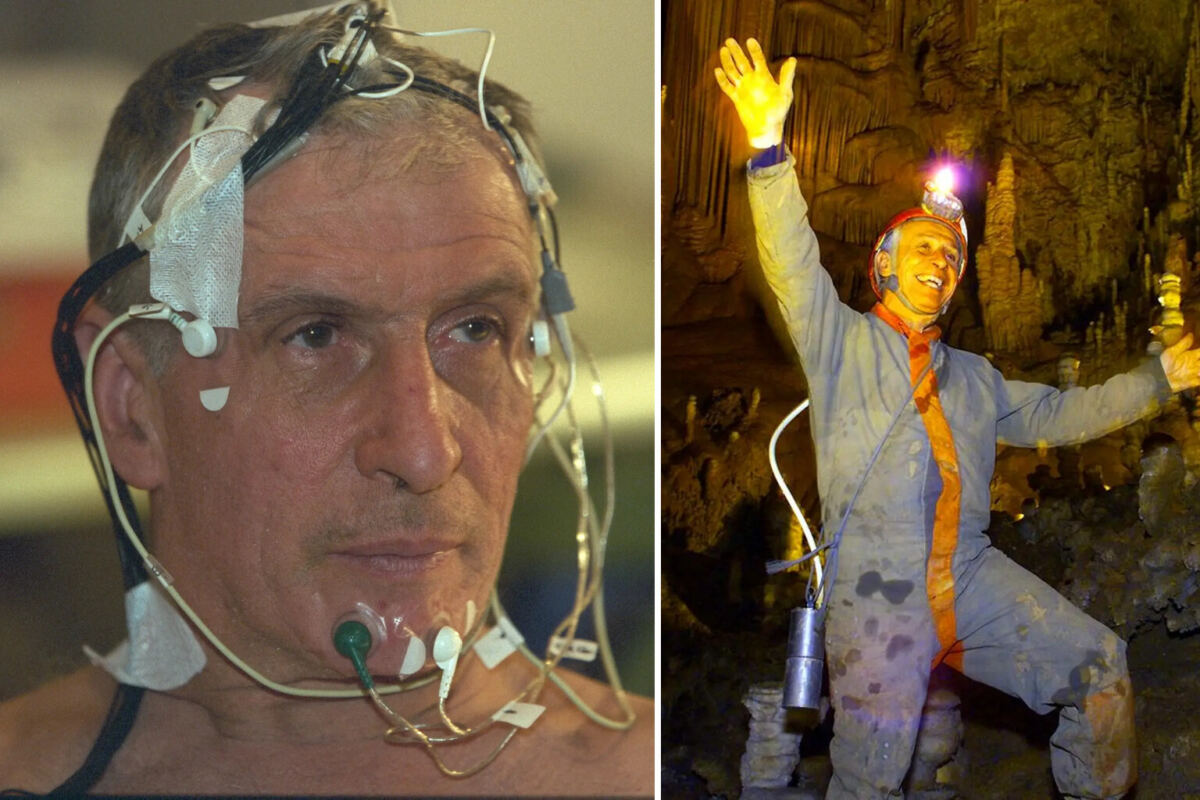
Michel Siffre’s landmark cave isolation experiments are being revisited following his death last August.
Siffre, 85, a French explorer and scientist, conducted his first underground time study in 1962 at age 23, descending 130 meters into Scarasson mountain in the Ligurian Alps. Armed with only a torch, he camped beside a glacier for 63 days without clocks, calendars, or sunlight, eating and sleeping purely by bodily impulse.
The Nice-born adventurer told Cabinet Magazine in 2008 that the concept seized him as “the idea of my life.” He designed a protocol where surface teams could only receive his calls, never initiate contact, ensuring zero external time information reached him.
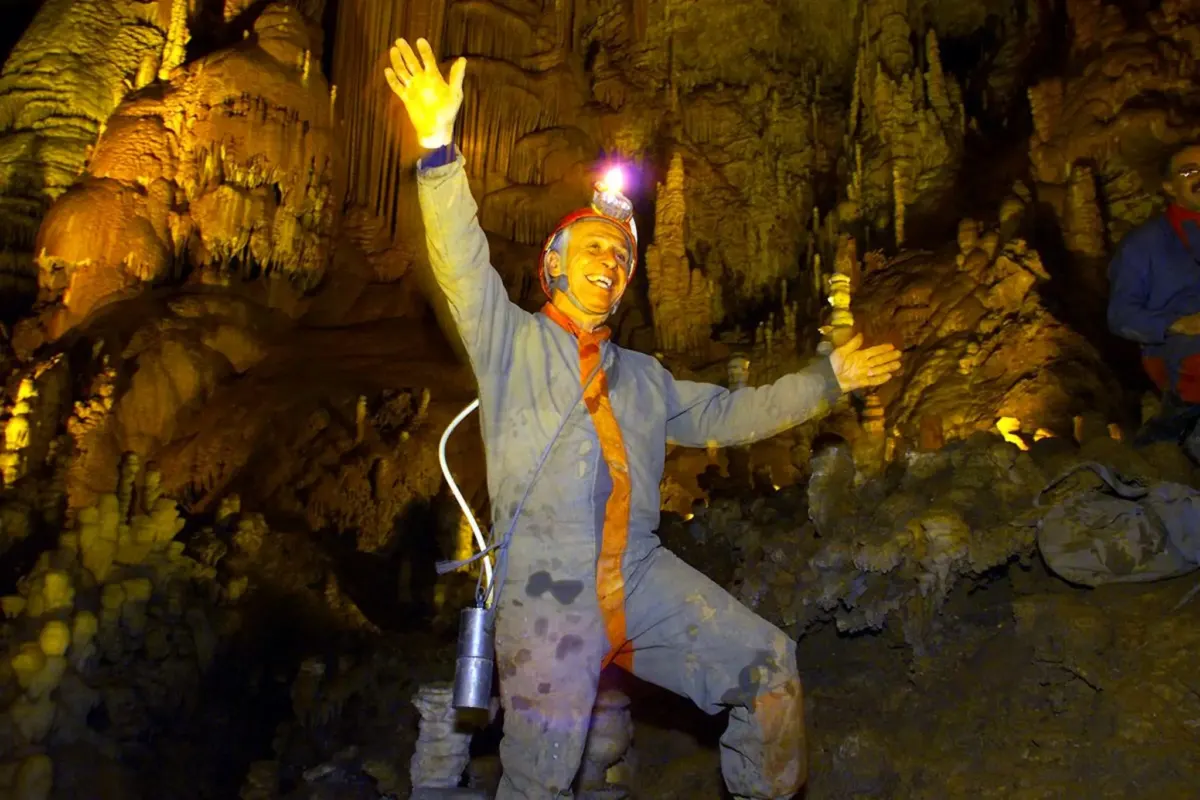
“I decided to live like an animal, without a watch, in the dark, without knowing the time,” Siffre said in that interview. “Instead of studying caves, you ended up studying time.”
He passed the isolated weeks reading, writing, and conducting self-administered tests. Each surface call included pulse checks and a psychological exercise: counting from 1 to 120 at one digit per second.
“With that test we made a great discovery: it took me five minutes to count to 120,” he explained. “In other words, I psychologically experienced five real minutes as though they were two.”
Siffre’s psychological time had compressed by half. When colleagues finally retrieved him, he believed an entire month remained. “My psychological time had compressed by a factor of two,” he said.
He spent four decades investigating this disconnect between perceived and measured time. “I believe that when you are surrounded by night—the cave was completely dark, with just a light bulb—your memory does not capture the time. You forget,” Siffre continued. “After one or two days, you don’t remember what you have done a day or two before. The only things that change are when you wake up and when you go to bed. Besides that, it’s entirely black. It’s like one long day.”
The initial 63-day stint proved insufficient. A decade later, Siffre isolated himself for six months in a Texas cave. Between these personal experiments, he organized dozens of similar underground studies. The extended Texas isolation yielded another pivotal finding: without time cues, humans shift to approximately 48-hour cycles rather than standard 24-hour rhythms.
NASA later applied Siffre’s findings to address short-term memory difficulties reported by astronauts deprived of normal day-night references during space missions.
Conditions during the 1962 Alpine experiment tested his endurance directly. Equipment was poor, his camp minimal, temperatures dropped below freezing, and humidity soared. Yet Siffre maintained his protocol throughout, emerging with only severe daylight sensitivity as lasting physical consequence.
The work established chronobiology as a formal scientific discipline. Siffre died in August 2024, leaving what colleagues recognize as a foundational legacy in understanding how human biology independently tracks time when stripped of environmental signals.
Siffre’s 1962 experiment came at a moment when space race ambitions drove new questions about human adaptation to extreme environments. His self-imposed isolation predated widespread recognition of circadian rhythms, offering empirical evidence that bodies maintain internal scheduling mechanisms without external prompting.