

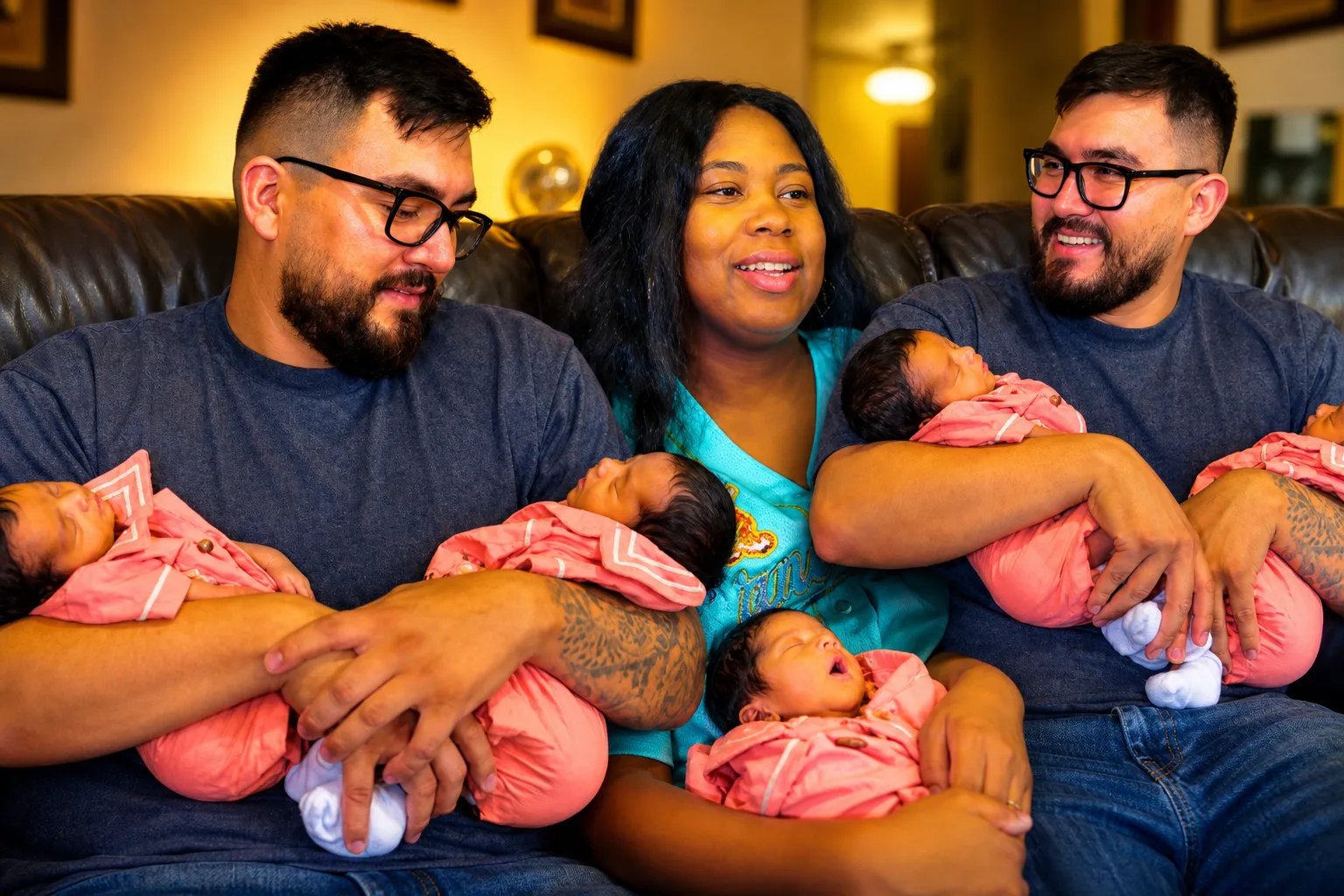
Nyla Craft has spoken out about the emotional moment she heard all three of her newborn sons crying together for the first time.
The South Los Angeles mother, whose age was not reported, delivered triplets Elio, Elias and Enzo on August 18 at Kaiser Permanente South Bay Medical Center. The three boys arrived with a combined weight of 19.3 pounds, falling just short of the Guinness World Record for heaviest triplets at birth. Two of the newborns are identical twins, and all three weighed approximately six pounds each.
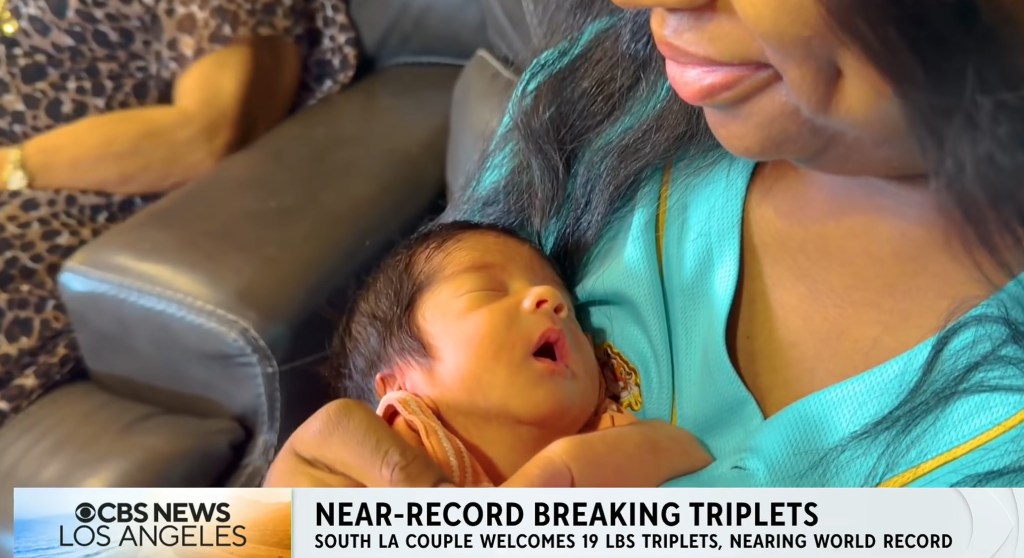
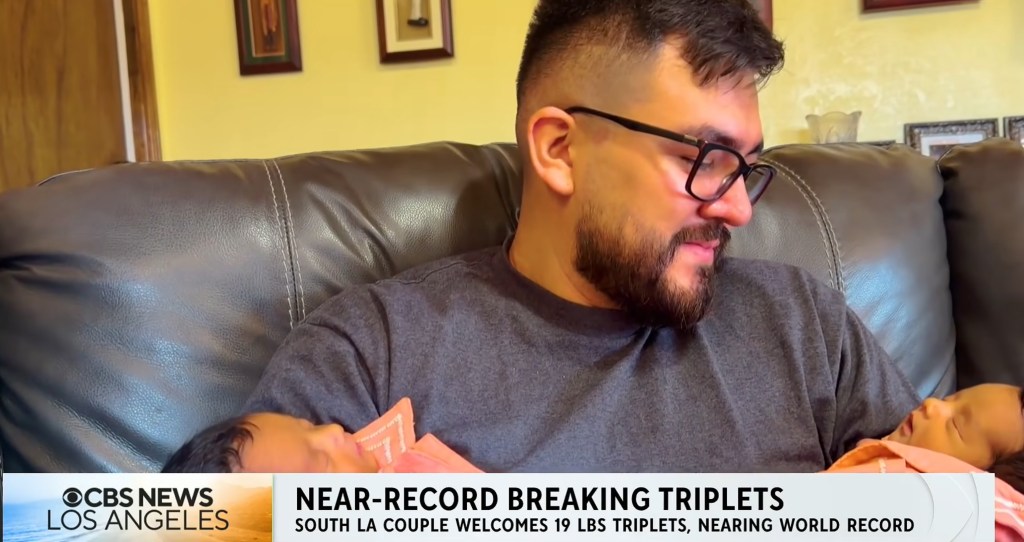
The triplets share their birthday with their father, Marco Bernal, who was photographed holding two of the infants while Craft carried the third during the family’s interview LA. The couple’s family has now expanded to seven members total, with the triplets joining two older siblings.
Craft described her overwhelming relief during the delivery, saying LA:
“When I heard the first baby come out, I cried because I was just, ‘oh my gosh … he’s okay,’ then the second one then the third one, and I was just like, I heard them all crying at once, and I was like, ‘oh thank God, they are good.'”
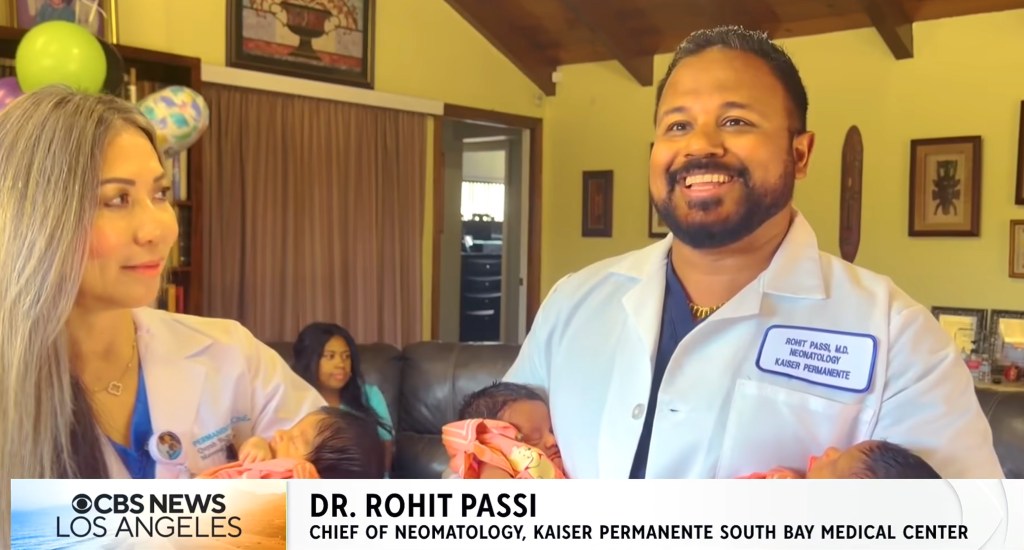
Dr. Rohit Passi, chief of neonatology at Kaiser Permanente South Bay Medical Center, joined the family for the interview and shared his own reaction to the successful birth.
“We’re just so happy,” he said. “This is the best part, seeing them out and sitting with the family and this is the reason we do what we do.”
The current Guinness World Record for heaviest triplets at birth belongs to Evan Patrick, Aiden Cole and Lilly Kathryn from Englewood, Colorado, who weighed 22 pounds 12.06 ounces combined in July 2003. Craft and Bernal’s sons missed that mark by roughly three and a half pounds.
The all-time record for heaviest single birth dates back much further, to 1879, when Anna Haining Swan — one of the tallest women ever recorded at 7 feet 11 inches — delivered a baby weighing 22 pounds. Swan reportedly lost an estimated six gallons of fluid when her water broke.

The California couple’s near-record birth drew local media attention this month as they adjusted to life with three simultaneous newborns. The identical twin pair among the triplets adds another uncommon element to an already statistically rare occurrence — naturally conceived triplets occur in roughly 1 in 10,000 pregnancies.
Craft’s emotional account of hearing her sons’ first cries together underscores the medical complexity that can accompany multiple births. Neonatal teams typically prepare for additional risks when delivering triplets, including the possibility of premature birth and lower individual birth weights.