


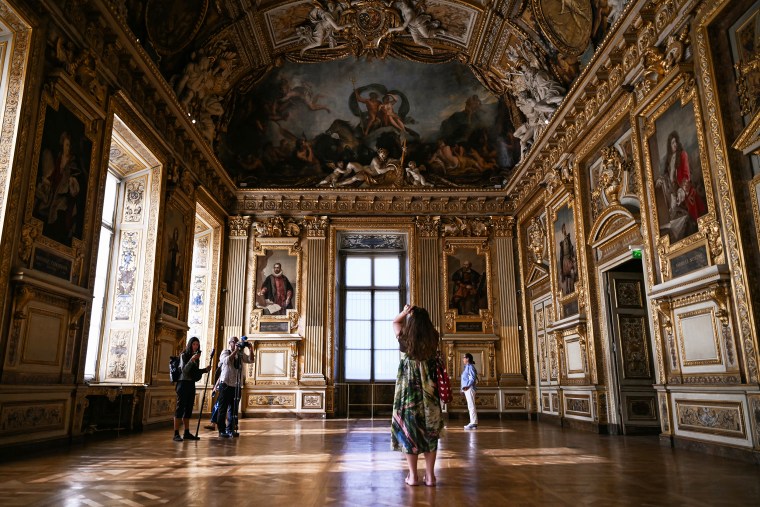
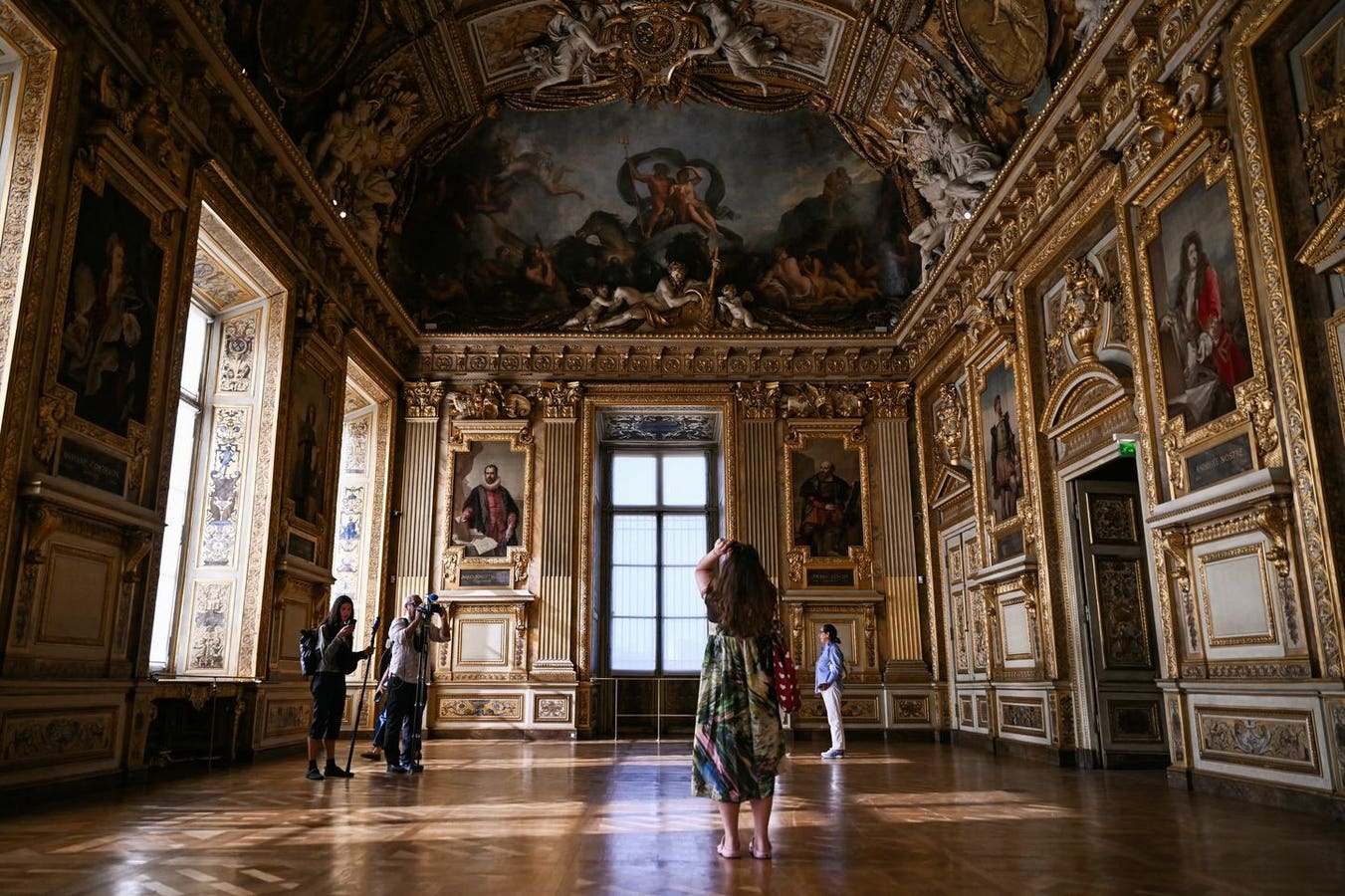
The Louvre’s Apollo Gallery, one of the world’s most famous art spaces, reopened to visitors Wednesday after remaining closed for nine months following a stunning daylight heist that exposed glaring security vulnerabilities at the world’s most visited museum.
The iconic gallery, with its ornate gilded ceilings and 17th-century frescoes, welcomes back tourists eager to catch a glimpse of the masterpieces. But visitors will notice something conspicuously absent: the dazzling crown jewels that once drew crowds to the opulent room.
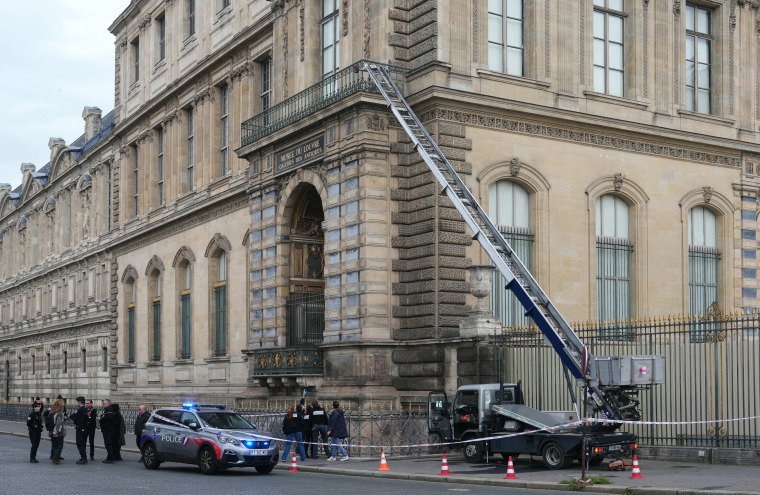
On October 19, 2025, a team of four masked thieves executed a brazen raid in broad daylight, forcing their way through a window using a truck-mounted cherry picker and disc cutters. The entire operation took less than eight minutes. They made off with eight pieces of jewelry valued at 88 million euros, or $102 million, before escaping on motorcycles. The stolen items included pieces belonging to Napoleon’s family and other 19th-century French royalty, such as the tiara of Empress Eugénie and emerald necklaces that once belonged to Empress Marie-Louise.
One crown—Empress Eugénie’s pearl tiara—was recovered after the thieves dropped it in the street during their escape. That piece is currently undergoing restoration.
The theft stunned France and the world, tarnishing the reputation of the Louvre, which welcomes approximately 9 million visitors annually. The museum remained closed for two days following the incident, and the Apollo Gallery stayed shuttered as investigations continued and the museum grappled with the fallout.
The heist prompted significant personnel changes at the museum’s highest levels. Laurence des Cars, the Louvre’s director at the time of the robbery, offered her resignation immediately after the incident, though it was initially rejected. However, in February 2026, she formally resigned after mounting pressure over security failures. Christophe Leribault, an art historian and former director of the Palace of Versailles, was appointed as the new director to lead the museum’s recovery and modernization efforts.
Rather than attempting to restore the gallery to its previous jewel-filled state, Leribault and the museum have chosen a different path. The remaining jewelry that survived the heist will be moved to a secure, windowless vault being constructed elsewhere in the museum. The Apollo Gallery itself is returning to its original 17th-century purpose as a ceremonial state gallery, without any jewelry on public display.
“It’s also an opportunity to rediscover the splendid architecture and decor of this gallery,” Leribault said, emphasizing the museum’s desire to present the space as an architectural highlight rather than a reminder of the robbery.
The decision reflects both a practical security concern and a philosophical shift. The original 17th-century room was designed by architect Louis Le Vau and decorated by painter Charles Le Brun to honor King Louis XIV, known as the Sun King. It later served as inspiration for the glittering Hall of Mirrors at Versailles. Visitors can now experience these architectural and artistic elements without the distraction of empty display cases or the psychological weight of viewing a space that was recently violated.
The theft has prompted a comprehensive overhaul of security measures at the institution. The Louvre announced plans to install approximately 100 new surveillance cameras by the end of 2026. Security bars have been installed on the very window the thieves used to enter. The museum also installed new anti-intrusion systems and added a security coordinator position among more than 20 emergency security measures being implemented.
The missing jewels remain unrecovered as of the gallery’s reopening. Eight of the nine pieces stolen during the heist have not been located, though investigators have been pursuing leads.
The reopening is part of a broader modernization initiative known as the “Louvre New Renaissance,” a decade-long renovation project that will cost an estimated 800 million euros and aims to modernize infrastructure, reduce overcrowding, and eventually give the Mona Lisa its own dedicated gallery by 2031.
For many visitors returning to the Louvre, the reopening represents a turning point for the museum as it works to restore public confidence following what many in France viewed as the most embarrassing breach of national heritage security in living memory. The Louvre has a long history of thefts and attempted robberies, but the October heist—executed in minutes while tourists were inside the building—highlighted just how vulnerable even the world’s greatest institutions can be.
As the museum moves forward with renovations and security improvements, the empty Apollo Gallery stands as a reminder that protecting irreplaceable cultural treasures remains an ongoing challenge, even in an age of modern surveillance and security protocols.