

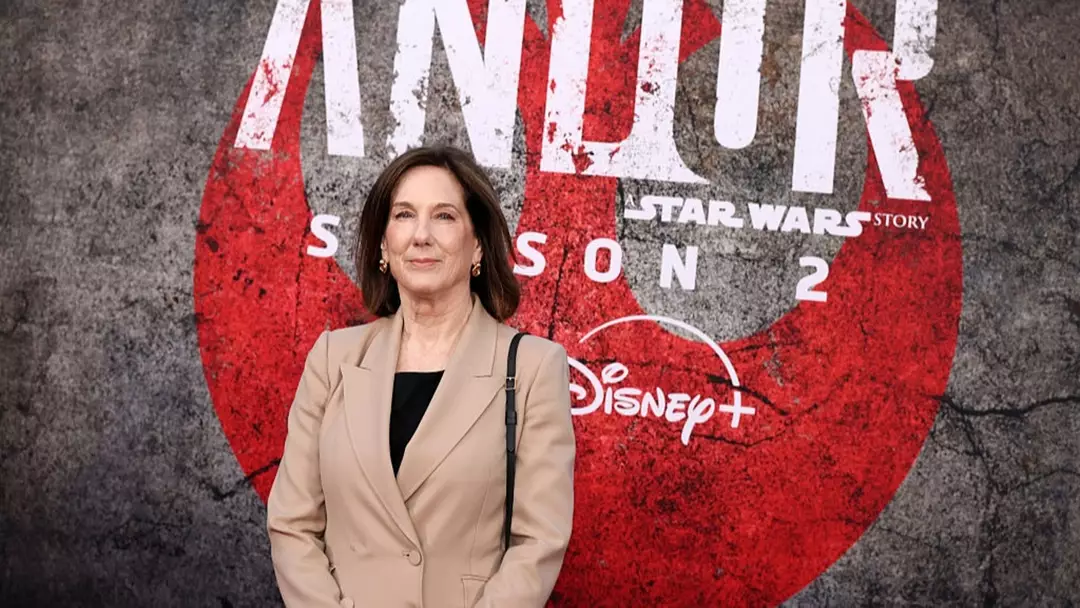
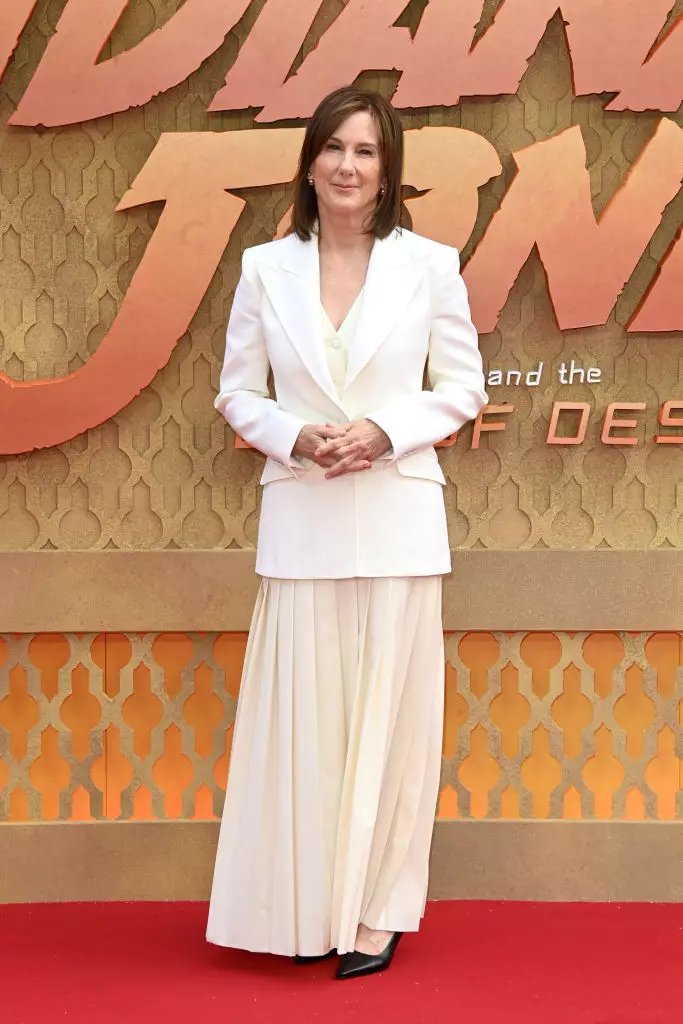
Kathleen Kennedy, president of Lucasfilm, has shared her thoughts on the use of Artificial Intelligence in movies, expressing her enthusiasm with a cautionary note.
The accomplished film producer has been at the helm of Lucasfilm, the company founded by George Lucas, since 2012.
Her early career saw her working with Steven Spielberg on E.T., and they collaborated once more in 1993 on the Jurassic Park series.
When Kennedy became part of Lucasfilm in 2012, she initially served as co-chair with Lucas right before Disney purchased the studio for approximately $4.05 billion.
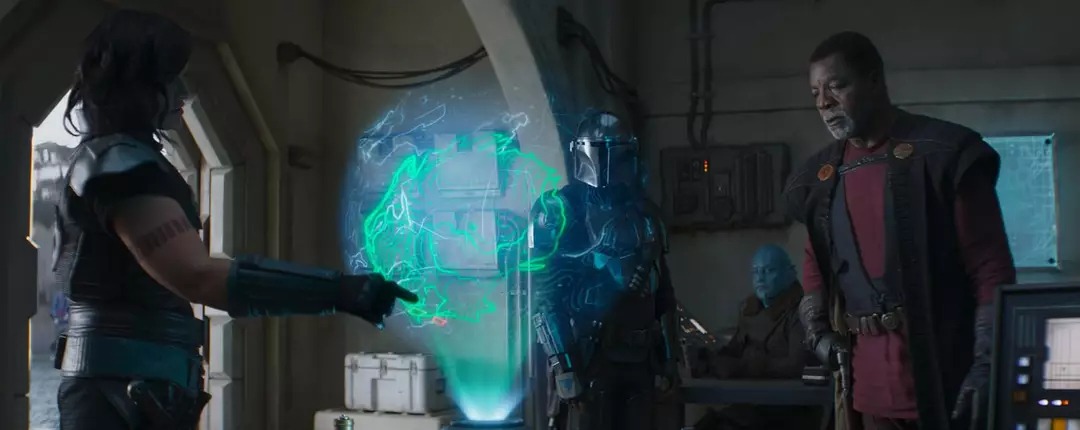
Under her leadership, the Star Wars sequel trilogy was produced along with standalone projects such as Rogue One and Solo. She has also overseen a significant move into television, overseeing popular series like The Mandalorian and Andor on Disney+.
After a 14-year tenure, she is transitioning the company’s leadership to Chief Creative Officer Dave Filoni and Executive Vice President Lynwen Brennan.
In an interview with Deadline, the 72-year-old discussed the reasons for her departure and her future endeavors.
She also commented on the controversial topic of AI’s increasing role in the film industry.
Kennedy noted that discussions about her departure had been ongoing ‘for two years.’
“I went to Bob and Alan to figure out what the transition plan would be and I made the recommendation that it be Dave Filoni and Lynwen Brennan, the latter of whom has been running the business alongside me,” she elaborated.
She expressed her interest in the ‘new technology’ that AI represents.
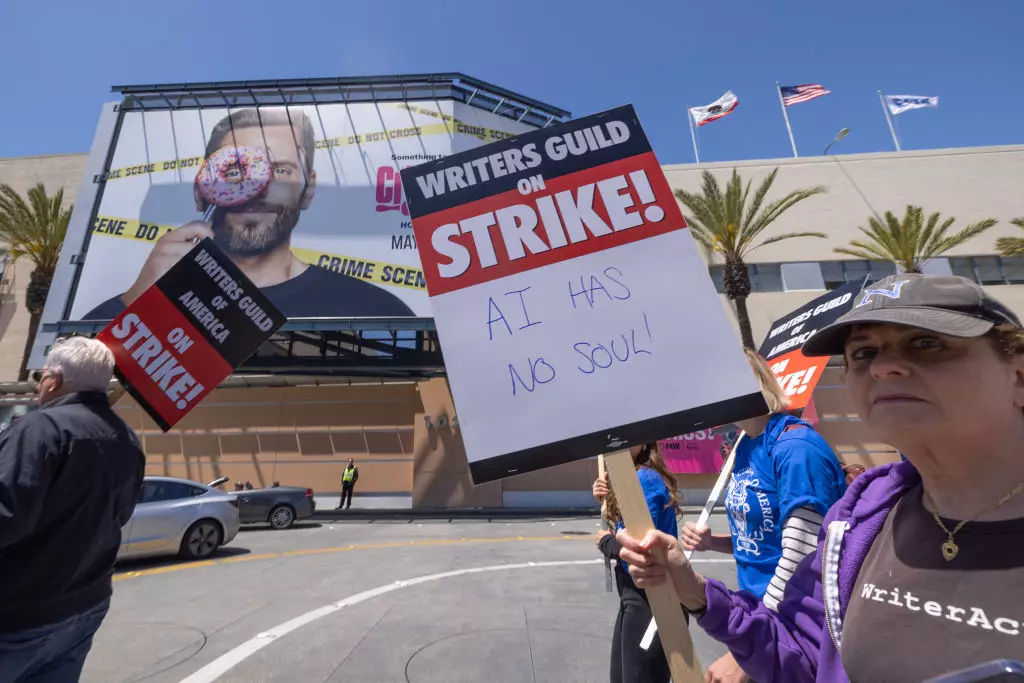
While AI offers the promise of faster and more ambitious creative capabilities, there are concerns within the industry regarding its potential impact on jobs, pay, and creative ownership.
Despite these concerns, Kennedy described the AI movement as ‘really exciting,’ with the caveat that its use must be carefully managed.
“I am interested in exploring using those tools in responsible ways, and working out the complications around trying to figure out what we’re going to do in terms of protecting artists’ rights,” she clarified, emphasizing its importance.
“But at the same time, there’s nothing more exciting than having new tools that can expand on what you’re capable of doing in terms of creating visual language around stories,” she added.
Reflecting on her long career in Hollywood, Kennedy drew parallels to earlier innovative periods.
She likened AI’s potential to the technological advancements that led to Jurassic Park, recalling past breakthroughs at Industrial Light & Magic.
This included what she called the first-ever CG shot in a film, created for 1985’s Young Sherlock Holmes.
“It was absolutely thrilling,” she recalled, noting the experimentation and research that paved the way for CGI to revolutionize blockbuster filmmaking.
Though she clarified that AI may not transform every film, Kennedy believes it holds great promise for large-scale, world-building narratives.
“For big tentpole stories where you’re trying to create images people haven’t seen before, I really believe this technology is going to do that,” she stated.
“I genuinely feel like we’re entering that moment again… where we’re going to see things we’ve never seen before.”