

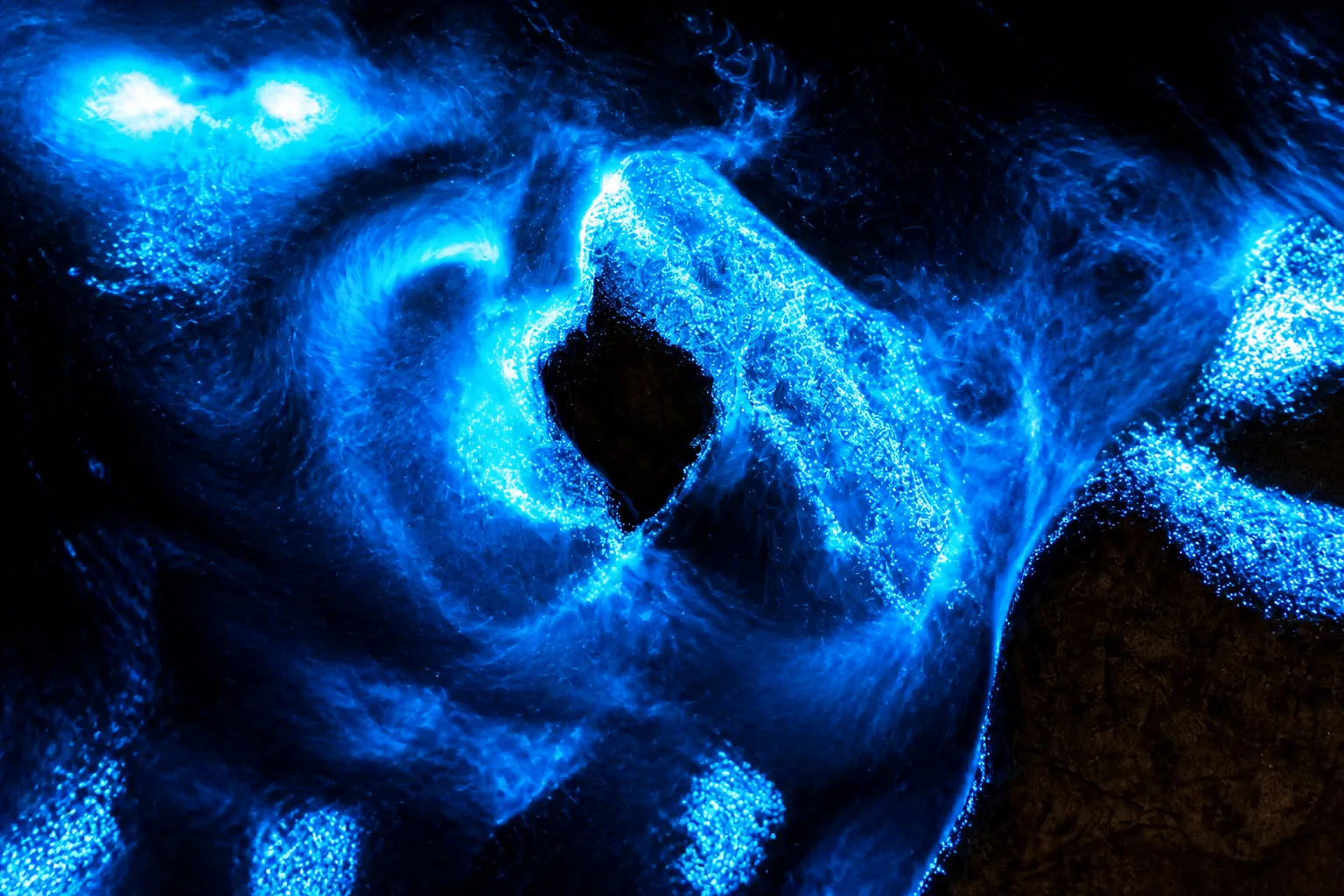
The Maldives’ famed “Sea of Stars” has earned a 4.5-star rating on Google Maps despite not being a real place.
Travelers hunting for the glowing blue ocean have been chasing a phantom destination, marine experts now warn. The spectacle, which looks like a galaxy submerged beneath waves, has inspired thousands to book trips to a fixed location that simply does not exist on any chart.
Lauren Arthur, a marine biologist who spent eight years working in the Maldives, explained the science behind the confusion in a recent interview. “When people say they want to see the Sea of Stars in the Maldives, they are actually asking to see a chemical reaction – it’s bioluminescent plankton.”
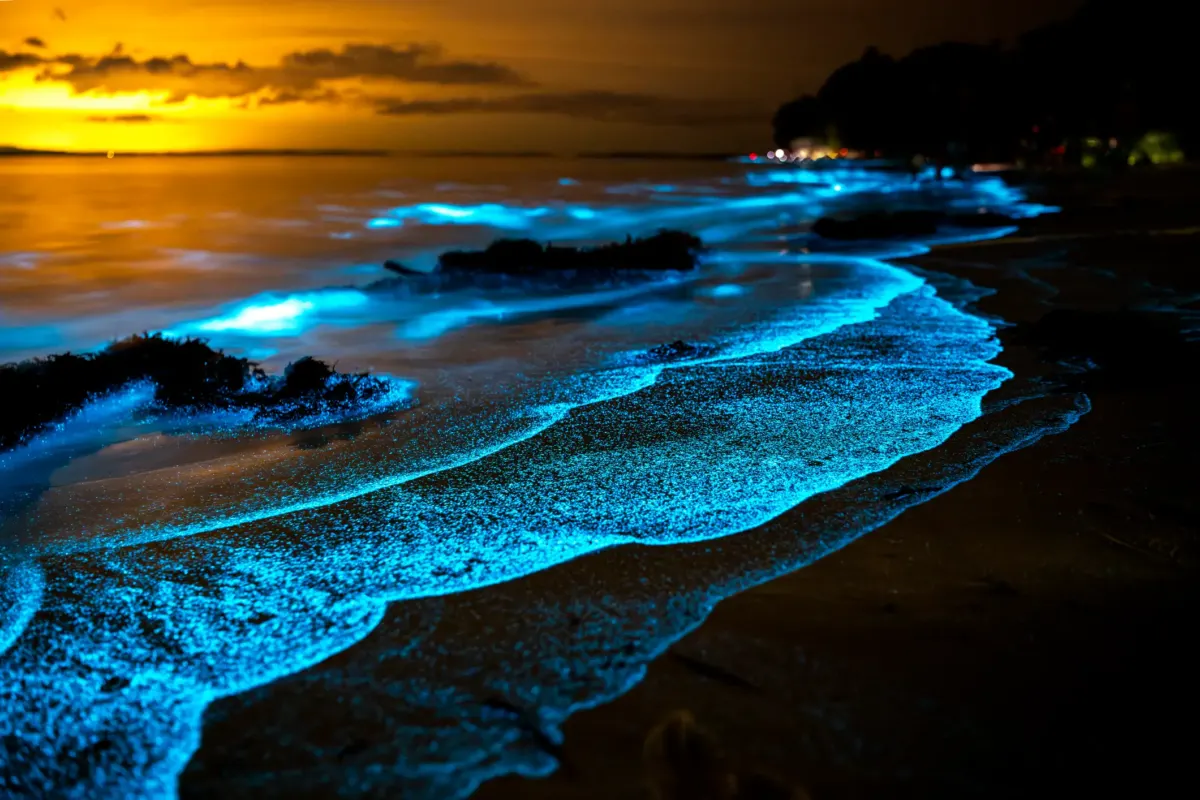
Arthur clarified that plankton is a collective term for microscopic organisms that float in ocean currents. The creatures only emit their fluorescent blue light when physically disturbed by movement in the water.
The phenomenon has proven so captivating that a Google Maps pin now marks the nonexistent attraction, where reviewers have called it “beautiful” and “amazing.” The glowing display is entirely natural, but it is also completely unpredictable, meaning no traveler can guarantee they will witness it.
Arthur emphasized the spontaneous nature of any potential sighting. “There’s no one specific place to find bioluminescent plankton. It can be found anywhere in the Maldives, or even anywhere around the world where you get plankton, even the United Kingdom.”
Timing improves the odds. Visiting between April and October increases chances significantly, as seasonal weather patterns drive huge amounts of plankton into Maldivian waters. Even then, luck remains the deciding factor.
“You may see it if you’re lucky while you’re sitting on the beach with a nice glass of Champagne, but luck is the key word,” Arthur warned travelers seeking a sure thing.
For those determined to maximize their experience, Arthur recommended a more immersive approach. “The best way to see it is to get into the water when it’s thick with plankton and go night snorkeling. It’s one of the most exciting things you can do.”
She offered specific guidance for groups willing to take the plunge after dark. “The minute you turn them off, it’s very eerie, but just start moving your arms and legs like crazy.”
Arthur described the underwater effect in vivid terms. “You’re disturbing the plankton that will emit light – whether that’s being disturbed by a predator or even a human swimming. As soon as you disturb them, you’re floating amongst the stars.”
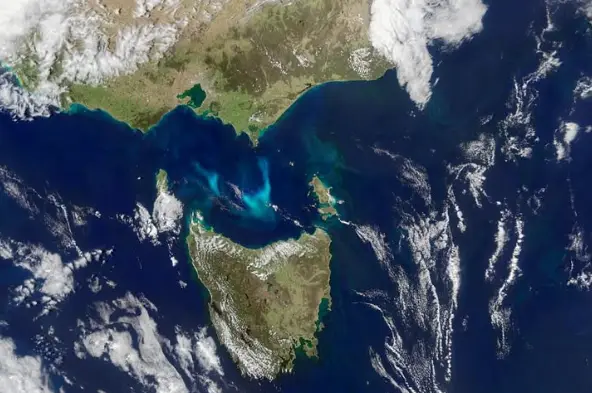
The Maldives is not the only place where ocean life generates its own light show. Satellite footage from NASA has previously captured strange fluorescent glows blooming in the Great Australian Bight and Tasman Sea. Scientists confirmed that bright glow came from bioluminescence in phytoplankton blooms, which are algae rather than the animal plankton behind the Sea of Stars effect.
Phytoplankton thrive when nutrient-rich water rises from the deep ocean, fueled by decomposing sea life that sinks to the ocean floor and releases nitrogen and phosphorous. When this water reaches the surface, light from the “photic zone” prompts explosive growth. The resulting blooms concentrate chlorophyll-a, a green pigment involved in photosynthesis, producing a detectable glow visible from space.
The confusion between a permanent landmark and a fleeting natural event has left many vacationers disappointed. Social media images of the ethereal blue waves continue to circulate, driving demand for a destination that cannot be booked, mapped, or scheduled.
Arthur’s advice underscores the reality that some of nature’s most stunning displays resist tourism packaging. The Sea of Stars remains real in the sense that the plankton creating it are everywhere in the Indian Ocean, yet impossible to summon on demand.
The Maldives’ official tourism season runs through April, with plankton concentrations typically peaking in the months ahead.