

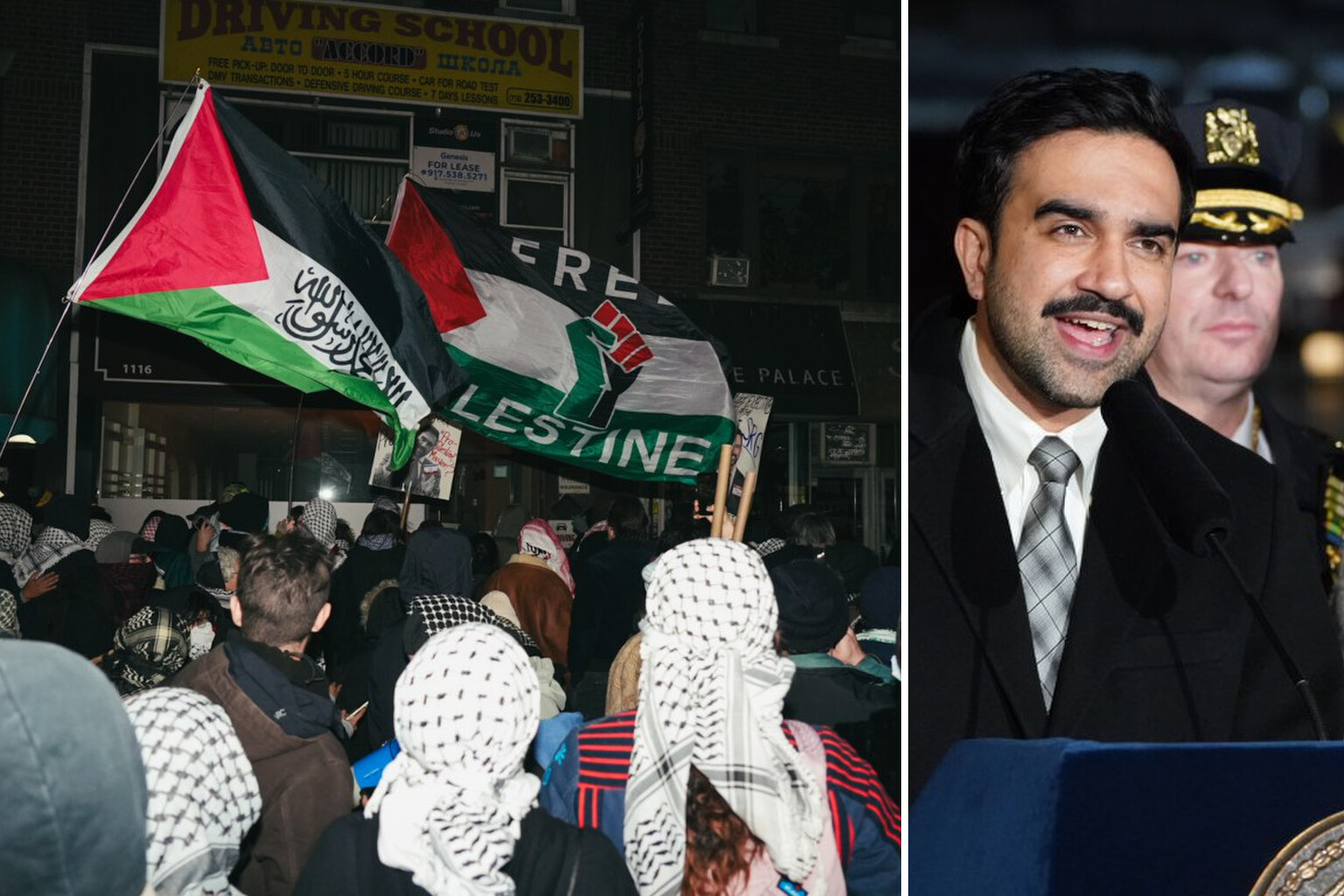
Mayor Zohran Mamdani deployed the NYPD’s Strategic Response Group to a violent Brooklyn protest just ten days after announcing he would eliminate the elite unit.
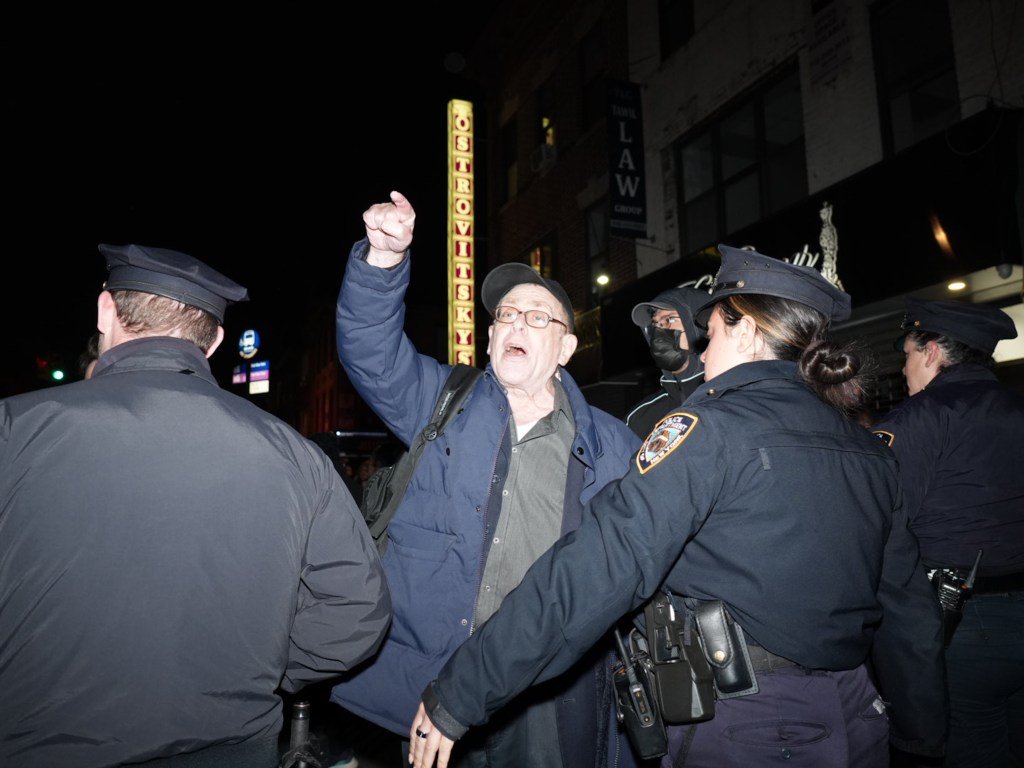
The Democratic socialist mayor, 33, ordered the SRG to Essen NY Deli in Midwood on Wednesday night as pro-Palestinian demonstrators and counter-protesters clashed outside the kosher eatery, according to police. The deployment came despite Mamdani’s Nov. 16 proclamation that he was “disbanding” the unit and replacing it with unarmed civilian responders.
“Of course SRG was sent, it is the only way to deal with violent protests,” one Brooklyn police officer said Thursday, adding, “the mayor knows that.”
“Without SRG last night people would have been injured,” a Brooklyn detective continued. “And when they get rid of SRG, that’s what will happen. Total chaos with civilians and cops getting injured.”
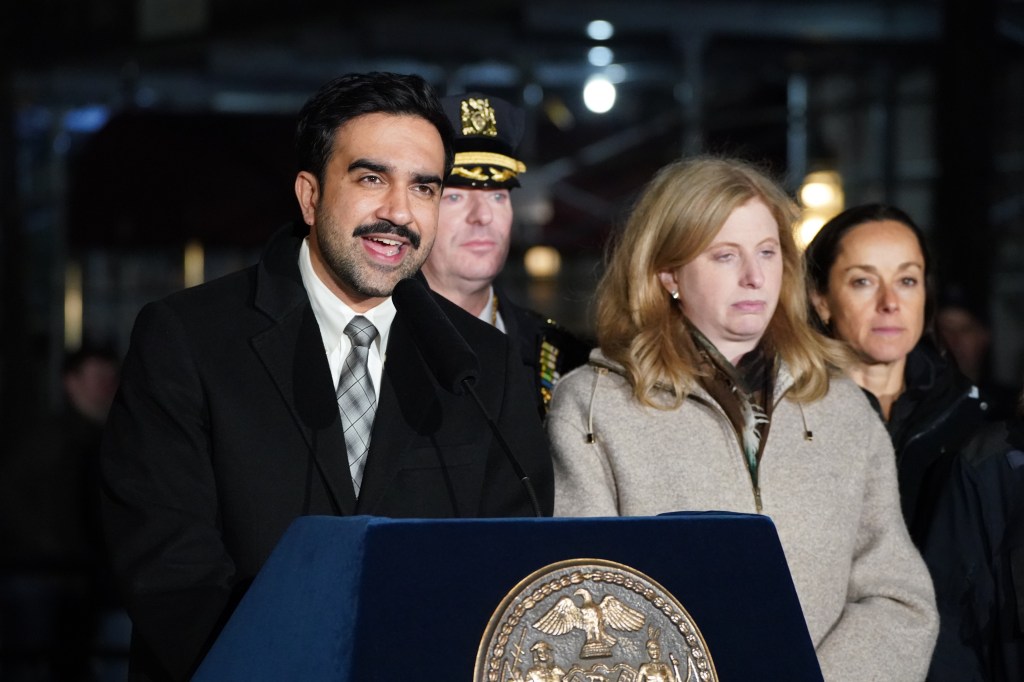
Michael Jacobowitz, 35, who owns the targeted deli, told The Post the scene could have become a “massive sh-tshow” without the SRG’s presence. “It’s a terrible move by the mayor,” he said about Mamdani’s plan to eliminate the unit. “The SRG is there to protect us from the bad apples. They are not there to socially discriminate. They are not there to pick and choose who to go after. They are there to keep us safe.”
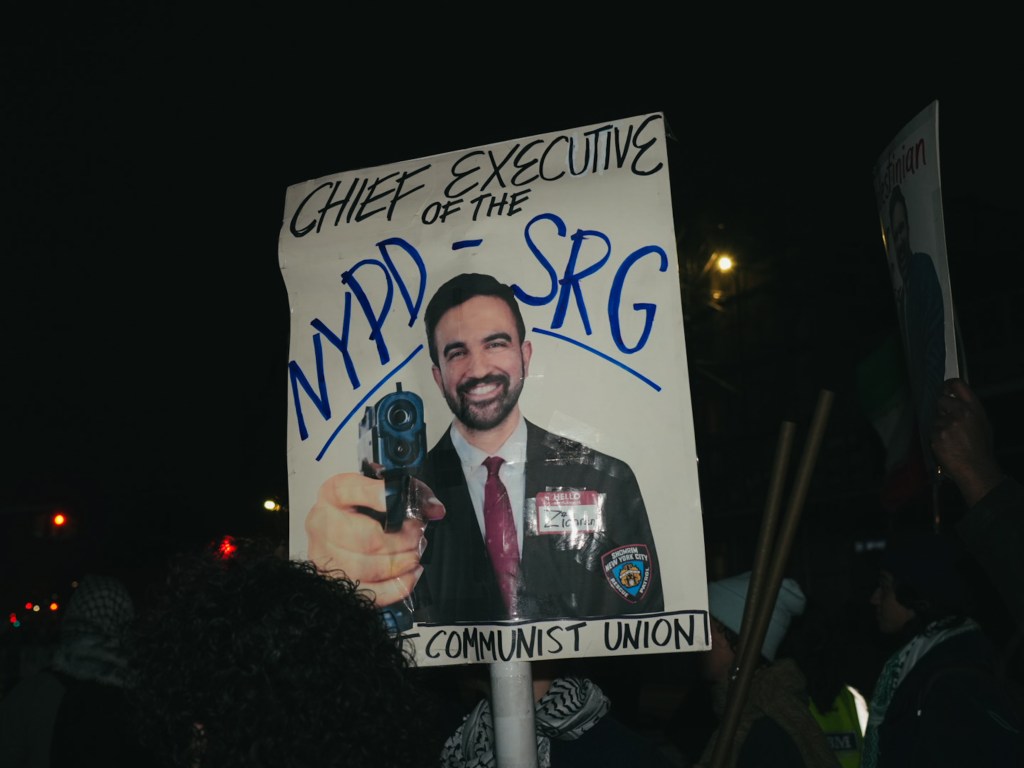
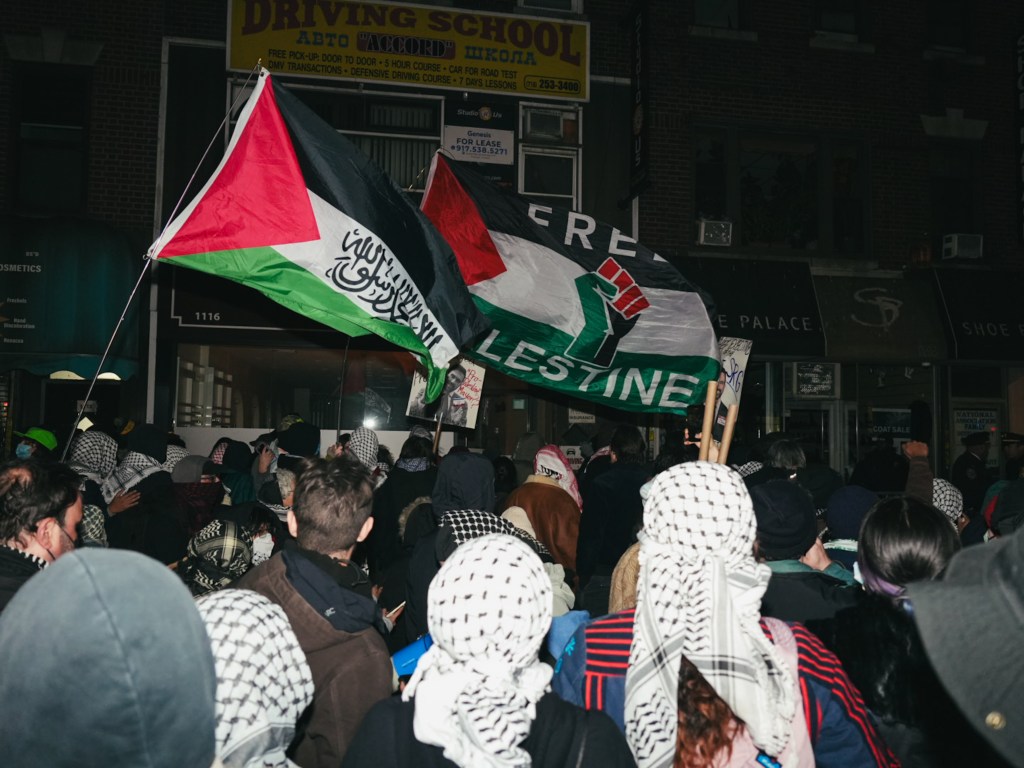
The demonstration was organized by Pal-Awda, the Palestine Right to Return Coalition of New York and New Jersey, to protest Israeli brokerage firm CapitIL hosting a private dinner at the restaurant. Even that far-left group condemned Mamdani for the police response.
“We have no faith in the Mayor’s lofty words when it is his NYPD that is trampling, strangling & brutalizing protesters of conscience,” the organization said in a statement. “No politician is above critique, & no words or symbolic gestures are sufficient, when Palestinian land is being robbed from within our neighborhoods, & when those protesting this theft are subjected to ceaseless brutality,” the group wrote on X, demanding “full abolition” of the NYPD.
Mamdani’s dissolution of the SRG, which he has long criticized as a “stormtrooper force” that crushes free speech through intimidation and violence, is not scheduled to take effect until February. His promised replacement—a “Community Dialogue and De-escalation Division” backed by a small “Patrol Support Division” trained in crowd management—will not become active for over a year. Under the eventual new structure, the Patrol Support Division would handle any arrests at protests, a police spokesperson said.
Republican elected officials seized on what they called the mayor’s hypocrisy. “Which one is it, Mr. Mayor?” asked Councilwoman Joann Ariola (R-Queens). “First City Hall tells us that New Yorkers don’t need SRG, and then they call out SRG when things start to look ugly. Last night was a very clear reminder that there is no substitute for a well-trained police officer when public safety hangs in the balance.”
Assemblyman Mike Reilly (R-Staten Island) added: “There’s fairy-tale land, and then there’s reality. The reality is clear and simple: an NYPD unit like the Strategic Response Group will always be needed.”
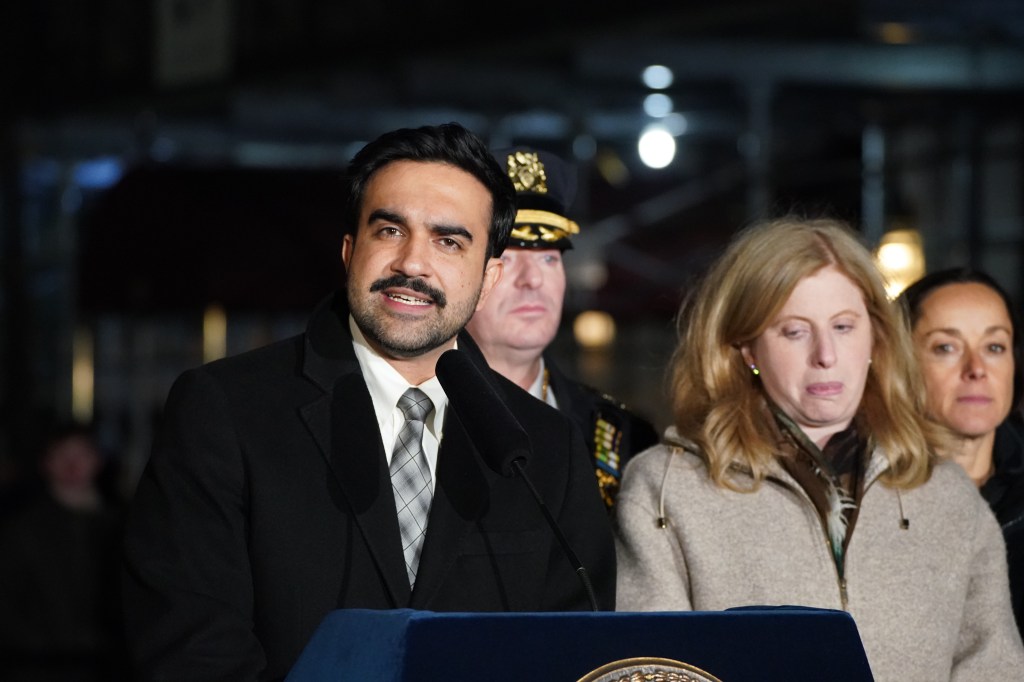
State Sen. Steve Chan (R-Brooklyn) shared: “I can see that our mayor needed the very same unit of the NYPD that he disbanded. As anyone who has any knowledge of law enforcement would know, the SRG unit is absolutely required to make sure that protests and counter protests remain peaceful with minimal violence.”
Democratic critics also weighed in. Assemblyman Kalman Yeger (D-Brooklyn) charged that “people came to do violence, urged on by the mayor’s rhetoric.” He fired back: “This is WHY he wants to disband the single NYPD division trained to respond to his supporters’ pogroms, to be replaced with grad students and smiley face stickers.”
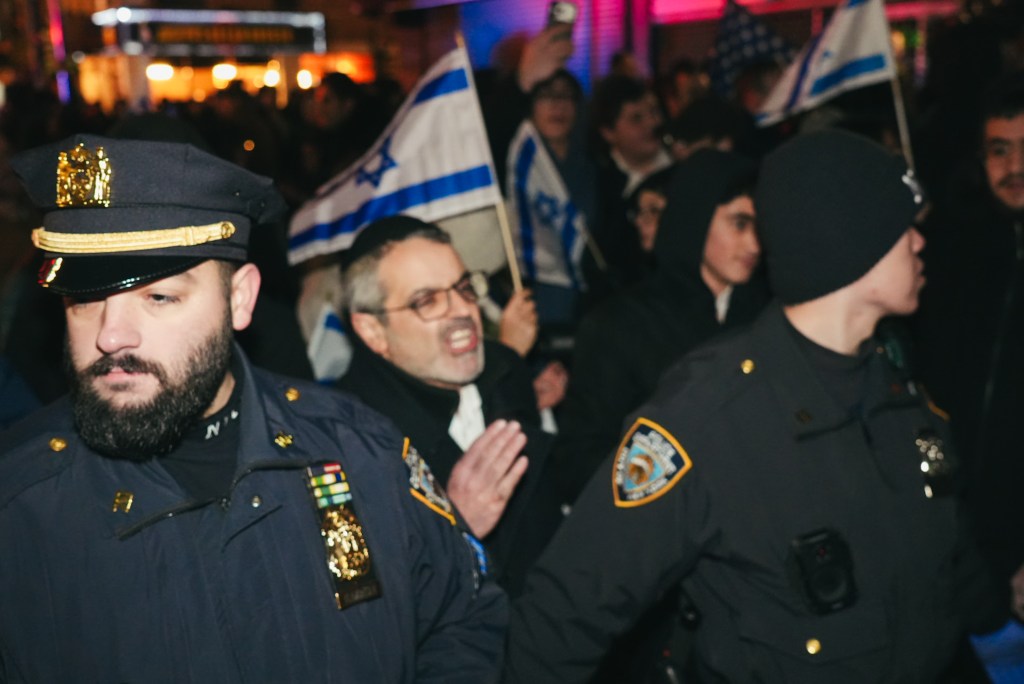
The NYPD reported that three people received criminal court summonses and no formal arrests were made after keffiyeh-clad pro-Palestinian protesters faced off against counter-demonstrators. The mayor holds sole authority to order SRG deployment.
Mamdani campaigned on separating counterterrorism from protest response and building what he termed a “new approach to public safety,” repeatedly condemning the SRG for its treatment of demonstrators. His Nov. 16 announcement that he was “delivering on that promise” came with much fanfare, though the actual timeline for replacement stretches well into 2026.
The SRG remains active through at least February, when the unit is formally scheduled to be eliminated.