

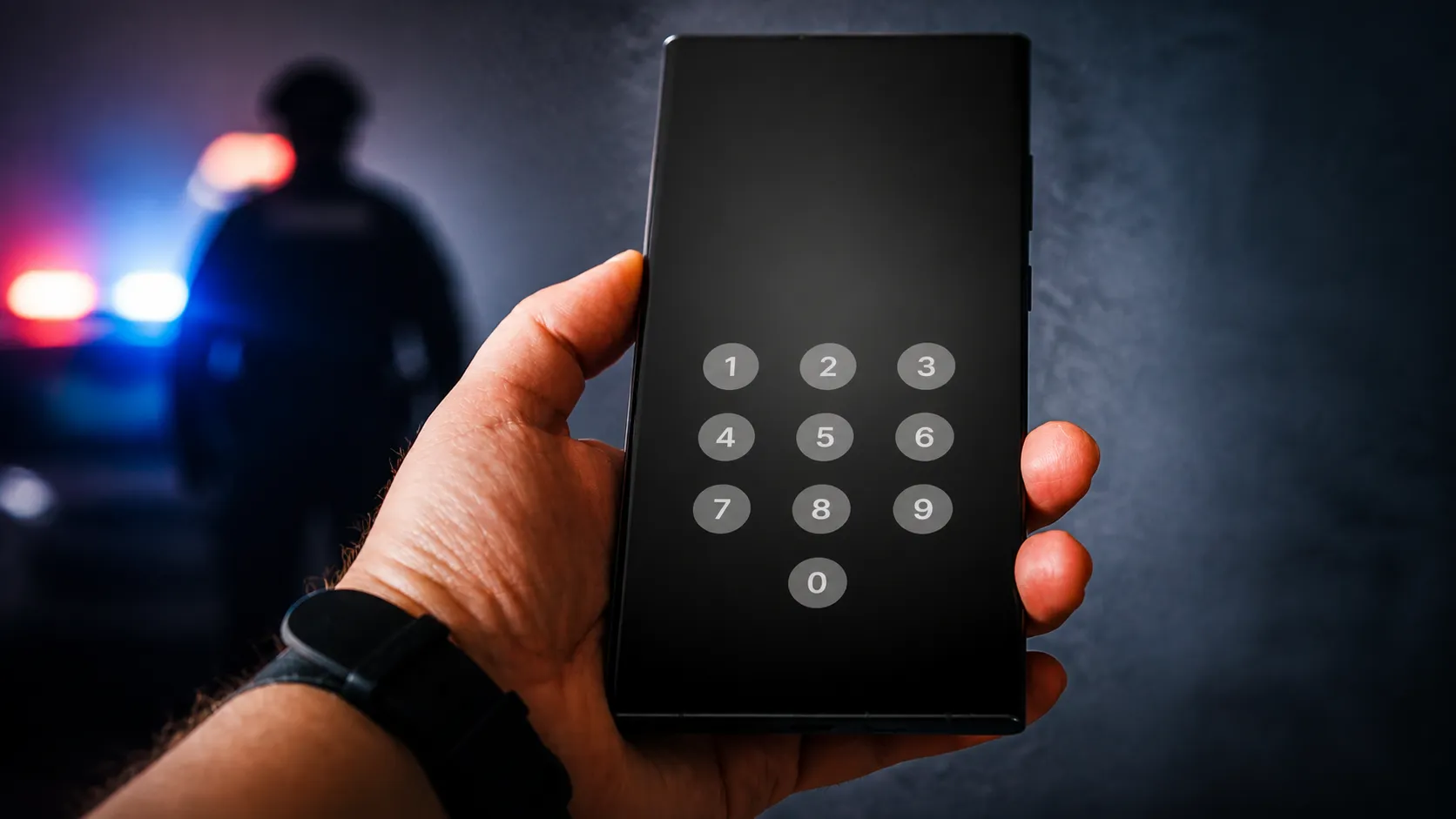
Samuel Tunick says he was stopped by US Customs and Border Control after returning to the US from a trip to the Dominican Republic in January 2025, before agents allegedly seized his phone during questioning at Atlanta’s Hartsfield-Jackson International Airport.
According to reports, Tunick had allegedly been placed on a terrorism watchlist over claimed ties to the protest movement opposing Cop City, the controversial police training facility built near Atlanta, Georgia, in a 1,000-acre area of urban forest.
The case has drawn attention because it combines two issues that rarely collide in court: border searches of electronic devices and privacy-focused phone software. US Customs and Border Protection says travelers crossing the border are subject to inspection, and that device searches are used only in a small fraction of cases. GrapheneOS, meanwhile, is designed to strengthen Android privacy and security, including a duress PIN/password feature that can irreversibly wipe the device and any installed eSIMs if entered on a supported unlock screen.
Phone seizures at borders are not unusual, but Tunick’s device reportedly presented a different challenge for investigators. He was carrying a Google Pixel running GrapheneOS, a privacy-focused Android operating system that can erase the phone’s contents if a particular code is entered.

It is claimed that Tunick entered what is known as a duress code rather than his standard passcode, which would have prevented officials from viewing any data stored on the device.
The code ‘will irreversibly wipe the device (along with any installed eSIMs)’, says Yahoo! Tech.
When Tunick gave them the so-called duress code, the ‘screen went blank, flashed several times and the phone appeared to restart’.
The Department of Justice is now reportedly seeking a federal obstruction charge against Tunick, arguing that destroying evidence or moving assets to stop the government from seizing them can amount to a crime.
A hearing in the matter was held at federal court in Atlanta last week.

Tunick’s legal team has since submitted a motion seeking to suppress evidence and statements, meaning they want certain material barred from being presented in court.
In that filing, his attorneys allege officers repeatedly demanded his phone passcode and claimed they were searching for child sexual abuse material.
Allegedly officers repeatedly asked him for his phone’s passcode and said they were looking for child sexual abuse material as ‘a pretext for a fishing expedition into Mr. Tunick’s connections with the Defend the Atlanta Forest movement’.
The same motion argues that Tunick’s constitutional protections were breached during the encounter.
The motion also claims that Tunick was ‘not provided with Miranda warnings and repeatedly invoked his right to an attorney and requested to end his questioning’, therefore his constitutional rights were violated, his lawyers say.
Recent reporting says federal agents testified at an evidentiary hearing in July 2026, and that a judge is expected to rule on the suppression motion later this year, with October mentioned as the likely timing. If the case moves forward, it could become an early test of how courts treat duress-password use at the border, especially when a device is configured to wipe itself automatically.
Observers believe the case may be one of the first to test this kind of issue in court.
Speaking to TechCruch, Runa Sandvik, a digital security expert who works to protect at-risk people as the founder of security consultancy firm Granitt, said:
“I have not seen this before, though I’ve discussed the potential scenario with activists and journalists over the years.
“I think this case serves as a reminder that authorities may argue you knowingly destroyed data, so it’s better to not have that data on you when you cross certain borders.”
If Tunick is formally charged and later convicted, he could face a prison sentence of up to five years, a fine, or both.