

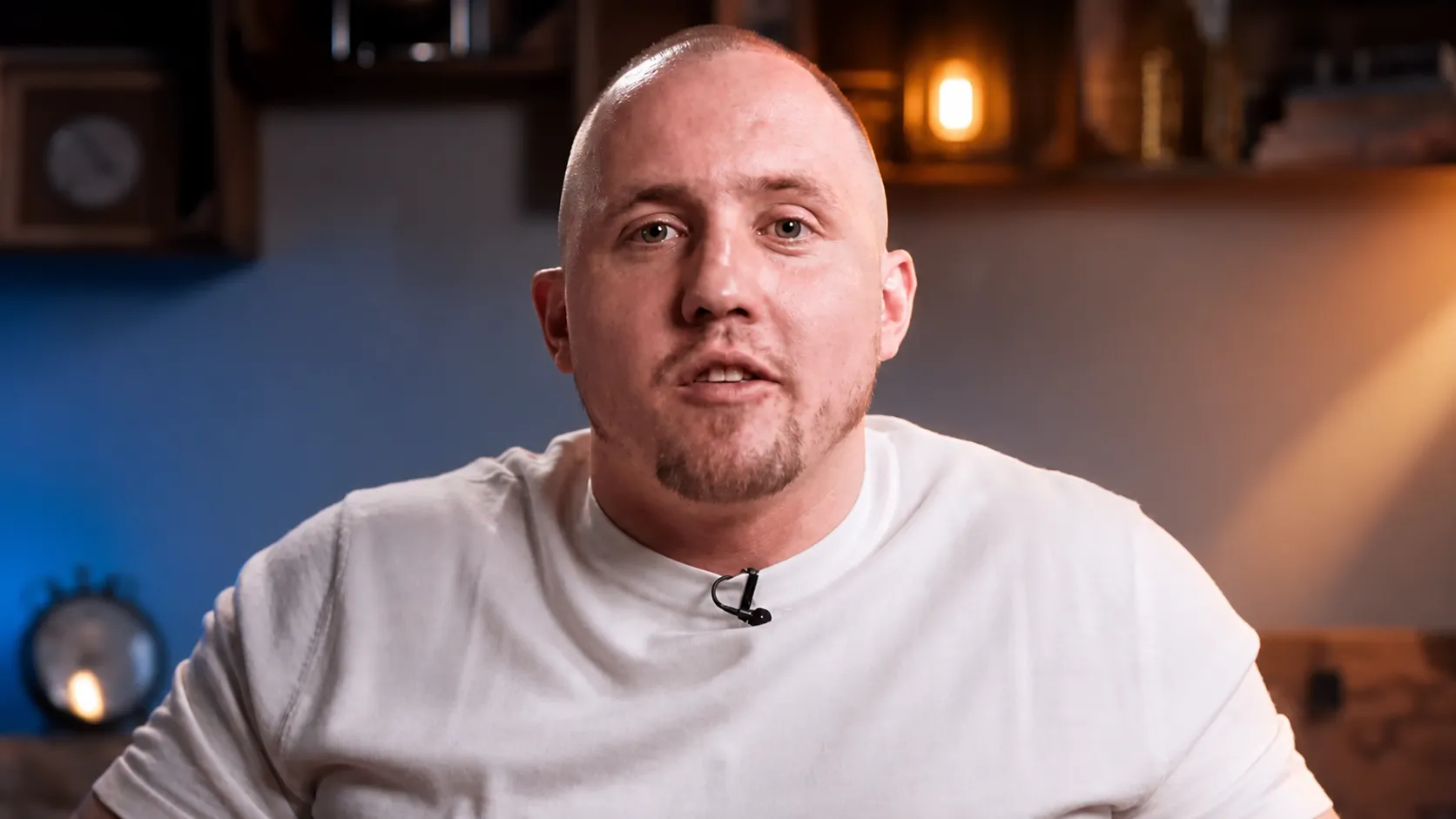
A 26-year-old man who spent weeks in a coma said the experience was less like dreaming and more like “living a different life.”
Keenan Acton was placed in an induced coma for more than a month after collapsing during a Hyrox competition in 2024. Hyrox is a high-intensity indoor fitness race that combines repeated 1km runs with workout stations, and the format can put enormous strain on the body. He developed rhabdomyolysis, which Cleveland Clinic describes as a “life-threatening condition that can happen after an injury or excessive exercise without rest.” The condition can also cause muscle death and kidney damage.
In an interview for an episode of It Happened to Me, Keenan explained that when he regained consciousness, the first thing he asked his now wife was how the babies were.
She believed he was referring to their two sons, but Keenan was actually asking about “the twins” he believed they also had during the time he was unconscious.
He said the memories from the coma felt like a full parallel existence. In those memories, he was on holiday with his sons and their “new twins,” and the family was enjoying a happy life together.
After waking, he said it was difficult to come to terms with the fact that the twins did not exist and that parts of the life he remembered were not real. He recalled feeling “devastated” by that realization.

“I wasn’t watching it happen, I was doing it and living this other life,” he said.
Remarkably, Keenan said that parts of the life he experienced while in the coma later appeared in reality.
He left hospital in December and married Olivia the following August. The couple later decided to try for a daughter as their third child, only to discover that Olivia was pregnant with twins.
Reflecting on that moment, Keenan said he thought it was “too much of a coincidence” and felt he may have “saw what was coming”.

Not all of what he remembers was comforting. Keenan said many of the memories were “dark” and “not nice to see”.
He was placed into two induced comas and also suffered a heart attack after waking from the first one after two weeks. Doctors sometimes use an induced coma to help the body rest and to manage serious medical emergencies, but recovery can still be unpredictable and long. Speaking about another memory from that period, he said:
“There was one stage of it where there was field with loads of different huts on it, and you got put in these huts and told you were going to die.”
He said his watch showed a countdown of “8 days,” and while still in the coma, he believed that was how long he had left to live. That became his final memory before waking up. When he later told a friend about it, he was told that his final coma had actually lasted eight days.
Keenan now says the ordeal has “massively” changed the way he looks at life.