

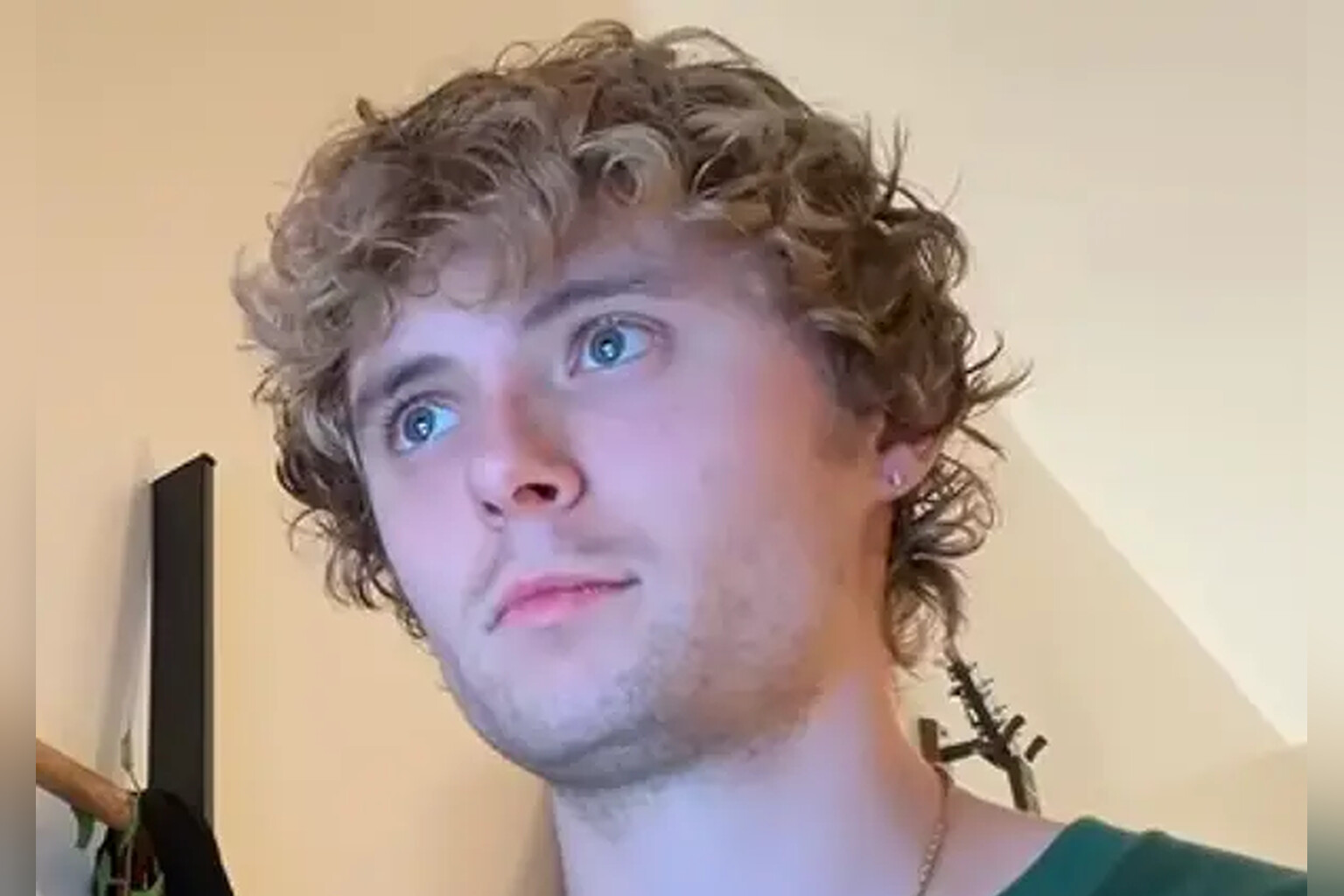
YouTuber Luke J has spoken out about the disturbing hallucinations he suffered after forcing himself to stay awake for 84 hours straight.
The content creator, who documents challenge videos on his channel, said last month that he set out to test his body’s limits without even “overdoing it” on caffeine. By the time he reached day three and a half, the physical and mental toll had become impossible to ignore.
“At one point I thought I saw a huge bug that wasn’t there, and after that, I thought I saw a woman sitting on my couch who also didn’t exist.”
Luke said he “certainly wasn’t expecting to actually hallucinate” or to “feel as drunk” as he did by the end of the stunt. The false perceptions came as his grip on reality began to slip, with stretches where he could barely distinguish between what was actually happening and what his sleep-deprived brain had invented.
His sense of time unraveled in parallel. “Near the beginning I was very aware of how much time had passed and I was checking the stopwatch frequently,” he explained. “But as it went on, I focused way less on how long it had been and more on just staying awake no matter what. Time only really came up when I crossed into a new day or a friend asked.”
The disorientation ran deeper than lost hours. Luke found himself caught in loops of uncertainty, forced to stop and puzzle over whether he had already completed basic tasks. His body ached as if he had “done an insane workout.” By the final stretch, he could “barely walk normally.”
The experience was severe enough that Luke abandoned any thought of pushing further. He had initially considered attempting a full seven-day challenge, but research into the medical risks changed his mind before he even began. He established a hard stopping point in advance based on what he learned about hospitalization risks at extreme durations.
“I had done research before the video and found that the risk of hospitalization goes up after a certain point, so I set my stopping point before I started. Like I said, I was seeing things that weren’t there and could barely walk normally by the end, so I knew it was time.”
Medical guidance supports his caution. The Cleveland Clinic has noted that the longest documented case of sleeplessness lasted 11 days, while the Guinness Book of World Records eliminated the category entirely due to the dangers involved. According to Dr. Drerup, cited by the outlet, passing the 72-hour threshold typically brings irritability, anxiety, depression, impaired executive function, and potential hallucinations.
The Mayo Clinic further warns that prolonged sleep deprivation weakens immune response, raises susceptibility to illness, and slows recovery from sickness.
Luke’s body continued to rebel long after the challenge ended. He said that falling asleep became “a lot harder” in the weeks that followed, and once he finally did drift off, he slept “hard for a lot longer than usual” as his system struggled to recalibrate.
“I love a good challenge and testing my limits, but it’s not worth a serious health risk. I wouldn’t recommend anyone try this.”