

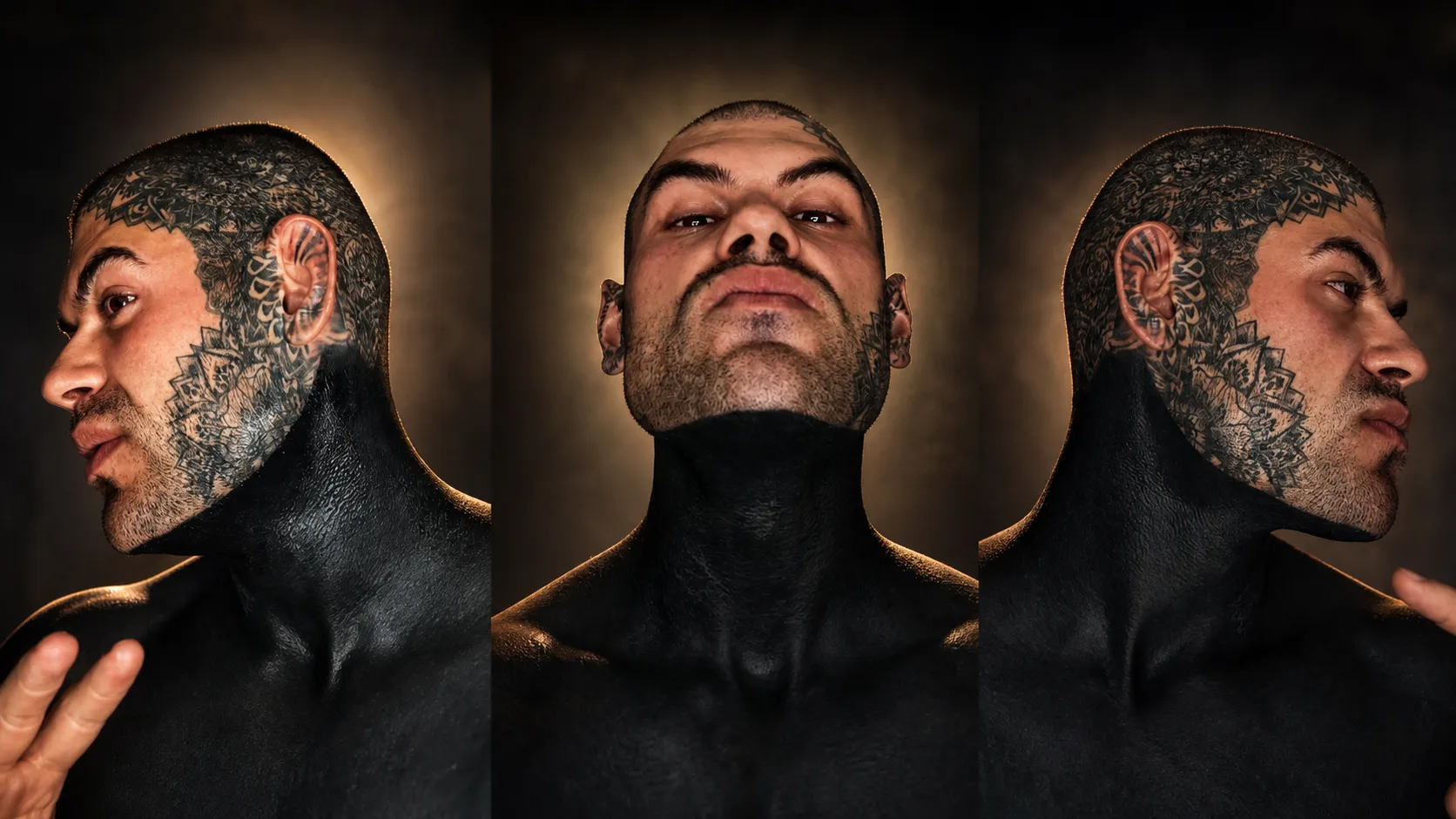
A man whose body is extensively covered in blackout tattoos has shared the hard truths he discovered after getting into the style at a time when there was very little clear advice about how to do it properly.
Dave Chudley first started his blackout tattoo journey in 2020, and since then the amount of black ink across his body has steadily expanded.
He was exploring the look before it became far more visible in mainstream culture through stars such as Machine Gun Kelly, who has gradually covered substantial parts of his own body with solid black tattoo work in recent years.
For anyone unfamiliar with the trend, blackout tattooing involves covering large sections of skin in dense black ink, often to mask older tattoos or create a striking, fully saturated appearance. Because the style uses heavy coverage over large areas, it usually takes multiple sessions, can be more painful than smaller tattoos, and demands careful aftercare and a highly controlled technique to avoid patchiness or unnecessary skin trauma.
Even so, Dave said he would approach things very differently if he were starting again. One of the biggest misconceptions, he explained, is the idea that blackout tattooing is simple because it lacks intricate linework or detailed imagery.
“‘It’s just colouring it in.’ No, it’s not just colouring it in. There’s so much to it, because it’s not just about colouring the skin in, it’s about not damaging the skin in the process, achieving that smooth finish, complete saturation,” he explained.
He believes many people underestimate how demanding the process really is until they experience it themselves.
“People think it’s easy, it is not, it’s far from it, it’s actually very, very difficult.”
According to Dave, there are three major things he wishes he had known at the beginning: blackout tattooing is much harder than it appears, it should be done by someone who specializes in it rather than a general artist, and in 2020 there was still no dependable method that artists widely followed.
His first blackout piece began on his forearm, but once it healed, it did not blend with the rest of his tattoos. The outcome was poor enough that he eventually had it removed and began again, with the work later extending further up his arm as he gained a better understanding of the process.
He said a big reason for that early problem was how undeveloped the style still was at the time.
“We didn’t know a lot about it back in 2020. It was more the artist will experiment along with you as they’re doing the work, maybe we need two passes, maybe this needle, maybe that needle,” he said.
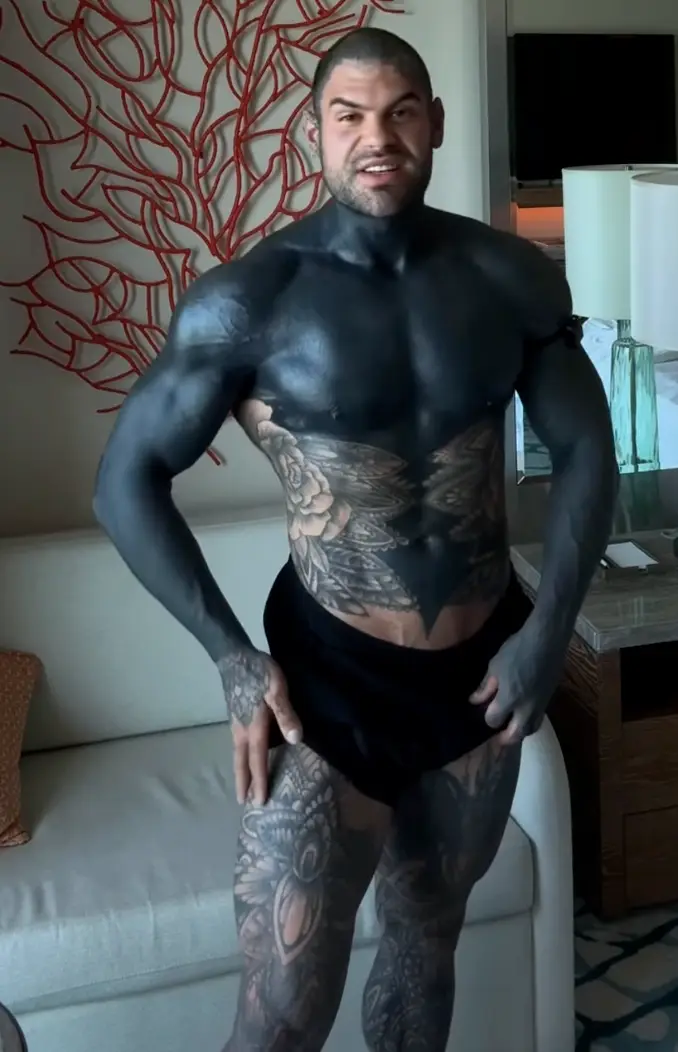
That experience is why Dave now strongly believes blackout work should be handled by a true specialist, not an artist simply trying something outside their usual area. These days, he travels to Berkshire to be tattooed by Johnny Ransom, who concentrates solely on blackout pieces.
“His saturation is the best. He knows exactly how to [do it], this is the only thing he does. He’s the best in the UK, potentially even in Europe,” he claimed.
Dave said the uncertainty that shaped his early sessions has now largely disappeared as the industry has developed a far clearer approach to the style. Tattooing remains a permanent skin procedure, and health authorities warn that inks are not approved for injection into the skin and that contaminated products can cause infections, which is one reason specialists and sterile practices matter so much in large-scale work.
“There is a very concise blueprint to how the work is done. We know what inks to use, we know what needles, we know what machine, we know exactly how to heal it in the best way possible.”
That change has happened alongside blackout tattooing’s rise from a niche style that few people knew much about to one of the most widely discussed looks in modern tattoo culture, helped by well-known figures bringing more attention to it. At the same time, dermatologists advise protecting tattooed skin from the sun with broad-spectrum SPF, since UV exposure can fade tattoos and, in some cases, trigger reactions in the ink.
Although the final look can seem intense, Dave said people rarely react much in person. Most of the strong responses, he added, come online, where videos of his tattoos often reach viewers far removed from the tattoo scene.
“The reactions come from online. When a video reaches viral status, it tends to get pushed out to audiences that aren’t involved in the tattoo industry. To people in the tattoo industry, it’s like, whatever, just blackout.”