

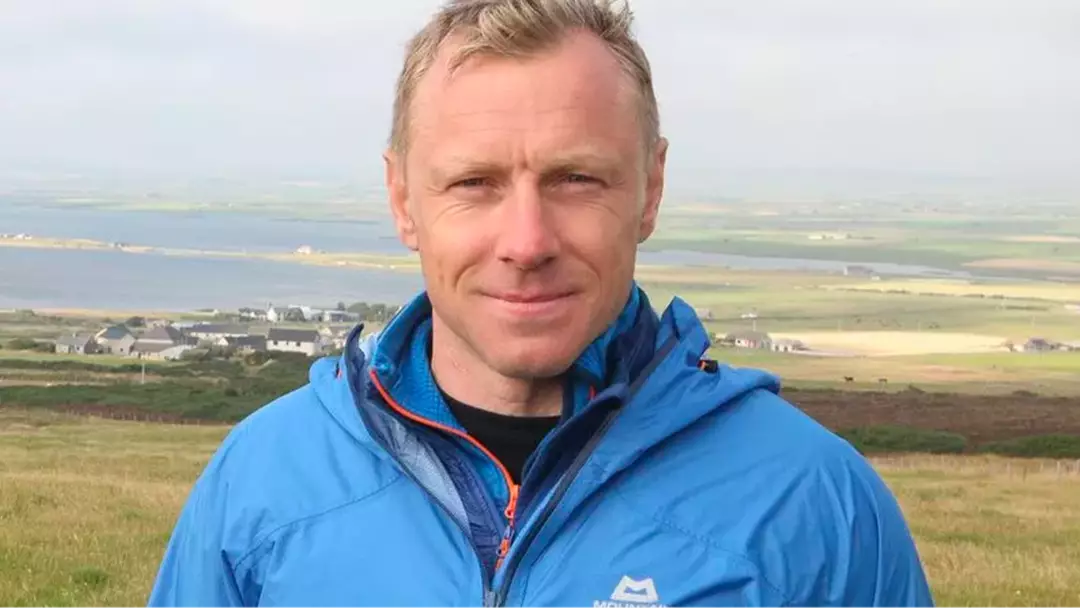
A man with a job few would envy has shared a harrowing experience involving a potentially lethal mistake.
Working with explosives is one of the most dangerous occupations, particularly when dealing with them underwater.
This is the unique career path of Andy Torbet, a Scottish cave-explorer and underwater bomb disposal specialist.
At 49, Andy has gained notoriety through presenting TV programs like *Coast* and *The One Show*. His job involves navigating through dark sewers and intricate cave networks to locate and neutralize deadly explosives.
Andy first encountered bomb disposal during his time in the Army and later specialized in underwater bomb disposal, combining his military skills with his passion for cave diving.
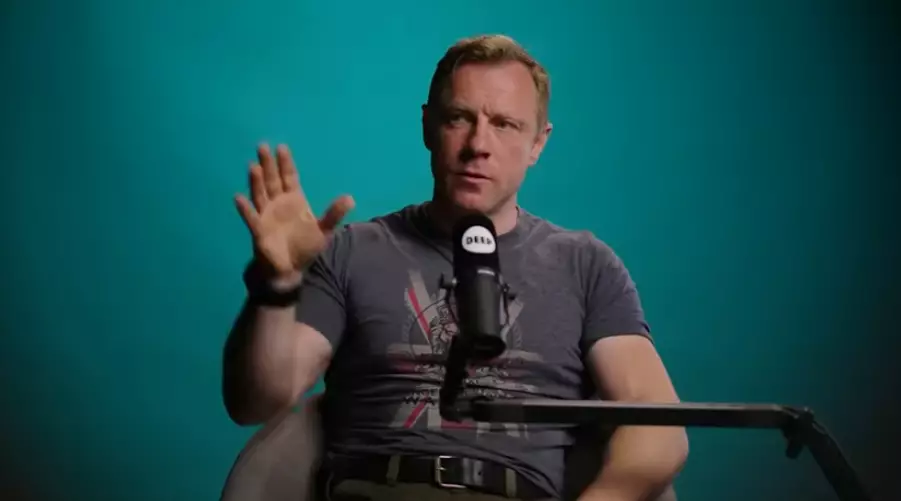
His work frequently places him in complete darkness, relying solely on touch to find explosives hidden in lakes, rivers, and sewers, knowing they could detonate with the slightest contact.
Though he maintains that his work is ‘actually very safe,’ Andy recounted a situation where he feared for his life.
This occurred when he found himself trapped in a submerged mine, surviving on the remnants of oxygen in his tank.
“It was quite late on in my career, which is why it happened. I was kind of complacent and it was in a flooded mine system,” he shared on the YouTube channel People Are Deep.
The water levels were ‘much higher than normal,’ necessitating the use of a guideline from the surface to navigate through the water.
“Even if you can’t see anything, you can hold the line, you’re going to get out,” Andy explained.
However, on that particular day, he opted to ‘follow the right-hand wall’ with his left hand, assuming it would lead him to safety.
“It was just like nil nil visibility and I turned around and it turns out this mine system is a honeycomb,” Andy remarked.
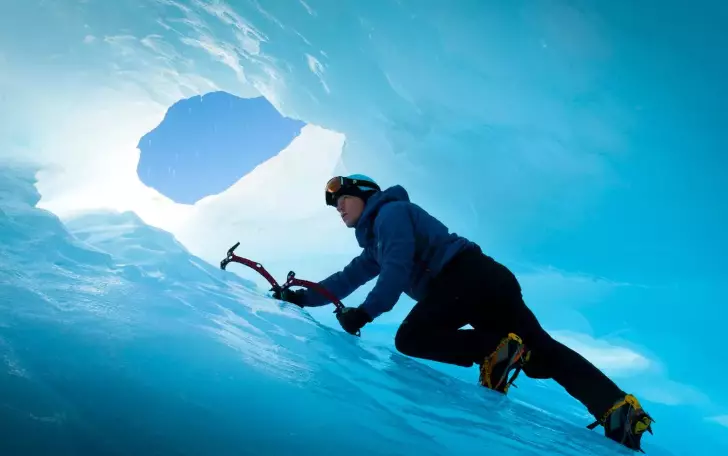
His plan to navigate by hand failed as he found himself unable to reach the surface.
At that depth, Andy realized he might have only 10 minutes of air left in his tanks.
“It did get to the point where I started thinking, ‘this is going to burn when that first bit of water enters my lungs, it’s going to feel like fire in my lungs,'” he admitted.
Fortunately, Andy drew on his training, remained calm, controlled his breathing, and eventually surfaced.
He stated: “That whole thing was preventable just be following the simple basic rules I’ve been following in cave diving for the last 10, 20 years. It’s entirely my own fault.
“It will never happen again.”
Andy continued: “I plan for every single thing going wrong. That’s why I’m still breathing. Complacency will kill you faster than any bomb. You have to turn up every single day ready.”
Despite the dangers, Andy finds the job exhilarating, noting that the team still relies on techniques from the 1940s.
He described the process: “Hand drill a tiny hole, pump in super saturated saltwater, let the salt crystallise and jam the fuse, then unscrew it. That’s it.
“Underwater, underground, in a claustrophobic crack of rock, pitch black, freezing water, completely alone – on paper it’s horrific, but if you plan for everything going wrong it’s actually very safe.”
Despite the frightening nature of the job, Andy loves the challenge and the opportunity to do what others avoid due to misunderstandings about risk.
Interestingly, Andy opts for a unique work attire, choosing comfort over traditional protective gear.
“Police are expecting the big bomb suits,” he noted. “We rock up in short-sleeve order and trousers. They go, ‘Where’s your protective gear?’ I’m like, if that goes off, you’re not surviving it anyway.
“Might as well be comfortable.”