


After being struck down by severe brain inflammation that left him feeling as though there was ‘an alien trying to get out’ of his head, a duathlete has spoken about the frightening path to discovering he had a rare infection.
Bill Lankford, a 62-year-old retired scientist from Cambridge, said the first signs that something was wrong appeared after he and his wife completed a demanding 50km swim-run event in Scandinavia in August 2025.
What began as fatigue, aching muscles and a fever initially seemed like an ordinary illness. For a short time, Bill thought he was improving, but the situation changed when a stubborn headache and flu-like symptoms returned. A Covid-19 test was negative.
About two and a half weeks after first becoming unwell, he visited his GP because the headaches had become increasingly severe, though no clear explanation was found.

When he went to hospital the following day, doctors suspected Lyme disease linked to a tick bite. He was given antibiotics and advised that he ‘should be feeling better’ soon.
Instead, the next few days became far worse. Bill developed overwhelming headaches, sleep disruption, balance problems, blackouts, and a sensitivity to ‘flickering lights and fast-moving images’.
He later returned to hospital, where he underwent extensive testing, including cerebrospinal fluid sampling. In September 2025, at the age of 61, he was diagnosed with tick-borne encephalitis.
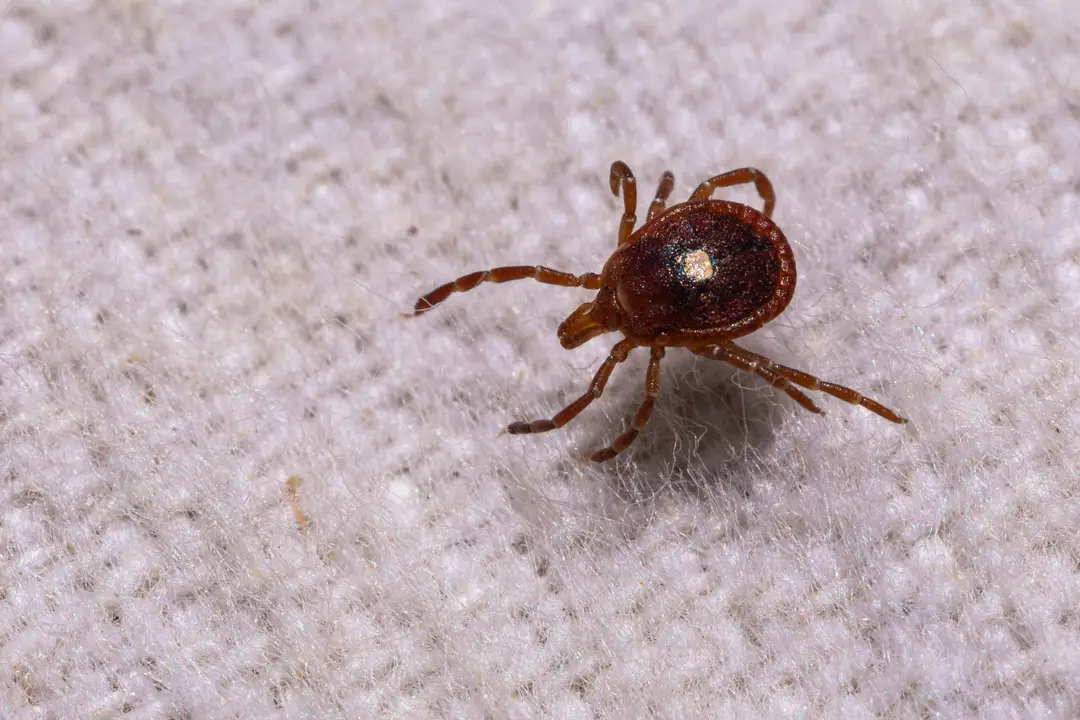
Tick-borne encephalitis is a viral infection spread mainly through tick bites. It does not cause symptoms in most people, but when it does, the illness can begin with a flu-like phase and then, in some cases, progress to inflammation of the brain or the lining around it. There is no specific treatment, and care usually focuses on hospital support while the body fights the virus.
Bill told PA Real Life: “It’s quite difficult for medical staff to diagnose. I was basically tested for everything from Aids to Zika… it’s only when they did a spinal tap of the cerebrospinal fluid that they found the virus.
“But due to the illness and brain pressure, I don’t remember any of the discussions about the diagnosis while in the hospital.
“I think for anyone who’s going through anything to do with encephalitis, you don’t take it all in.”
According to Encephalitis International, tick-borne encephalitis is a viral infection passed on through tick bites. It can trigger symptoms including flu-like illness, loss of consciousness, severe headache, memory difficulties, behavioural or emotional changes, and seizures.
Before falling ill, Bill said he had been in ‘very good shape’ and enjoying a ‘happy and healthy life’ with his wife Christina. Since 2016, the couple had regularly taken part in swim-run competitions.

He explained that the races involve alternating between open-water swimming and running through island chains or lake regions while competitors remain in a ‘wetsuit and shoes’ from start to finish.
In early August 2025, Bill and Christina travelled to Stockholm, joined friends for practice sessions, and then competed in the main event on August 9 in the Aland archipelago between Sweden and Finland.
Bill said: “You’re running through the forests, cliffs and beaches, and swimming across the bays and in between the islands. It was about 10km of swimming and just over 40km of running.”
After the race, the couple spent time unwinding with tubs, saunas, camping and sightseeing. During that period, Bill noticed marks on his skin that he assumed were insect bites from midges or mosquitoes.
The NHS says tick bites are often painless, though they may leave a red lump and can also cause swelling, itching, blistering or bruising. It also advises removing ticks as soon as possible and with care, using fine-tipped tweezers to grip the tick close to the skin before pulling steadily upward without crushing it.
Roughly five days after the event, while on the way back to the UK, Bill began to feel as though he was coming down with a cold. He experienced tiredness, fever and muscle pain.
He said: “I completely rationalised it, with all of the transport we took and people from different countries. Of course I might get a cold because my immune system is probably a bit depressed from the event.”
Although the symptoms briefly eased after about a week, the relief did not last. A persistent headache appeared, along with additional flu-like illness.

By the time he saw his doctor around two and a half weeks after first falling ill, the headache had become much more intense. As there was no obvious cause, he was advised to keep an eye on it and seek hospital care if it failed to improve.
That recommendation led to the hospital visit where Lyme disease was suggested and antibiotics were prescribed. But after three days on the medication, the pain reached another level.
Bill said: “Now my headache is like an alien trying to get out of my head. There’s no words in the English language to describe how painful it is.”
Even with paracetamol and ibuprofen, he said he could only sleep for around 20 minutes at a time. He also struggled with coordination and balance, found he could not properly lift his feet, became sensitive to bright lights and moving visuals, and suffered ‘momentary blackouts’
Eventually, he took a taxi to A&E, where he was admitted to hospital and put on an IV drip.
For three days, doctors carried out a broad range of tests, but at first they had ‘no idea’ what was wrong. Encephalitis International says tick-borne encephalitis is rare in the UK, which can make it harder to identify quickly, although health officials now say cases have been reported in people believed to have acquired the infection in the UK as well as abroad.
Because of his recent trip to Scandinavia, medics went on to test his cerebrospinal fluid, which confirmed the diagnosis.
Bill spent a week in hospital. The IV treatment began to help, but recovery was far from immediate.
Bill said: “Without anyone at home, I couldn’t have looked after myself. It’s a bizarre thing where you come out of hospital in a wheelchair and then go to your bed and just tough it out.”
The UK Government says there is no specific treatment for tick-borne encephalitis, although vaccination is available to reduce the risk for people travelling to areas where the virus is common and planning to spend time outdoors. The NHS says the vaccine is recommended for some travellers to parts of Europe and Asia and usually requires at least two injections before travel, with the first dose ideally given at least a month before departure.
Bill said he would urge ‘anyone who is active’ in areas where ticks are common to ‘consider’ being vaccinated.
In the early stages after leaving hospital, he said he was unable to ‘walk more than 500 metres’ and needed a walking stick because of continuing balance and coordination problems.
He has also dealt with spontaneous muscle tremors, poor spatial awareness, nightmares, chronic fatigue, difficulty regulating emotions, anxiety, and short-term memory loss.
Nine months after being diagnosed, Bill said his physical condition has gradually improved through longer and longer dog walks, short bike rides and pilates.
Looking back on how far he has come, Bill said: ‘In terms of physical fortitude, I’m pretty proud.
“I would never be able to do the long distance events that we did – that’s clearly off the table – but I’m able to do much shorter events. It’s not perfect, but I’m really pleased with that.’