

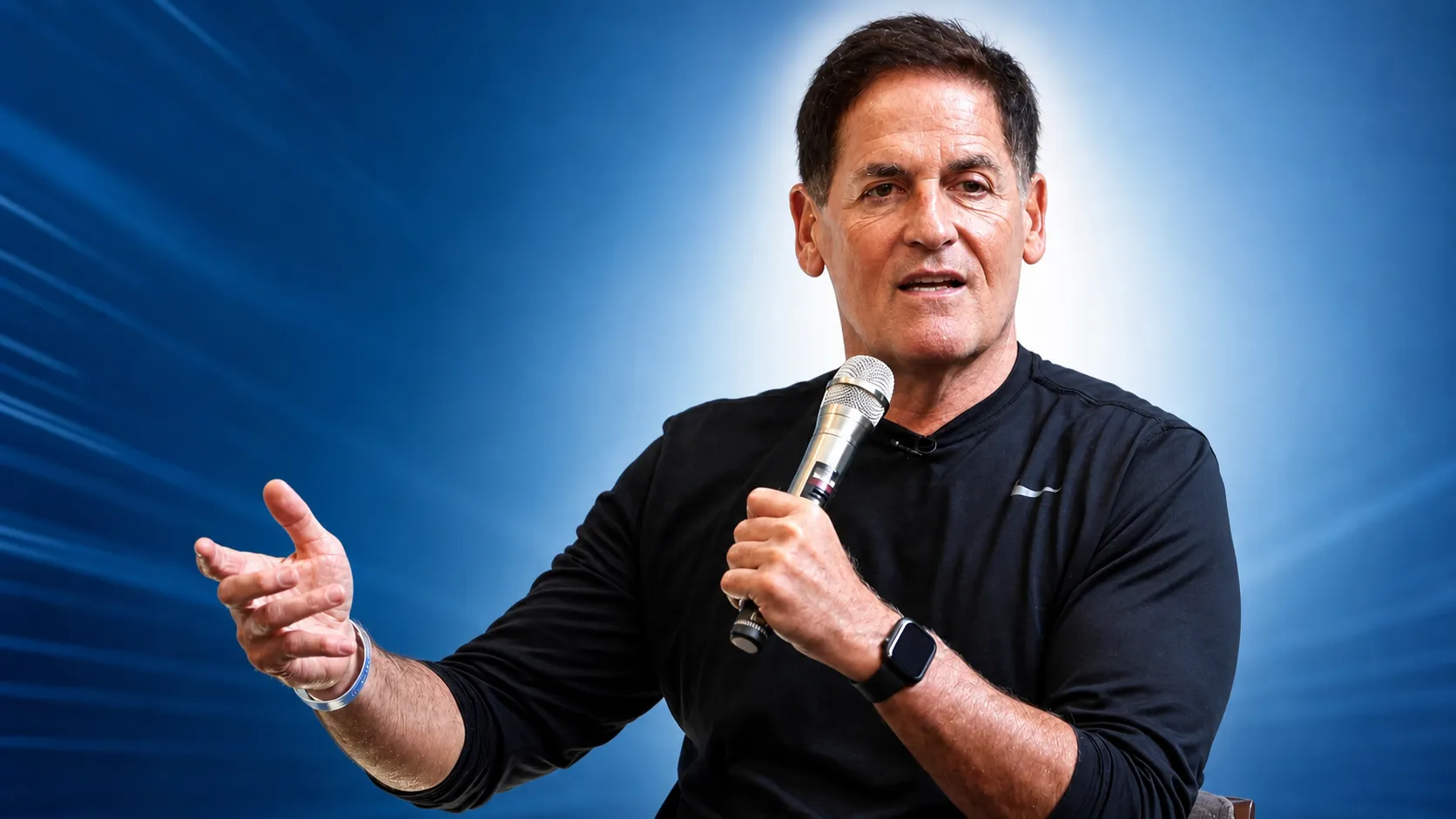
Mark Cuban has shared a blunt view on student borrowing, arguing that taking on major college debt can seriously damage a person’s future.
The billionaire entrepreneur, who earned a BS in management from Indiana University, first became a millionaire in 1990 at the age of 32 after selling his computer consulting company, MicroSolutions, a decade after graduating.
Since then, his wealth and profile have continued to grow, eventually leading to his role as one of the well-known investors on ABC’s Shark Tank.
Cuban has long been known for offering business advice while also attracting attention for his direct style. His latest remarks came during an appearance on Logan Paul and Mike Majlak’s IMPAULSIVE podcast, where the conversation turned to higher education.
When Paul asked what he thought about the education sector, Cuban did not soften his response.
“It’s really f****d up,” he said.
He then expanded on why he believes borrowing heavily for a degree is a serious mistake.
“If you can’t afford it you can’t afford it. And the dumbest thing you can do is take out a s**t ton of loans and f**k up your future,” the 67-year-old added.
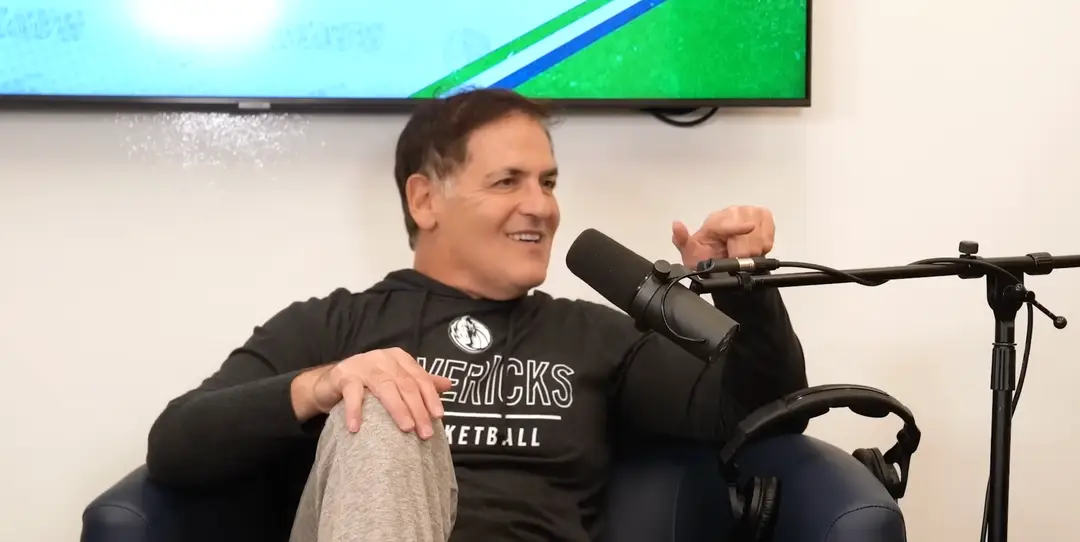
Cuban said he regularly encourages students to begin at community college instead of immediately committing to a more expensive university.
“I tell people go to community college. Accounting class is accounting class whether it’s at a community college or at Harvard. Psychology is psychology for the most part.”
He suggested using those early semesters to complete foundational coursework before moving on to a school that makes financial sense.
He then advised people to get those ‘first couple of years of introductory classes,’ before saying to ‘transfer where you can afford to go.’
His comments come at a time when student debt remains one of the biggest financial burdens facing American borrowers. Outstanding student loan balances in the U.S. Stood at about $1.66 trillion in early 2026, and serious delinquencies have also climbed as more borrowers struggle to keep up with payments after the end of the pandemic-era pause.
Cuban also argued that there is not a dramatic difference between the value offered by lower-cost four-year schools and leading public universities.
“You’ve got to go to a school that you can afford, because the delta between the most basic four year school and the best public universities is really small,” he claimed.
That view lines up with a broader cost argument that many families face. Public community colleges typically charge far less than four-year schools, making them a lower-risk way to knock out general education credits before transferring.
His comments quickly drew a range of reactions online after the clip spread across X, formerly Twitter.

Some agreed with parts of what he said, while others felt the issue depended heavily on individual goals and circumstances.
One penned: “It really just depends on your goals. If you want to work for a big corporation, then a university is helpful. If you want to work locally, then a community college works fine. A lot of times, people just want to get away and experience new things, so they attend big universities.”
A second wrote: “In terms of knowledge, 100%. But the way the world works. You’re gonna need to hustle A LOT harder to get an equivalent job in high finance for example.”
Not everyone agreed with Cuban’s perspective, with some pushing back strongly against the idea of dismissing student loans altogether.
However, others weren’t having any of it, with one writing: “Go to college. Learn. Experience different cultures, time management, living away from parents. Do not listen to any billionaire.”
Another person argued that borrowing can still be worthwhile when handled carefully and paired with clear opportunities.
Another penned: “As a first generation college student who received scholarships and grants to attend Dillard University, taking out $10K in loans each year was the best investment towards my future. My network and access to opportunities shifted completely. Just take out loans responsibly.”