

Plenty of fans think they know who will lift the World Cup, but one prediction is getting extra attention because its creator has already called the last three winners correctly.
German economist Joachim Klement has built a strong record when it comes to forecasting the tournament, and his latest call has resurfaced as the 2026 FIFA World Cup gets under way across the United States, Canada and Mexico.
He backed Germany to win in 2014, then correctly turned away from his own nation in 2018 and instead picked France.
Four years later, he also successfully tipped Argentina to go all the way in 2022.
The 2026 tournament, which runs from June 11 to July 19 and features 48 teams playing 104 matches, is being staged across 16 host cities in the three co-host nations.
Now attention has turned to who he believes will come out on top this time.
His answer is not one of the host nations.
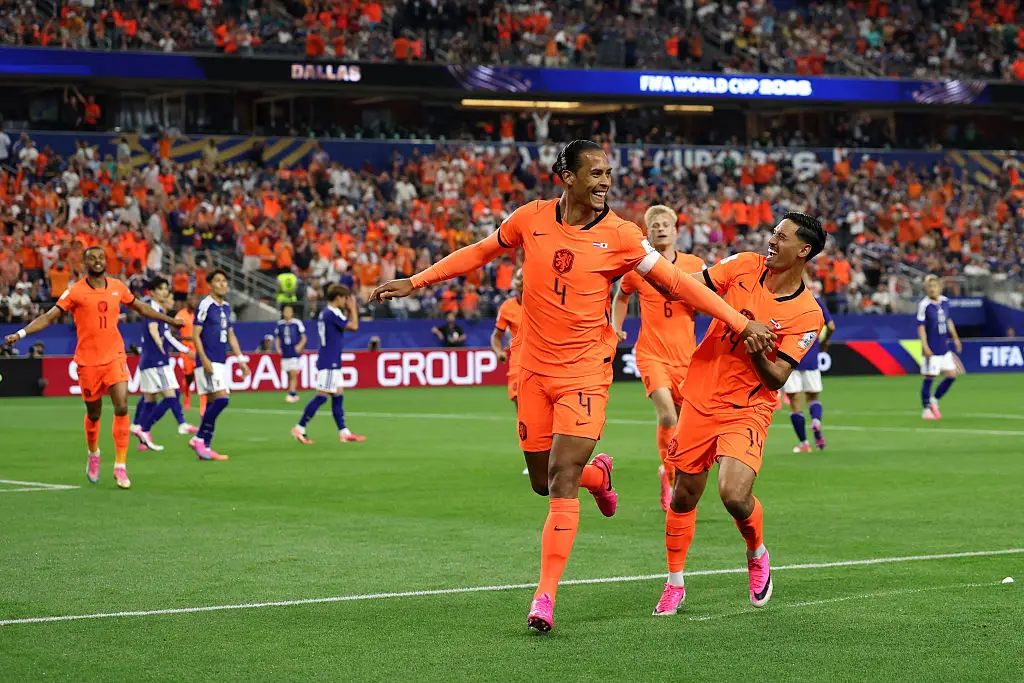
Instead, Klement is backing the Netherlands, a side that has never won the World Cup and is not widely viewed as one of the main favorites.
So how does he arrive at these calls? Klement relies on an economic model.
“It uses economic variables to try to predict which teams are likely to win,” he said.
German mathematician Joachim Klement has correctly predicted the past three FIFA World Cup winners. He explains to CBS News' @RamyInocencio why he picked a non-favorite to win it all. pic.twitter.com/91rWMwi8kj
— CBS News (@CBSNews) June 10, 2026
According to Klement, the model is based on four main factors: a country’s population, its climate, whether ‘teams are wealthy enough to have the infrastructure to develop talent,’ and its current FIFA World Ranking.
He argues that nations with larger populations have a ‘bigger talent pool,’ while climate matters because players benefit from being able to play soccer ‘all year round’.
That part of the theory is especially notable in a tournament being played in North America during the summer, with FIFA already confirming three-minute hydration breaks in every match to protect player welfare.
The rankings component helps provide a snapshot of where each side stands at the moment.
Klement has also pointed out that the ‘usual suspects’ – the ‘soccer powerhouses’ Brazil, Argentina, Germany, France and Spain – are typically ‘near the top.’
Explaining why he likes the Netherlands, he told the outlet: “Arguably, they’ve never won the World Cup so far, but for being a small country, they have been in three World Cup finals already.”
He added that while the Dutch may not have any ‘huge stars’ on the level of Messi, they do have ‘no weak spot’ and a ‘great defence’.
Whether that makes them champions remains to be seen.
Klement is not alone in making a forecast, though other experts have reached a different conclusion.
Researchers from the University of Innsbruck also ran their own assessments of the tournament and put Spain at the top of the list.
Their analysis gave every competing team a separate probability of winning the trophy.
To build those estimates, the researchers examined previous results, bookmaker odds, squad market values and player ratings.
Spain emerged with a 14.5 percent chance of winning the competition, while England and France were tied for second on 12.4 percent.
For now, the debate continues until the tournament delivers the real answer.