

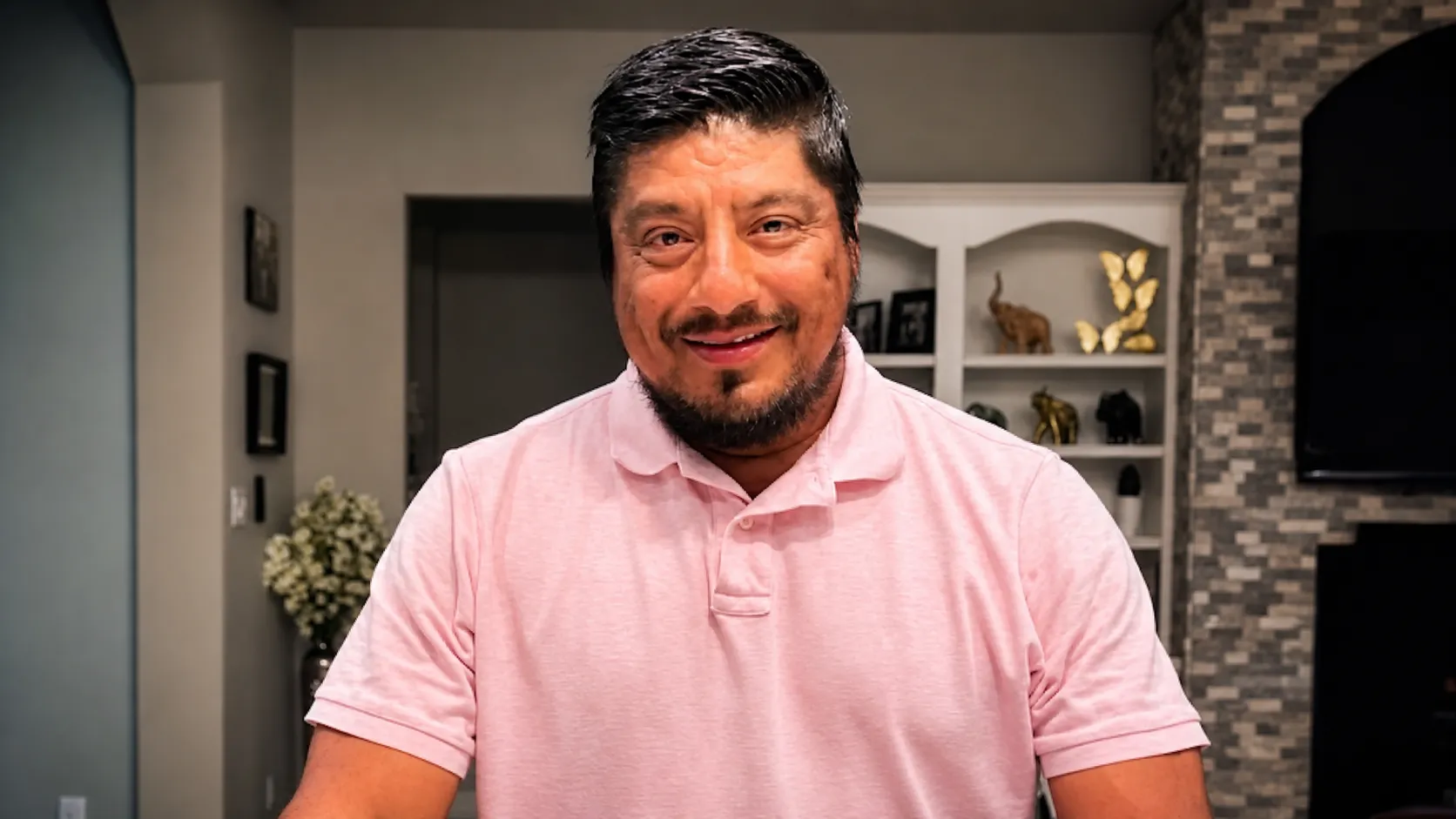
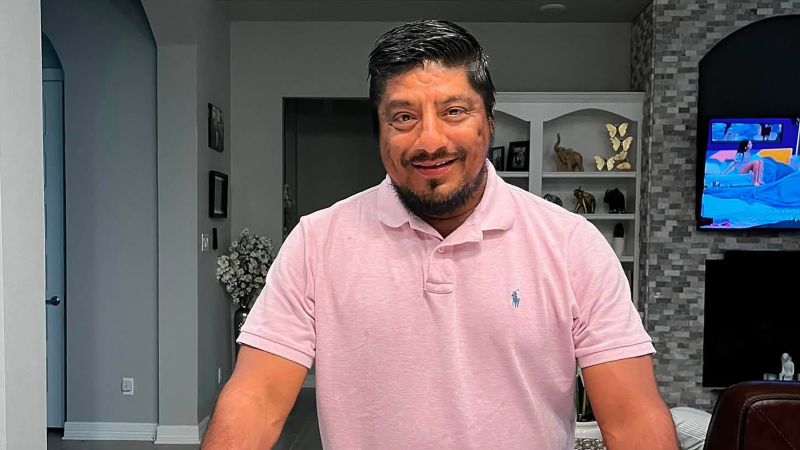
A 52-year-old Mexican construction worker who spent 35 years building Houston’s suburbs was mourned this week as hundreds gathered to demand answers after he was fatally shot by an Immigration and Customs Enforcement officer during a traffic stop in the city’s predominantly Latino East End neighborhood.
Lorenzo Salgado Araujo was killed early Tuesday morning, July 7, while driving a white van to pick up his construction crew members before heading to a job site. He left his home at sunrise—as he did most days—with the intention of finishing work on several homes. Instead, his son found him in a video taken at the scene, bleeding and moaning on the ground near a barbershop on Canal Street.
Salgado Araujo’s death has set off waves of grief and anger across Houston and beyond, with community members, elected officials, and civil rights groups calling for an independent investigation into the shooting. His story has also drawn comparisons to other controversial ICE-involved shootings during the Trump administration’s intense immigration enforcement campaign, raising questions about how federal officers account for their use of force.
According to his son Ronaldo Salgado, his father came to America as a teenager after meeting his future wife in Mexico and deciding they wanted a better life. The couple built that life together in Houston, where Salgado Araujo established himself as a construction entrepreneur. He built houses in the suburbs, started his own business, and assembled his own crew of workers. All three of his sons are American citizens. His oldest son became a teacher, one is an engineer, and another is studying engineering in college. The family said he had no criminal record and was “a simple man” and “a family man” who “left for work at sunrise and loved to pet his dog and sit on his porch listening to music.”
At the time of his death, Salgado Araujo had been working toward securing legal status in the United States after prioritizing his family’s wellbeing for years. He was in the process of obtaining a work permit through the legal process.
The Department of Homeland Security said ICE agents were conducting a “targeted enforcement operation” when they attempted to stop his vehicle around 6:50 a.m. On Tuesday. The agency alleged that Salgado Araujo ignored verbal commands and “weaponized his vehicle in an attempt to run over an ICE law enforcement officer,” prompting an officer to fire his weapon “in self-defense.” ICE said he rammed their vehicle and attempted to evade arrest.
However, that account has come under significant scrutiny. A congresswoman whose district includes the neighborhood where the shooting occurred said ICE confirmed that Salgado Araujo was not even the target of the operation—federal agents had been looking for someone else. Three men who were in the van with Salgado Araujo and have spoken through their attorney disputed the federal government’s version of events entirely, saying that at no point did they use the van to ram ICE agents and that the officers were never in danger.
Salgado Araujo’s son suggested his father may have panicked when he saw unmarked vehicles following him, concerned that someone was trying to steal his van and the work tools inside—something that had happened to him before. He said if his father had seen any emblem indicating law enforcement, he would have complied and stopped.
The inconsistencies between the federal account and witnesses’ descriptions echo previous controversial ICE shootings. Federal officials claimed that U.S. Citizen Renee Good tried to run over ICE agents in Minneapolis in January, but video footage later contradicted that narrative. Federal officials also claimed a similar self-defense scenario in another Minnesota case, but videos later called that account into question as well.
The incident has also raised concerns about accountability. The officers involved in the Houston shooting were not wearing body cameras, with DHS blaming government shutdowns for the lack of equipment. Federal officials have refused to release the name of the officer who fired the shot, declined to say how long he has worked for ICE, and have not disclosed whether anyone involved has been placed on administrative leave.
The Harris County Medical Examiner ruled Salgado Araujo’s death a homicide, meaning he was shot and killed by another person. He was shot in the abdomen and died at the hospital.
His death has become the focal point of intense community mourning and activism. On Wednesday evening, just 36 hours after the shooting, hundreds of people gathered in Houston’s Magnolia Park neighborhood, the historic heart of the city’s Latino community, to hold a vigil honoring Salgado Araujo and demanding justice. Candles, flowers, handwritten notes, stuffed animals, and crosses were left at the spot where he died. Protesters marched down Canal Street chanting “ICE out of Houston,” and a newly crafted mural was dedicated to his memory.
Family members who spoke at the vigil, visibly emotional, expressed their gratitude for the large community turnout. A statement from the family read at the gathering outlined three requests: a full and independent investigation into his death, reform to “ambush-style” ICE tactics and the use of unmarked vehicles, and that the community help support Maria, his widow and their mother.
The shooting has drawn support from elected officials, including Democratic Congress members Sylvia Garcia, Al Green, and Christian Menefee, all of whom have called for a transparent and thorough investigation. More than $360,000 has been raised through a GoFundMe campaign organized by the Salgado Araujo family and the League of United Latin American Citizens to help cover funeral expenses, legal costs, and living expenses for the family.
Mexico’s president said her administration will pursue legal action beyond diplomatic channels, stating the country will file criminal charges in U.S. Courts over alleged killings linked to ICE operations. She said Mexico “cannot stand silent” in the face of deaths of Mexicans “whose only crime is working honestly in the United States.”
Multiple investigations are now underway. The Department of Homeland Security’s Office of the Inspector General is investigating the shooting, and the FBI is investigating an alleged assault on a federal law enforcement officer. The Harris County District Attorney’s office is conducting its own probe but has complained that access to key evidence remains under federal control, including Salgado Araujo’s work van, which prosecutors say is “one of, if not the most crucial piece of evidence.”
For the community that knew him, Salgado Araujo represented not a headline about immigration enforcement, but a man who gave his family the opportunity to build successful lives in America through decades of hard work. His son captured that distinction when he said: “He did not deserve to die. He did not deserve to be reduced to a headline of Mexican man shot and killed by ICE.”