


Miami tied its all-time heat record Tuesday as the temperature hit 100 degrees for the first time in 84 years.
The mercury reached the triple-digit mark at 2:47 p.m. At Miami International Airport, matching the only other 100-degree reading ever recorded in the city on July 21, 1942, according to the National Weather Service. Forecasters have been recording temperatures in Miami since the summer of 1895, making this one of the longest-running weather datasets in the United States.
“Scorcher!” Florida meteorologist Matt Devitt said on Facebook, according to the Miami Herald. “Today was the city’s hottest day in 84 years and only the second time reaching 100.”
The 100-degree reading also shattered the daily record for August 19, which had stood at 96 degrees since 2022. The previous daily benchmark had itself been a relatively recent record in a city where triple-digit heat had remained elusive for more than eight decades.
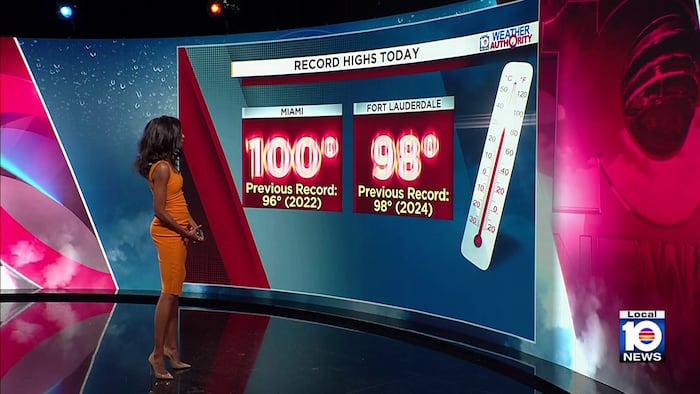

West winds prevented the usual ocean breeze from developing along the coastline, which generally provides a cooling effect in the city Miami’s weather team. Without that moderating influence from the Atlantic, temperatures climbed unimpeded through the afternoon.
Residents baked in “feels-like” temperatures well over 100 degrees as health officials warned them to avoid going outside during the hottest part of the day. The dangerous conditions extended well beyond Miami itself, with more than 72 million people reportedly under heat alerts across the southeastern United States as of Wednesday.

The Miami heat advisory ended at 7 p.m. Tuesday, and cooler temperatures were forecast for Wednesday, with highs around 95 degrees and a chance of rain. That slight moderation offered little relief to a region that had been enduring an extended stretch of exceptional warmth.
Miami had already been flirting with historic heat throughout the summer. The city had recorded 40 consecutive days with temperatures of 91 degrees or higher as of late July, setting the longest such streak ever recorded. That prolonged heat wave had primed the region for a potential all-time record, with forecasters watching closely as August progressed. The 100-degree reading represented the culmination of that pattern, validating warnings that had circulated among meteorologists for days ahead of the event.
The 1942 record that Miami tied Tuesday had stood as an outlier in the city’s climate history, set during a summer when World War II raged overseas and Franklin D. Roosevelt occupied the White House. For decades, that 100-degree reading had seemed increasingly anomalous as Miami grew into a major metropolitan area with millions of residents, many of whom had never experienced official triple-digit temperatures in the city.
Tuesday’s conditions were part of a broader heat dome that has gripped much of the Southeast, with dangerous and life-threatening temperatures extending from Florida through Georgia and into the Carolinas. The extreme weather has strained power grids, threatened vulnerable populations, and prompted emergency declarations in multiple jurisdictions.
The National Weather Service’s climate report for the day confirmed the 100-degree maximum with an “R” notation indicating a record was set or tied. That official verification came after preliminary reports circulated on social media Tuesday afternoon, with residents sharing thermometer readings and expressing disbelief at the milestone.
Meteorologists noted that while 100 degrees is rare in Miami, the city’s subtropical location and humidity can make lower temperatures feel equally oppressive. The heat index on Tuesday likely exceeded 110 degrees in many areas, creating conditions where prolonged outdoor exposure could lead to heat exhaustion or heat stroke within minutes.
The forecast for the remainder of the week called for continued above-normal temperatures, though not at record levels, with typical afternoon thunderstorms expected to provide brief respites from the heat.