

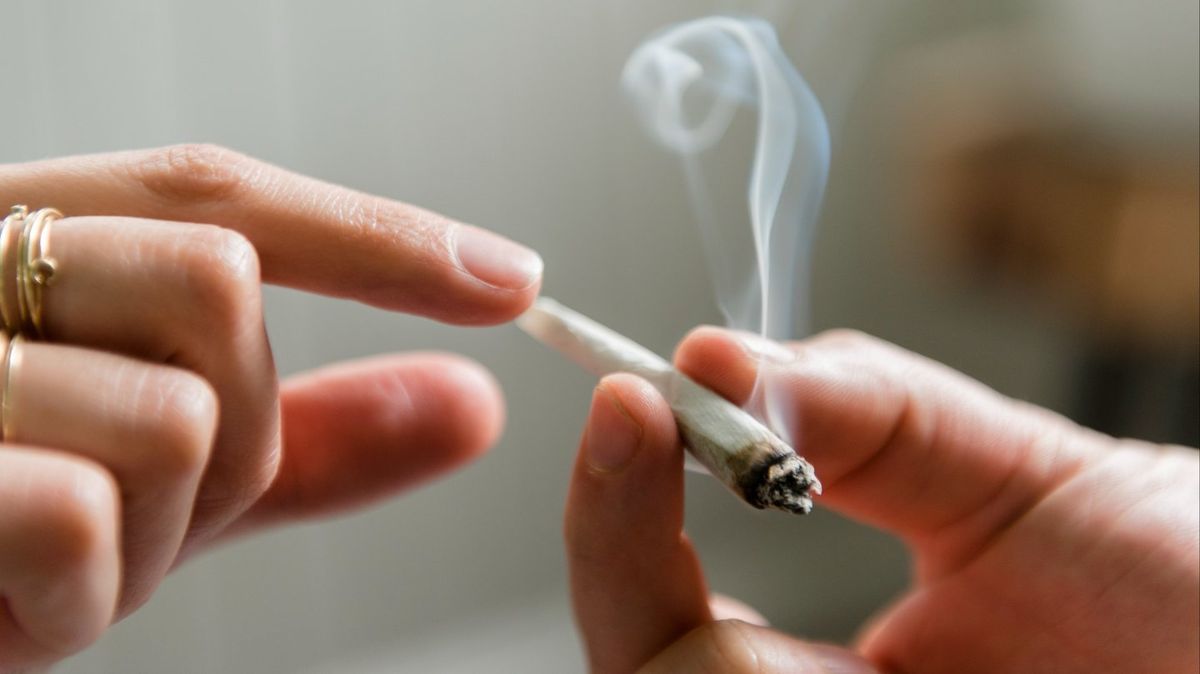
Federal cannabis policy moved another step toward broader legalization yesterday after the US Department of Justice shifted marijuana to Schedule III.
“The Department of Justice is delivering on President Trump’s promise to expand Americans’ access to medical treatment options,” acting attorney general Todd Blanche said in a statement announcing the change.
He added: “This rescheduling action allows for research on the safety and efficacy of this substance, ultimately providing patients with better care and doctors with more reliable information.”
While the change aligns federal policy more closely with the many states that already permit legal cannabis sales, it’s still important to remember marijuana is a psychoactive drug that can affect your body quickly—whether that’s from a bong rip or when an edible finally kicks in.

How cannabis shows up in your system depends on factors like the strain, dose, and method of use.
Smoke tends to work fast: Healthline reports effects can begin in as little as two to ten minutes. Edibles are slower, often taking 30 minutes to two hours before you notice much.
Once THC, cannabis’s main intoxicating compound, reaches the bloodstream, it can raise heart rate—often by 20 to 50 beats per minute—and that increase can persist for hours, according to WebMD.
You may also notice bloodshot eyes, which happens when vessels in the eyes widen. Many of cannabis’s effects relate to the endocannabinoid system, a network in the body that interacts with compounds found in the plant.
Tetrahydrocannabinol (THC), the substance in weed that gets you high, can attach to receptors linked to things like mood and appetite, prompting dopamine release and producing the “high.”
If you’ve smoked, THC is typically fully absorbed by around 20 minutes. With edibles, the timeline is longer because the drug must be processed by the liver first. After that, the brain can experience heightened pleasure and euphoria, and many people feel calmer and more relaxed.

That said, cannabis doesn’t feel relaxing for everyone. Depending on the person and the strain, it can trigger anxiety or even a panic response.
For others, it leads to the “munchies,” a sudden urge to eat. THC can affect the olfactory bulb, sharpening taste and smell and encouraging the brain to interpret those signals as hunger.
By about 30 minutes, many users are at or near the peak (timing varies widely), and the main effects may stick around for five to six hours.
However, impairment can linger far longer—some effects on judgement and focus may last up to 24 hours. More concentrated forms, such as dabbing through pipes or bongs, can produce a shorter, more intense high that often fades after about one to three hours.
The new classification could also make cannabis easier to obtain through legitimate channels, which may reduce reliance on illegal sales.
Dr Carl Hart, a psychologist and neuroscientist from Columbia University explained: “When you legalise a compound, far more people would go to the legal market, just because it’s simple and people don’t have access to the black market. The illicit market would certainly dwindle.”
The definition of a Schedule III drug is: “Drugs, substances, or chemicals are defined as drugs with a moderate to low potential for physical and psychological dependence.
“Schedule III drugs abuse potential is less than Schedule I and Schedule II drugs but more than Schedule IV.
“Some examples of Schedule III drugs are: products containing less than 90 milligrams of codeine per dosage unit (Tylenol with codeine), ketamine, anabolic steroids, testosterone.”