


Hang Mioku has remained permanently disfigured despite multiple surgeries to remove hundreds of grams of cooking oil from her face.
Mioku, now a former South Korean model, was 28 when she first went under the knife for a cosmetic procedure. What began as a single treatment spiraled into an all-consuming addiction as she chased smoother skin through repeated operations.

Her career took her to Japan, where she continued undergoing treatments that left her face considerably swollen and enlarged. The physical changes mounted until physicians eventually refused to operate further. One doctor suggested she might be suffering from a psychological disorder.
Mioku briefly received professional support for her plastic surgery addiction. The intervention failed to hold, and she soon returned to her destructive patterns. This time she obtained vials of silicone and began injecting the substance into her own face.
When her silicone supply ran out, Mioku turned to an even more dangerous substitute. She began injecting ordinary cooking oil directly into her skin.
Medical literature documents the catastrophic consequences of this practice. A study published in the Brazilian Journal of Plastic Surgery found patients who injected oil for cosmetic purposes suffered inflammation, abscesses, and hard oedema — excess fluid trapped in connective tissues. The oil can also form hard masses called oleoma beneath the skin, inflicting permanent damage on affected areas.
A separate study in Acta Biomedica catalogued additional horrors: tissue damage leading to ulcers, abscesses, and fistulas, abnormal connections between body parts that can channel blood, pus, or feces to places they should never reach.
Mioku’s self-administered injections triggered extreme swelling that rendered her face unrecognizable. The grotesque disproportion between her enlarged head and slight frame earned her a cruel nickname in her hometown: locals called her the “standing fan.”
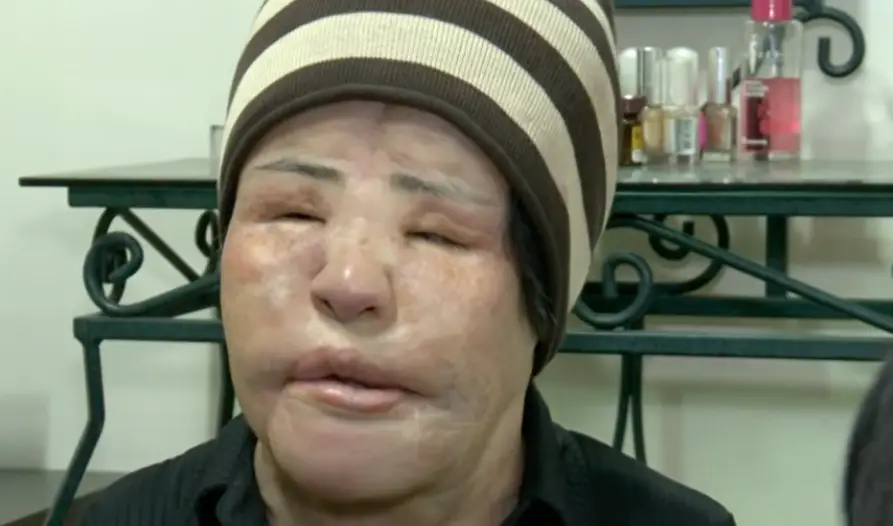
Her case eventually drew national attention in South Korea through television documentaries. Viewers moved by her plight sent donations that funded multiple corrective surgeries. Surgeons have since removed hundreds of grams of oil from her face, significantly reducing its swollen size.
The improvement has its limits. Mioku remains disfigured from the damage she inflicted on herself.
She is not the only public figure to suffer this particular nightmare. Mexican actor Lyn May was also left permanently disfigured after falling victim to a scam involving unregulated fillers. May’s injections contained a toxic mixture of baby oil, cooking oil, and water that produced similarly devastating facial swelling.

The two women’s cases stand as extreme examples of what happens when cosmetic procedures escape medical oversight and rational limits. Where Mioku escalated her own regimen after legitimate doctors cut her off, May was deceived by others into accepting dangerous substances.
Mioku’s decades-long ordeal traces back to that first procedure at 28, followed by her move to Japan and the accelerating cycle of operations that doctors eventually refused to continue. The cooking oil injections came after the silicone, each stage representing a further descent beyond the boundaries of safe or sane practice.