

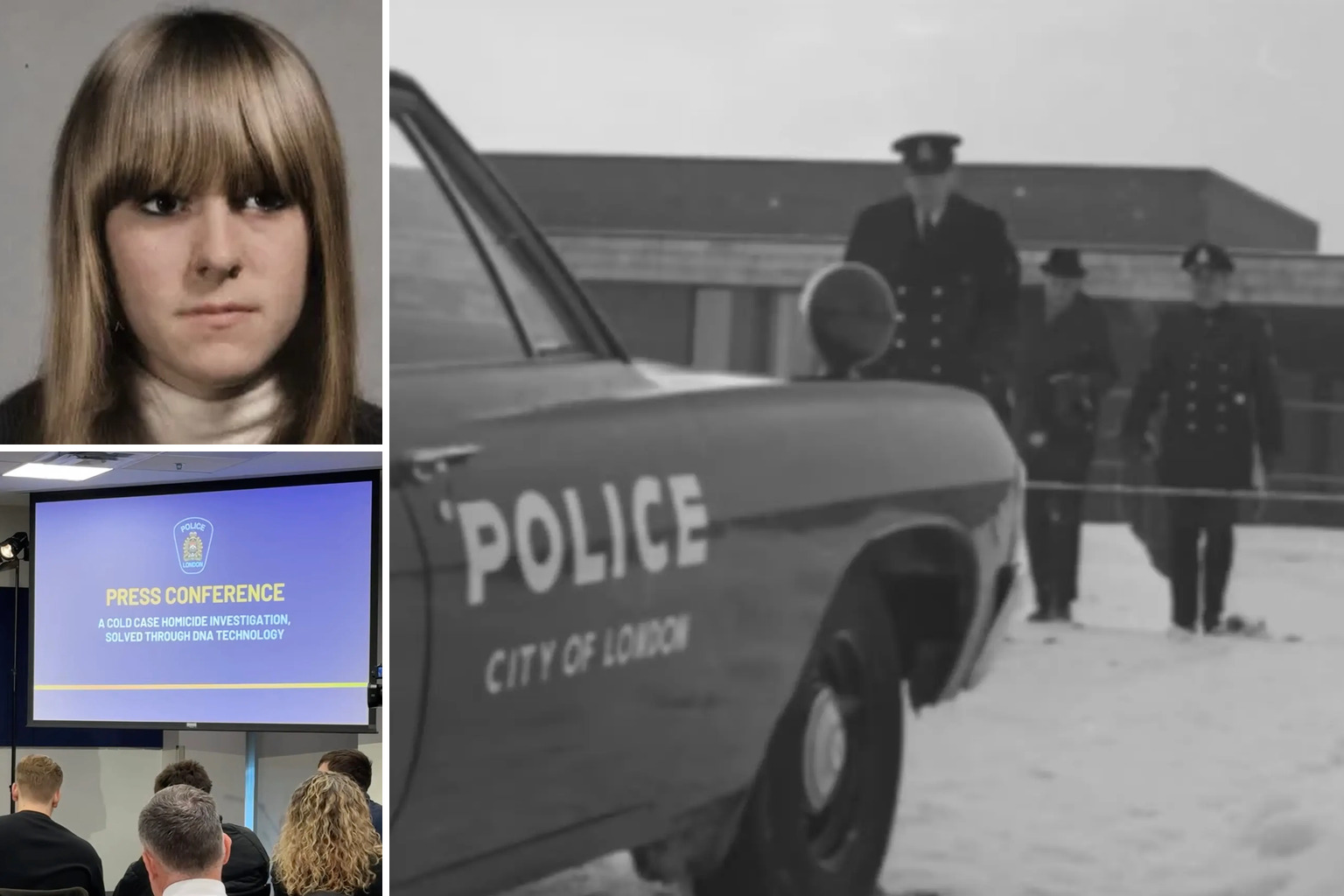
Canadian investigators have identified the killer in a 1968 slaying that went unsolved for nearly six decades.
London Police Chief Thai Truong announced Monday that Jacqueline “Jackie” Dunleavy, 16, was murdered by Michael Joseph Moore, then 25, whose name had remained unknown to her family and detectives until modern DNA testing closed the case.
Moore died in 2018, but Truong stressed that the evidence would have supported his arrest had he lived. “For nearly six decades Jackie’s family has lived with a loss that no passage of time could ever erase and with unanswered questions about who was responsible for her death,” Truong said in a statement. “Today we are in a position to provide answers.”
Truong described the victim as “a daughter, a sister, a friend, and a young girl who had her entire life ahead of her.”
Jackie was last seen alive on January 9, 1968, leaving the convenience store in London, Ontario, where she worked. Less than two hours after her shift ended, three young people discovered her body on school grounds several miles away. She was pronounced dead at the scene.
A post-mortem determined strangulation as the cause of death. Reports later indicated she had also suffered a head injury and sexual assault.
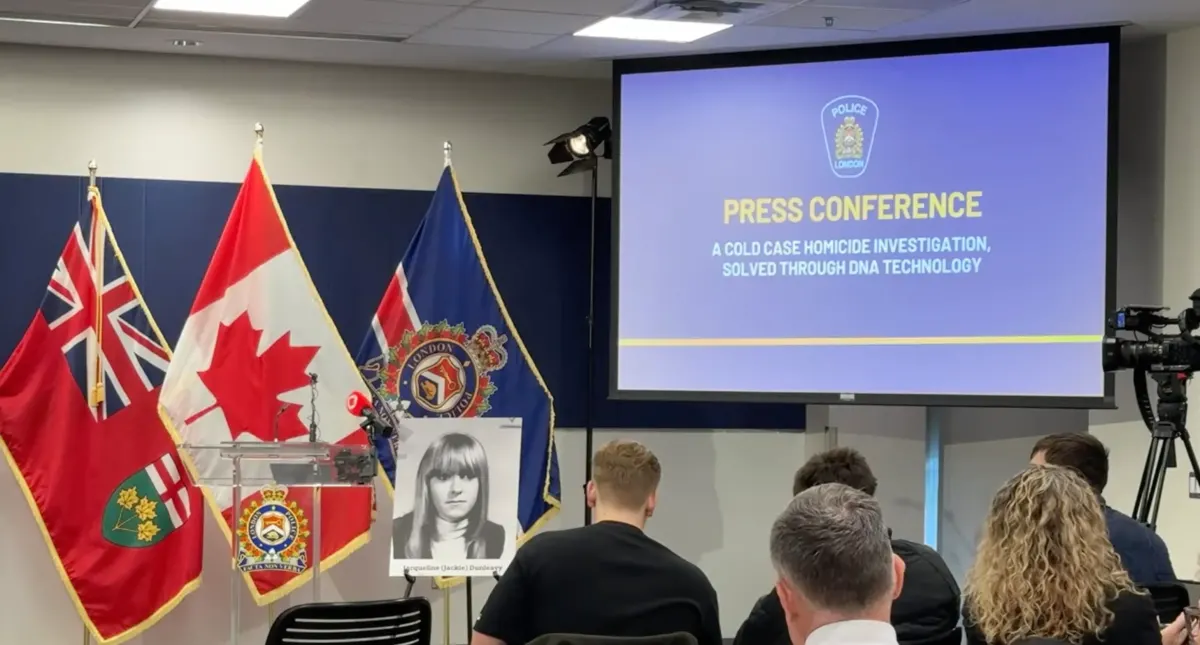
The breakthrough came after investigators partnered with Texas-based forensic laboratory Othram, Inc. To analyze suspect DNA and trace distant relatives through genetic genealogy. Following those family connections led them to Moore.
Lead investigator Mike Budzyn, a London police detective, outlined the final phase of the investigation in a statement: “Our investigators conducted additional interviews, gathered new evidence, and obtained DNA samples for comparison. Based on the evidence obtained through this investigation, we are confident that the evidentiary threshold to support criminal charges was met.”
Moore was born in Ireland in 1942 and emigrated to Canada in 1967, just one year before the homicide. After Jackie’s death, he joined the London fire department and served for 28 years, eventually retiring as a captain.
The case represents one of the oldest cold case resolutions in Canadian history through genetic genealogy, a technology unavailable to original investigators who processed the crime scene in 1968.
Truong emphasized the department’s enduring obligation to victims and their families regardless of how much time passes. “There is an important responsibility that comes with policing when investigating the most serious crimes,” he said. “That responsibility does not end because an investigation becomes difficult, because leads have been exhausted or because years have passed.”
Jackie’s relatives, who spent 58 years without knowing who attacked her, received the identification from police alongside the public announcement.
London police continue to encourage anyone with information about historical cases to come forward, noting that advancing forensic capabilities can now resolve investigations once considered permanently stalled.