

Warning: This article contains discussion of cancer which some readers may find distressing.
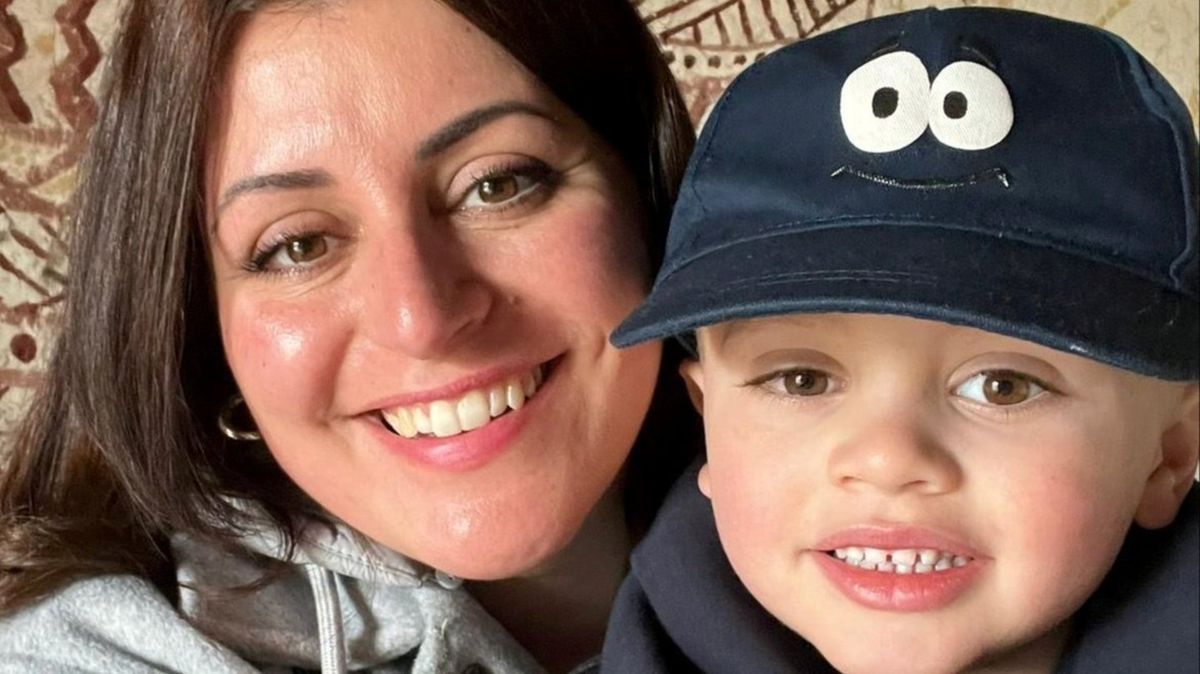
A mom has spoken about how an unusual change in her son’s eye turned out to be a life-altering sign of cancer — and ultimately led to him having the eye removed.
Maria Simeonidis says she first spotted something odd in her son Isaac’s eye as he sat watching Paw Patrol with his older brother, Simeon. The four-year-old was celebrating his third birthday on 8 June, 2024, when Maria noticed a strange white shine in his pupil.
Alarmed by what she’d seen, she booked him in for an optician appointment as quickly as possible.
At the examination, the optometrist reportedly saw something worrying at the back of Isaac’s eye and arranged for him to be referred urgently to the Royal Bournemouth Hospital.
Following further checks, doctors told Maria they suspected retinoblastoma and that Isaac needed specialist care at the Royal London Hospital, one of the UK’s leading eye centres.
MDAnderson states that retinoblastoma affects around 1 in 14,000 to 34,000 live births, with roughly 300–350 new cases diagnosed each year in the US.
Although it’s considered rare, outcomes can be very positive when the disease is found early.
Maria, who works as a kindergarten teacher, described how overwhelming it was to hear the word “cancer” connected to her child.
“When doctors told me that Isaac had a retinoblastoma, I started crying. As a worst-case scenario, I thought it might be a retinoblastoma, but people were telling me it was so rare and it could be a cataract.
“I just knew something was wrong, and as a parent, you have to trust your gut.
“I remember Isaac had his pupils dilated; he turned to me and said, ‘Mummy, I can’t see you, but why are you crying?'”
She said the period was “awful,” adding that she couldn’t stop thinking about the possibility of losing him.
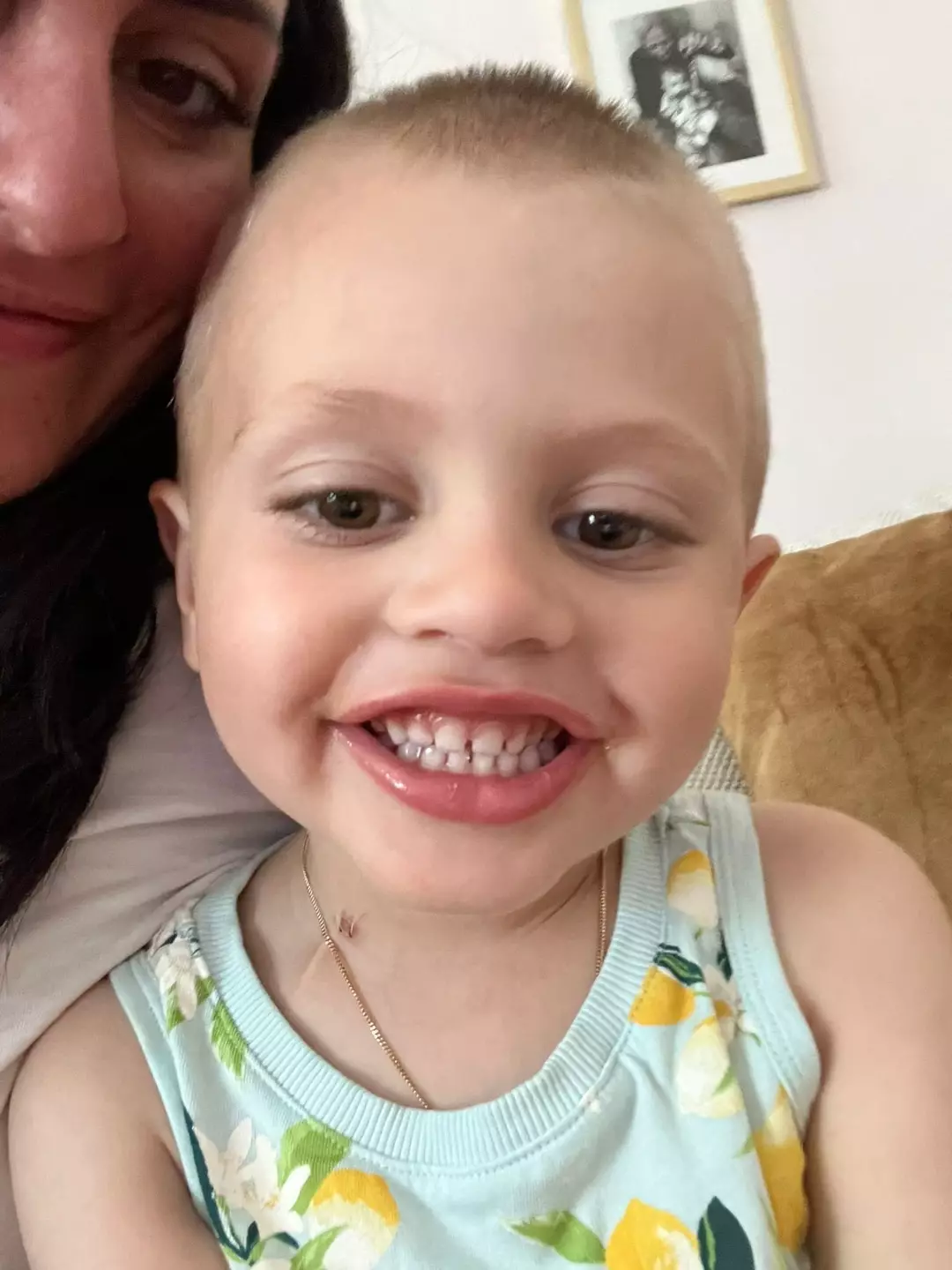
Retinoblastoma can sometimes be picked up through visible clues such as a white reflection in the pupil (known as leukocoria), a squint (strabismus), or a noticeable change in iris colour. Other potential signs include redness or swelling without infection, vision problems, or an eye that appears to turn. Symptoms are often first detected in photographs, which is why early medical advice is strongly recommended when anything looks unusual.
At first, Maria assumed the white glow was simply light reflecting in Isaac’s eye.
When she mentioned it to her partner, Matthew Comley, she says he immediately understood what she meant — and that made the moment even more unsettling.
Maria said: “Matthew said to me, ‘Oh yeah, do you mean his right eye?’ I immediately thought, sh*t, how does he know what eye I mean?”
Maria said Matthew told her he’d noticed it before too, leaving them both with a sense that it likely wasn’t something minor.
The Childhood Eye Cancer Trust (CHECT) has urged both parents and health professionals to stay alert to key warning signs of eye cancer — especially a white glow that may show up in flash photos or certain lighting, and a squint. CHECT Chief Executive Richard Ashton has advised that anyone who suspects retinoblastoma should take their child to a doctor as soon as possible.
Isaac began systemic chemotherapy in June 2024, and Maria said he was later given the all-clear after treatment.
However, at his first post-Christmas check-up that year, doctors found retinoblastoma “seeds” — tiny fragments that can break away from a tumour.
That discovery meant another return to hospital for cryotherapy, a procedure that freezes small tumours.
Despite multiple rounds of treatment, doctors later detected a small relapse.
Maria said: “We felt so deflated but decided to give it another try. So, we got booked in for plaque treatment – a tiny piece of radioactive material which is attached to the outside lining of the eye to kill targeted cancerous cells inside.
“It was done at the Royal London Hospital, and we had to isolate for most of our stay. Isaac really struggled with the plaque treatment; he was in pain and very uncomfortable.
“He refused to open either of his eyes for two whole days, but we were hopeful the plaque would finish the tumour off for good.”
But after the plaque therapy, the cancer returned again — a setback that came just when the family felt they were finally moving in the right direction.
Following difficult discussions, Maria and Matthew decided the safest option was to proceed with removing Isaac’s eye.
Maria said: “We decided that Isaac had endured enough and that we were not willing to take any more risks. We opted for an enucleation – removal of the eye.
“It was a hard pill to swallow after over a year of trying to save his eye, which had very good vision, but we just wanted him to have some peace.”
Isaac has since been fitted with a prosthetic eye, and Maria said he is “very happy and confident”.
She added that he understands what happened, and sometimes says he misses his old eye and wishes he could have it back.
Even so, Maria described Isaac as a “very happy confident boy” who loves dinosaurs and monster trucks.
She said: “He is very caring and has made some good friends.
“Sometimes he is a bit wary in new locations and realises that he does not have a full field of vision.
“But all in all, he manages amazingly. He is aware and understands what happened to him.”