

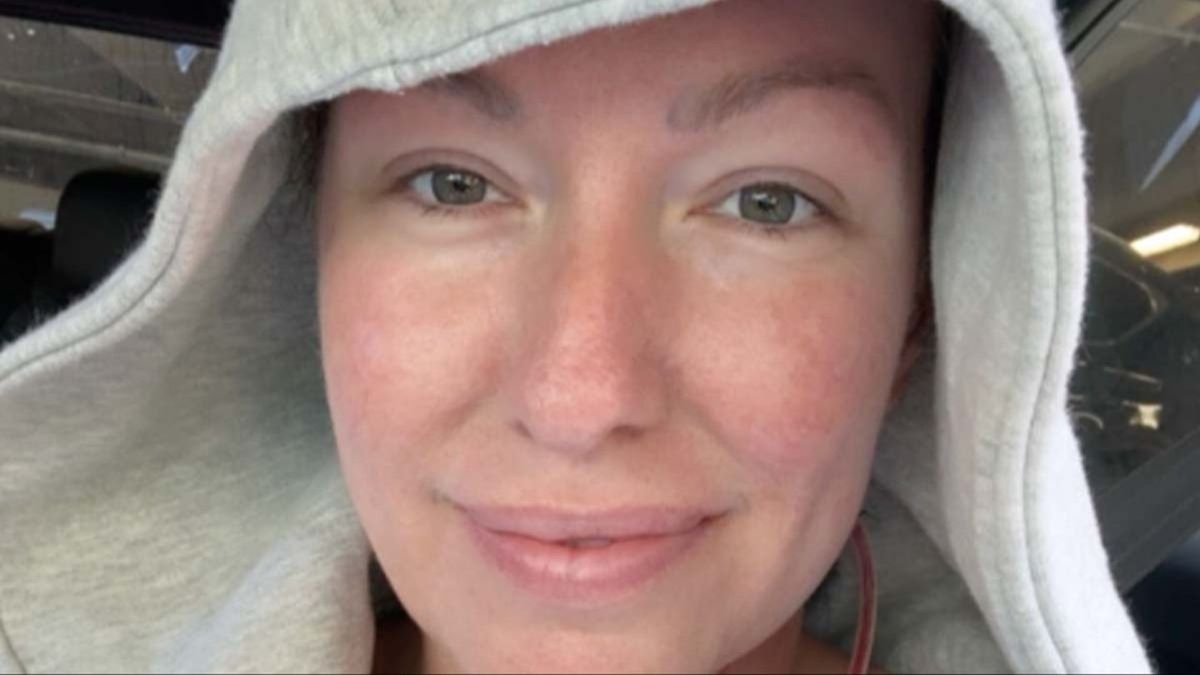
After a string of setbacks, one mom spotted a small change in her mouth — and was shocked by how long it took for anyone to treat it as serious.
Rachel Passarella was already dealing with emotional fallout after her relationship ended, which had happened just two weeks before she noticed something unusual.
When she looked in the mirror, she saw a red patch on her tongue.
Because she’d been crying a lot, barely eating, and feeling run down, she brushed it off as something stress-related.
She tried to reassure herself it was only a “canker sore” and carried on.
Still, three weeks later at a routine dental visit, she decided to mention it just in case.

Her dentist wasn’t alarmed, telling her: “You’re healthy. You don’t smoke or drink. It’s probably a canker sore.”
Passarella, a 42-year-old family nurse practitioner in Florida, understood the warning signs associated with cancer. But because the patch was small and the dentist didn’t seem concerned, she attempted to treat it as a typical sore — trying canker sore patches, coconut oil, and other holistic approaches.
Nothing helped, and the spot didn’t go away.
In an account for the outlet, she said that by November the area had grown to about twice its original size. Around that time, an ear, nose and throat (ENT) doctor suggested it could be an inflammatory lesion.
Even so, she described it as painful — and it continued to worsen.
Eating became increasingly difficult, and she lost 15 pounds without trying.
At a later appointment with a different dentist, she said she finally heard a far more serious assessment. After noticing it immediately and using a handheld scanner, the dentist told her it was likely cancer.

The timing couldn’t have felt worse.
She had just lost her job the day before, along with her health insurance — and then faced losing her car after a no-fault accident.
By March, about six months after she first noticed the patch, she received confirmation after paying for biopsies herself: squamous cell carcinoma, commonly referred to as tongue cancer.
Doctors removed a tumor that was 8 mm deep, along with 40 lymph nodes on the right side of her neck.
Fortunately, the lymph nodes showed no cancer, and she was ultimately classified as having Stage 2 tongue cancer.
Recovery, however, brought its own complications.
Passarella said she lost around 35–37 percent of her tongue, and at one point had to be rushed to hospital after an artery in her tongue burst.
She now requires speech therapy and regular scans every three months for the next two years to monitor for recurrence.
As a single mother of four, the financial strain has been significant — especially while unemployed.
She has since set up a GoFundMe to help cover living costs and medical expenses while she looks for work.