

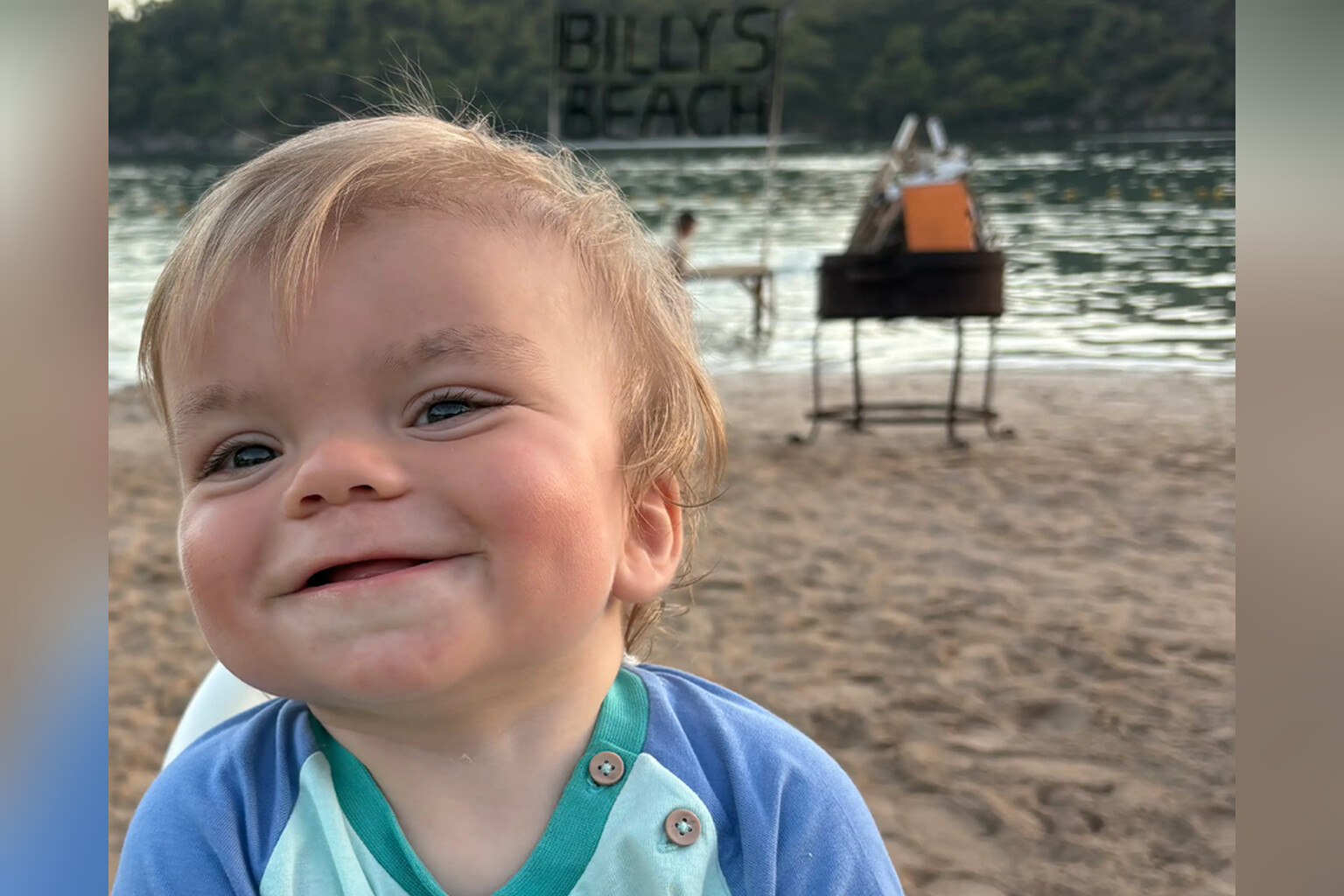
Beth Gordon is racing to raise millions for her toddler’s life-saving gene therapy before the window to stop his rare disease closes.
The 30-something mother from England said she first sensed something was wrong at Kole’s six-week checkup, when doctors lifted her newborn’s head and it lolled back, still floppy. “I said, ‘Oh, it’s not meant to be like that is it?’ but the doctor was like, ‘He might just not have the neck muscles just yet. Don’t worry about it,'” she recalled.
Kole, now around two and a half, was born in July 2024 via C-section and spent a brief stint in NICU for what staff called minor complications. He went home with his parents and older siblings, but his development lagged: he didn’t walk until 19 months old, and his head remained unusually large.

Beth initially shrugged off the size of Kole’s head, nicknaming him “moon head” after her own childhood. “Funnily enough, I had a really big head as a baby so we never really thought about it,” she said. “He was just our little ‘moon head’. That’s what I got called and I thought it was quite cute.”
A nurse flagged the concern during a hospital visit, and around six months old, Kole underwent an MRI. Doctors diagnosed him with BESS — benign enlargement of the subarachnoid spaces — and assured Beth his head would “even out in size” by age two.
But the delays persisted. Beth kept pushing for more tests, and one evening while scrolling TikTok, she spotted a little girl from America whose features stopped her cold.
“There was a little girl from America that popped up and she had Sanfilippo Syndrome,” Beth recalled. “I was like, ‘That looks a lot like Kole’. She had a big head, the big bushy eyebrows, the same nose, the same mouth and everything.”
“Everything just matched up,” she went on. “I didn’t know what Sanfilippo was, so I Googled it and saw what it was. I remember ringing my mom and crying, saying ‘I know this is what my child has’.”
Genetic testing confirmed her fear: Kole has type A Sanfilippo Syndrome, a rare and fatal metabolic disorder often called “childhood dementia.” The Sanfilippo Children’s Foundation explains that the disease causes brain cells to fill with waste the body cannot process, leading to hyperactivity, sleep disorders, speech loss, cognitive decline, seizures, loss of mobility, and typically death before adulthood.
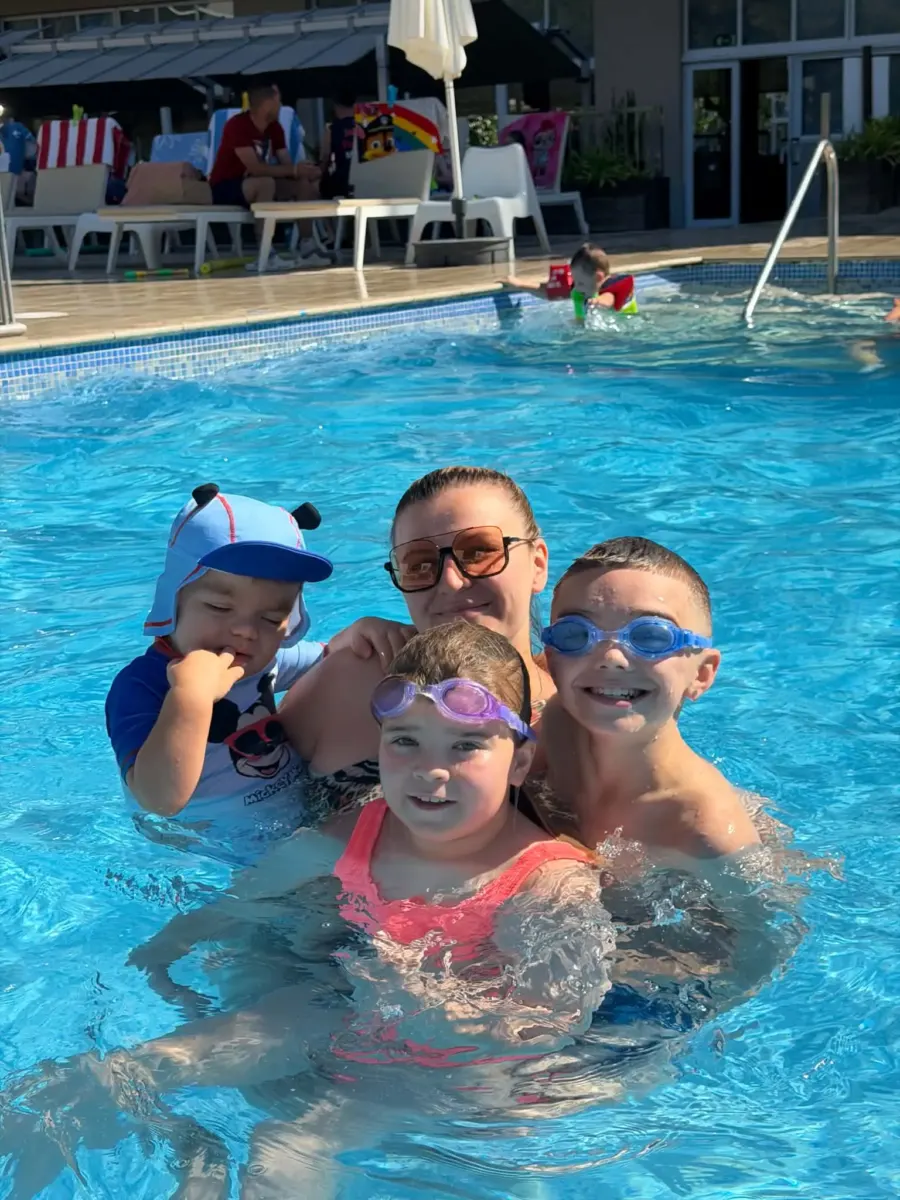
The cruel irony is that a treatment now exists — just not where Kole lives. In September, the FDA approved Fayuvi, a one-time intravenous gene therapy that uses a modified virus to deliver a working copy of the SGSH gene, enabling the body to produce the missing enzyme sulfamidase. Acting FDA Commissioner Kyle Diamantas said in a news release that the treatment “holds tremendous promise for rare diseases like Sanfilippo syndrome type A.”
Evaluations found that Fayuvi-treated patients aged two to five “maintained or improved cognitive function compared to an untreated historical control cohort,” the FDA reported, calling this “a meaningful divergence from the expected natural disease course of plateau and decline during this critical developmental window.”
But the therapy carries a staggering price. Reports said last month that Ultragenyx Pharmaceutical, Fayuvi’s developer, set the cost at $3.95 million. Kole’s family has no official figure yet, but launched a GoFundMe aiming to raise £2 million, roughly $2.6 million.
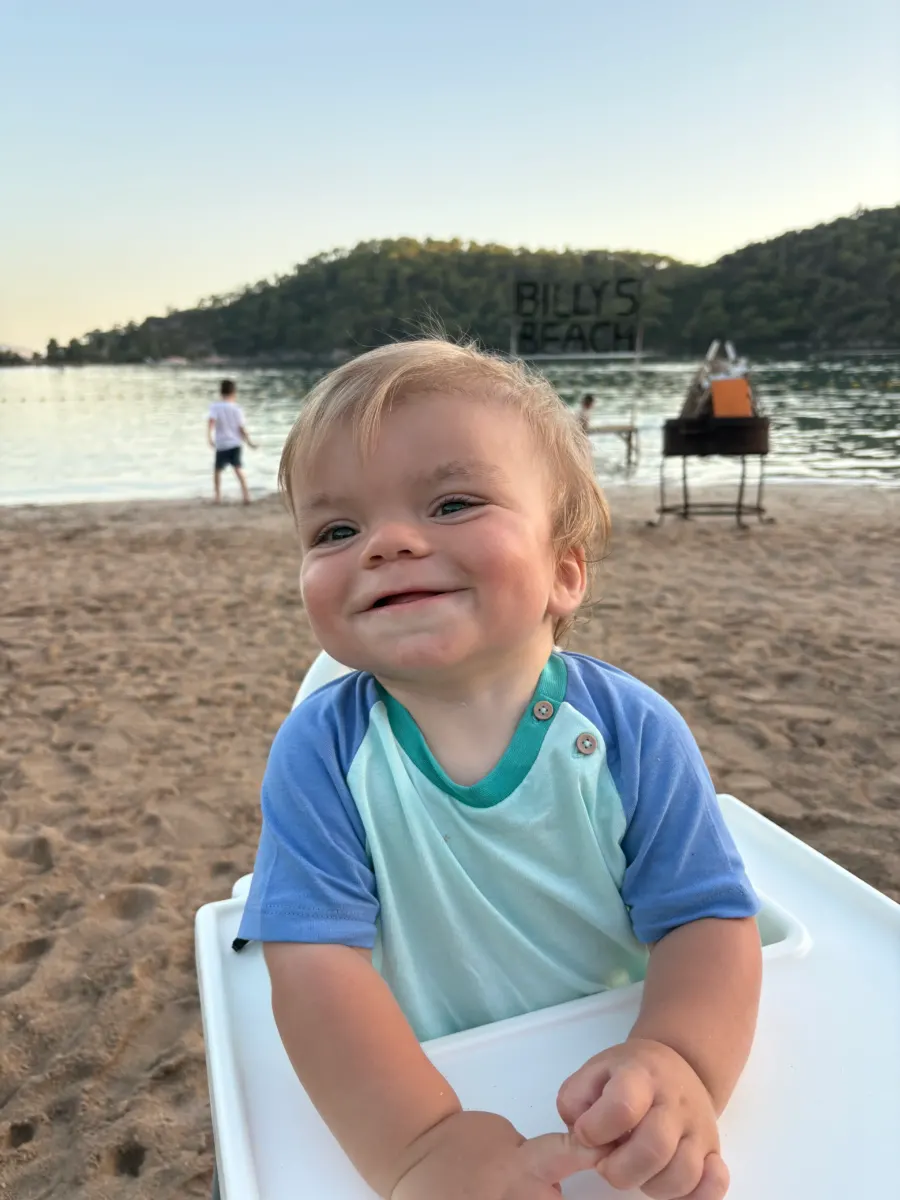
The timeline terrifies Beth. Children with Sanfilippo typically begin regressing between ages three and six, losing abilities they’ve gained. Kole has already shown hearing loss and speech delay alongside his global development delay, but Beth said he hasn’t lost any skills yet and is still learning new things daily.
“If we stop this disease within the next year, Kole won’t have regressed,” she said. “He’s got Global Development Delay (GDD), so he’s coming on really slowly, but he’s learning new things every day.”
“I know within the next year there will be a plateau,” she continued. “And that’s when the regression begins. Our argument is that if we can stop this disease dead in its tracks, Kole can go on to be on a good trajectory of continuing to learn new things.”
Without treatment, Beth said Kole faces a “mid-teen life expectancy.” “He’ll be lucky if it makes it to his 15th birthday,” she added. “But if we get him the treatment, he’ll go on to live a whole, happy life.”
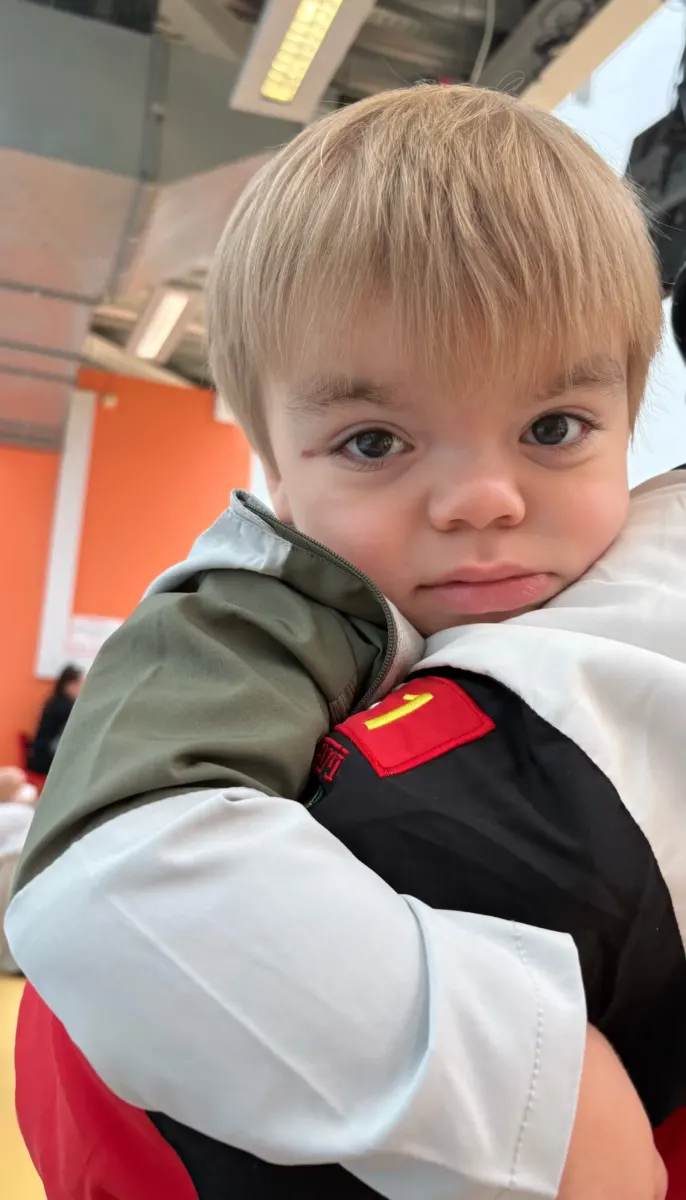
Beth noted that England’s NHS is reviewing Sanfilippo treatments, but she fears bureaucratic timelines will outpace her son’s biology. “Time is being taken away from him,” she said. “We’ve seen what he can do in two and a half years and how much he can learn.”
The family’s fundraising campaign and updates on Kole’s condition run through their “Kole’s Fight” pages on Facebook and TikTok.