


A woman has come forward to share her story of being forced to sell her house after falling victim to scammers who impersonated celebrities.
Jennifer Barton recounted how con artists masqueraded as well-known figures such as Charlie Hunnam, Nicky Byrne from Westlife, American singer Michael Ray, and Alexander Ludwig.
This 44-year-old resident of Kidderminster in the UK was defrauded of £250,000, approximately $340,000, as the scammers convinced her that the celebrities they were impersonating were entangled in complicated divorces and required funds to cover legal expenses.
The fraud also involved manipulating Barton into believing that the impersonated celebrities had romantic interests in her, ultimately persuading her to sell her car and even her home.
As the ruse intensified, the scammers concocted increasingly intricate lies and excuses to justify their need for money.

“People were reaching out on Facebook and Instagram, saying they were celebrities like Alexander Ludwig and saying they wanted to meet,” Jennifer explained.
“They wanted to chat on Telegram as it was more private.
“Some said they were going through divorce and didn’t have their own money.
“It was one excuse after another – one said they were arrested, another was let out of their contract, one was in London and got robbed.”
She continued: “They all told me that they loved me and wanted to marry me, wanted to come to England and be with me.”
Jennifer, who is employed by the UK’s National Health Service, mentioned that the interactions began as ‘general everyday kind of chat with a bit of flirtatiousness’, but soon escalated into emotional appeals and demands for money transfers.
“It was within a month or so he asked for money,” she remembered. “He asked for around £3,000 for court fees.”
Despite her reservations, Jennifer admitted she ‘got addicted’ to sending money.
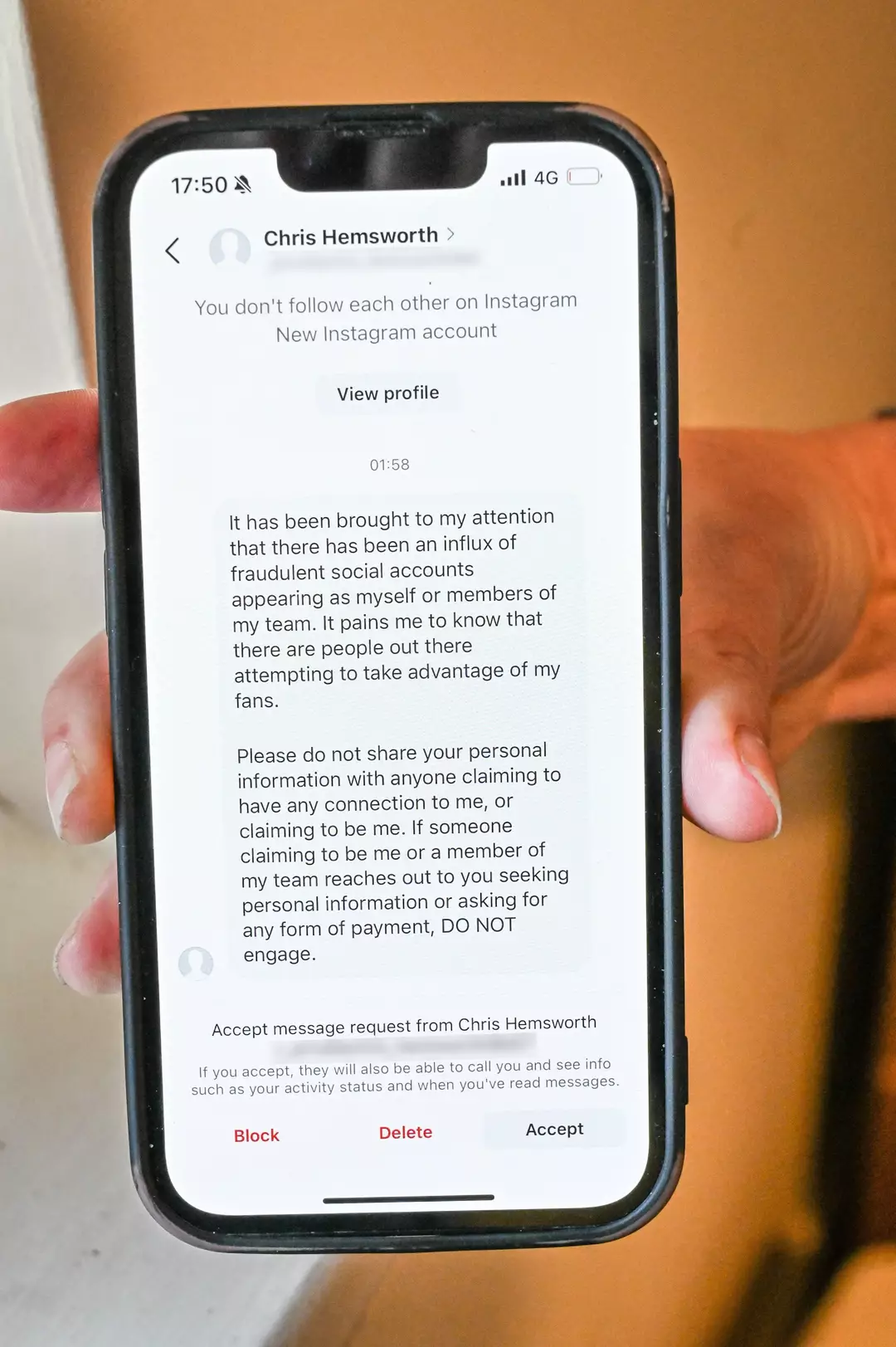
“You are hoping that the guy is legit,” she said. “I did wonder if I had gone too far, but I got addicted to spending this money – I have this attention from someone and I am liking this attention.”
The situation intensified when someone impersonating Michael Ray persuaded her to sell her house and car.
“I sold the house and I spent all the money,” Jennifer said. “I got £111,000 and then apart from a bit for a hotel and a hire car, the vast majority went on him.
“He said I would be able to get a new house with the money and he was reassuring me that everything was going okay.”
Jennifer now aims to caution others about the perils of online scams, advising: “For anyone facing anything similar, just reach out to family and friends. Especially if they’re asking you for money.”
She described the experience, stating: “There was an addictiveness, when someone gives you attention, even if it’s a scammer, it’s nice. They play on your feelings.”
Scammers utilize various tactics, such as offering a reward or incentive, like in Jennifer’s situation, or coercing someone by threatening negative outcomes if they refuse to pay, such as posing as the IRS and claiming a tax debt.
They often attempt to create a sense of urgency by making claims about court fees or suggesting that if payment isn’t made promptly, penalties will increase.
If you’ve been affected by any of these issues and want to speak to someone in confidence, you can contact Victim Support on 08 08 16 89 111, start a live chat , or visit the website , all of which are available 24 hours seven days a week.