


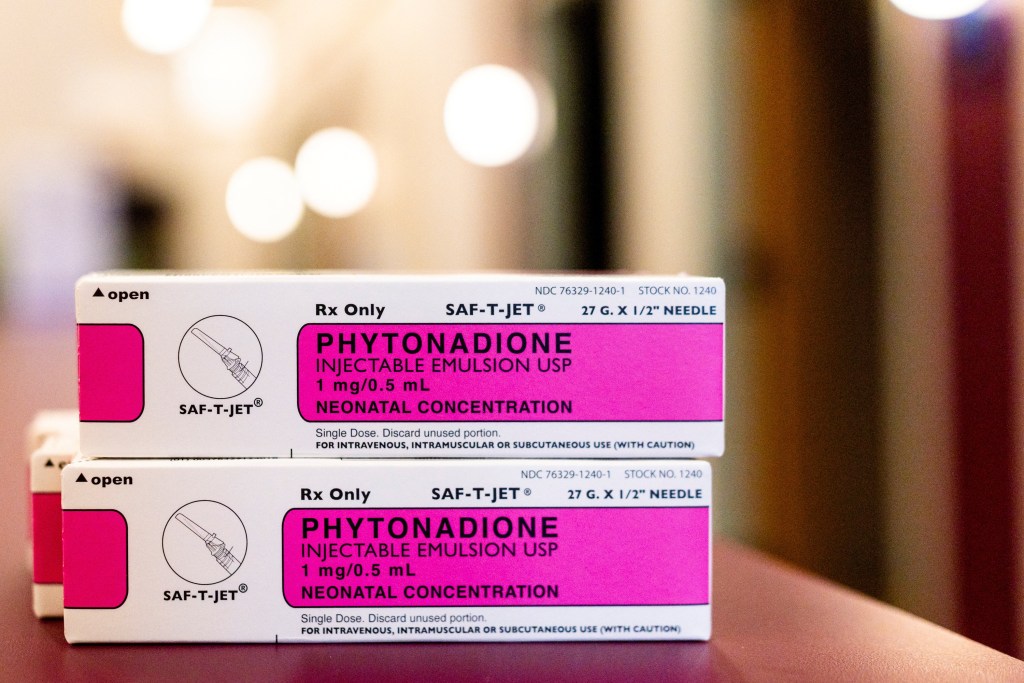
The percentage of U.S. Parents refusing a standard vitamin K shot for newborns jumped more than 57% in the first half of this year, according to an exclusive data analysis.
The Truveta review of over one million births nationwide found the non-receipt rate climbed to 8.1% by June, up from 5.2% just six months earlier, and 2.5 times higher than the 2019-to-2024 average. The acceleration aligns with Health Secretary Robert F. Kennedy Jr.’s January announcement dropping recommendations for the birth dose of hepatitis B vaccine and five other standard childhood vaccines from routine use.

For decades, Kennedy has stoked mistrust of vaccines and established medicines, and pediatricians now say they are on the front lines as parents digest health policy changes aligning with his and President Donald Trump’s views. Those vaccine changes are currently on hold due to a court ruling, though Trump called for them again in an August 10 executive order.
“It’s really terrifying. It’s like we’re going backwards,” Dr. Nia Heard-Garris, pediatric physician-scientist at Lurie Children’s Hospital, Chicago, said of growing refusals. “We’re trying really hard to keep little babies alive.”
Dr. Karen Puopolo, chair of the American Academy of Pediatrics’ Committee on Fetus and Newborn, said the report reflects what AAP members deal with daily as more parents reject evidence-based advice, often due to inaccurate, misleading information.
Babies are born with very low levels of vitamin K, which helps blood clot, and are unprotected until about six months of age, according to the CDC, which still recommends the shot. Without the injection, infants are 81 times more likely in those first six months to suffer life-threatening bleeding in the brain or gut, and such bleeding occurs in one out of 59 births without the shot. One in five infants who experience serious bleeding will die.
Dr. Sarah Coggins, now a neonatologist with Children’s Hospital of Philadelphia, carries a formative memory from her medical student days at Vanderbilt University in 2013, when Nashville saw an unusual cluster of babies with severe bleeding from vitamin K deficiency. Their parents believed the shot was unnecessary and potentially toxic or carcinogenic, according to a CDC account.
“The baby had long-term brain damage,” Coggins said. “I’ve always carried that with me. I think most pediatricians have a story like that.”
Coggins now requires parents who refuse the shot to sign a form acknowledging the risks. She and colleagues at three hospitals affiliated with the University of Pennsylvania health system found being born a girl was associated with twice the risk of vitamin K refusal, a pattern Truveta’s national analysis confirms. In June 2026, 8.9% of girls and 7.3% of boys had not received the shot within a day of birth.
The gender gap appears tied to circumcision. Many hospitals prohibit the procedure for boys without vitamin K because of bleeding risk, and about half of U.S. Boys are circumcised in hospitals. The desire for male children to be circumcised often overrides parental concerns.
“We have an absolute hard line: no vitamin K, no circumcision,” said Dr. Brad Scoggins of San Juan Health Partners’ Pediatrics in Farmington, New Mexico.
Scoggins added that studies link increasing vitamin K refusals with rejection of other key newborn interventions, including hepatitis B vaccine and antibiotic eye ointment. “That just gets put in the same bucket,” he said.

The mixed messages have raised doubts among many parents about routine newborn treatments, experts say. When Representative Kim Schrier, a Washington Democrat and pediatrician, asked Kennedy in an April congressional hearing about declining vitamin K support as a “spillover effect” from his policies, he denied any role.
In July, Schrier and Senator Angela Alsobrooks, a Maryland Democrat, sent a letter to then Acting CDC Director Jay Bhattacharya urging the agency to track vitamin K refusals and related bleeding events and deaths and make the data public.
“The CDC and HHS never responded,” Alsobrooks said in an email on Tuesday, adding that if the CDC is now tracking refusals, that information needs to immediately become public.
US Department of Health and Human Services spokesperson Grace Davis Jamison said the agency and CDC are evaluating available data and surveillance related to vitamin K refusal and associated bleeding events, and continue providing information to parents and healthcare providers. “Concerns about vitamin K and declining trust in public health institutions predate this administration,” she said.
The refusal trend has grown so common that Dr. Amanda Furr, chief medical officer of Zarminali Pediatrics, which operates 45 practices in 13 states, said her organization has started stocking the shot in all primary care practices. Two other doctors said they were also now providing the shots.
Coggins is now working with colleagues to design a study examining whether rising vitamin K deficiency will increasingly affect girl babies. “It’s not a theoretical risk. It keeps me up at night,” she said.