

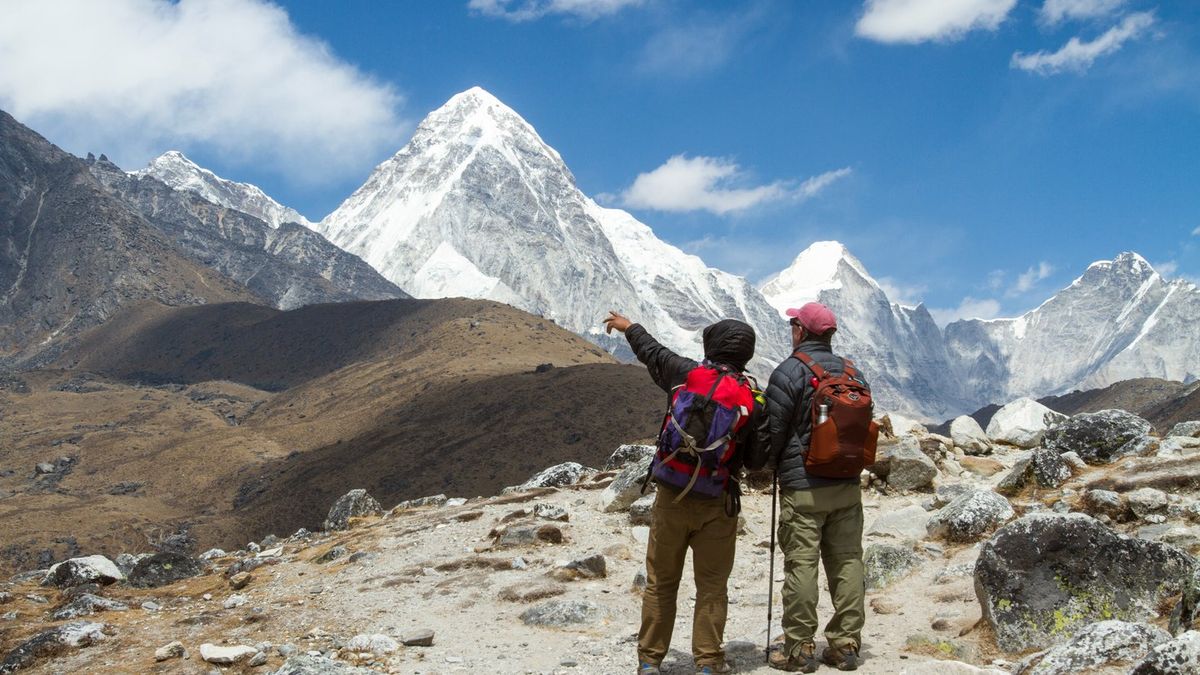
Picture the scene – you’re within reaching distance of accomplishing your lifelong goal of scaling Everest, but nefarious guides scupper your chances by ‘poisoning’ you to fake the symptoms of altitude sickness, pocketing the cash when insurers pay out for your rescue.
Nepal Police’s Central Investigation Bureau believes this kind of deception has been happening for a long time, describing it as part of a fraud worth around $20 million.
The alleged operation is said to have impacted 4,782 overseas climbers from 2022 to 2025. The Kathmandu Post reports that 32 guides were charged in connection with the case on March 12.
Investigators say the guides would deliberately create or stage a crisis for tourists from countries such as the UK and Australia, taking advantage of the fact that it can be difficult for insurers to verify what happened once the climbers are moved to Kathmandu.
According to Nepalese authorities, some guides used baking powder in climbers’ meals in an attempt to mimic symptoms commonly associated with altitude sickness—an illness frequently encountered on the route up the world’s tallest mountain.
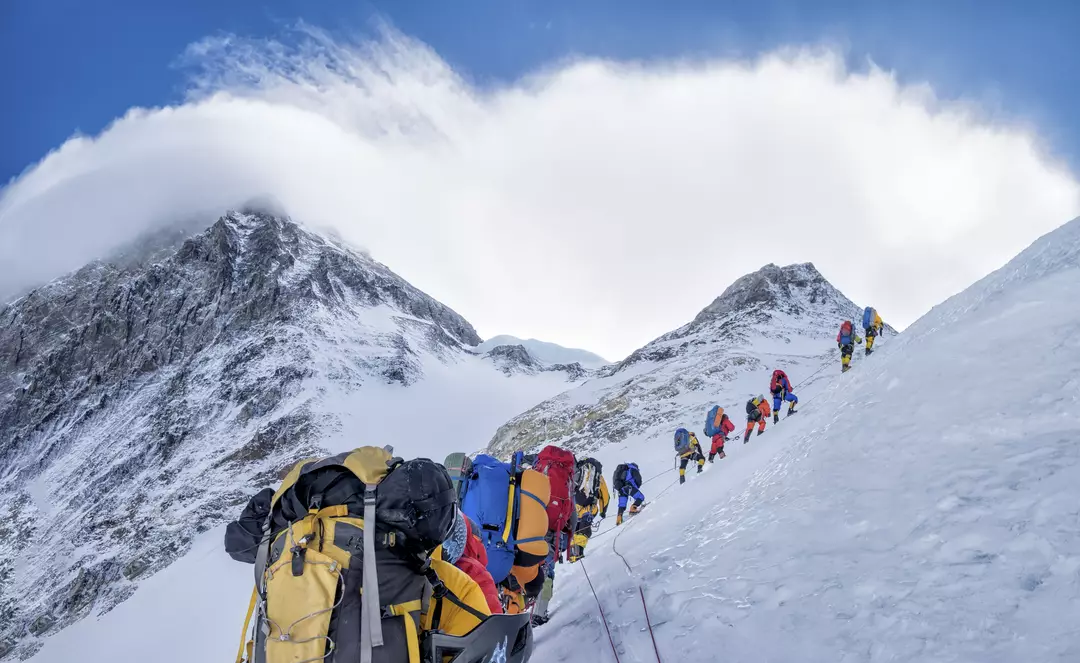
Altitude sickness happens when the body cannot adapt quickly enough to reduced oxygen levels at higher elevations, as explained by the Cleveland Clinic.
Mount Everest stands at 29,032 feet (8,849 meters) on the Nepal-China border. Since Sir Edmund Hillary and Tenzing Norgay first reached the summit in 1953, it has continued to draw hundreds of climbers each year.
While the peak is blanketed in snow, its ice is retreating rapidly because of climate change. Combined with harsh storms, avalanches and the risks of altitude sickness, conditions on Everest can be extremely dangerous.
Once climbers pass roughly 10,000 feet, the drop in air pressure significantly reduces available oxygen. That shift can trigger altitude sickness, with symptoms including headaches, nausea, dizziness, exhaustion and shortness of breath.
Police say some guides exploited those risks by adding baking powder to food to make climbers appear ill, before claiming the situation required urgent assistance.
The Kathmandu Post also reported that climbers were given diamox (Acetazolamide), alongside ‘excessive’ amounts of water. The medication is commonly used to prevent and treat altitude sickness.
In other cases, the alleged misconduct was less extreme: authorities claim some guides offered to help climbers stage an emergency in order to secure a helicopter ride off the mountain rather than walking back down.
To make the fake emergencies convincing, police allege that helicopter operators and hospitals also played a role in the wider scheme.
Era International Hospital is accused of receiving more than $15.87 million, while Shreedhi International Hospital allegedly took in over $1.22 million through claims linked to bogus rescue operations, according to investigators.
Mountain Rescue Service is alleged to have completed 171 fraudulent rescues, with police saying it collected $10.31 million from international insurers.
Nepal Charter Service allegedly earned $8.2 million, and Everest Experience and Assistance was connected to $11.04 million in insurance claims, police claim.
Authorities say the costs were also artificially increased through billing tactics—such as charging insurers for a helicopter per person rescued even when several climbers shared one aircraft—then backing it up using falsified flight manifests.
At hospitals, police claim digital signatures were forged on paperwork, in some instances without doctors being aware their names were being used.
Investigators also allege that an office assistant at one hospital admitted supplying an x-ray of his own broken limb from the previous year so it could be used to support an insurance claim for a foreign climber.
UNILAD has contacted Nepalese authorities for comment.