

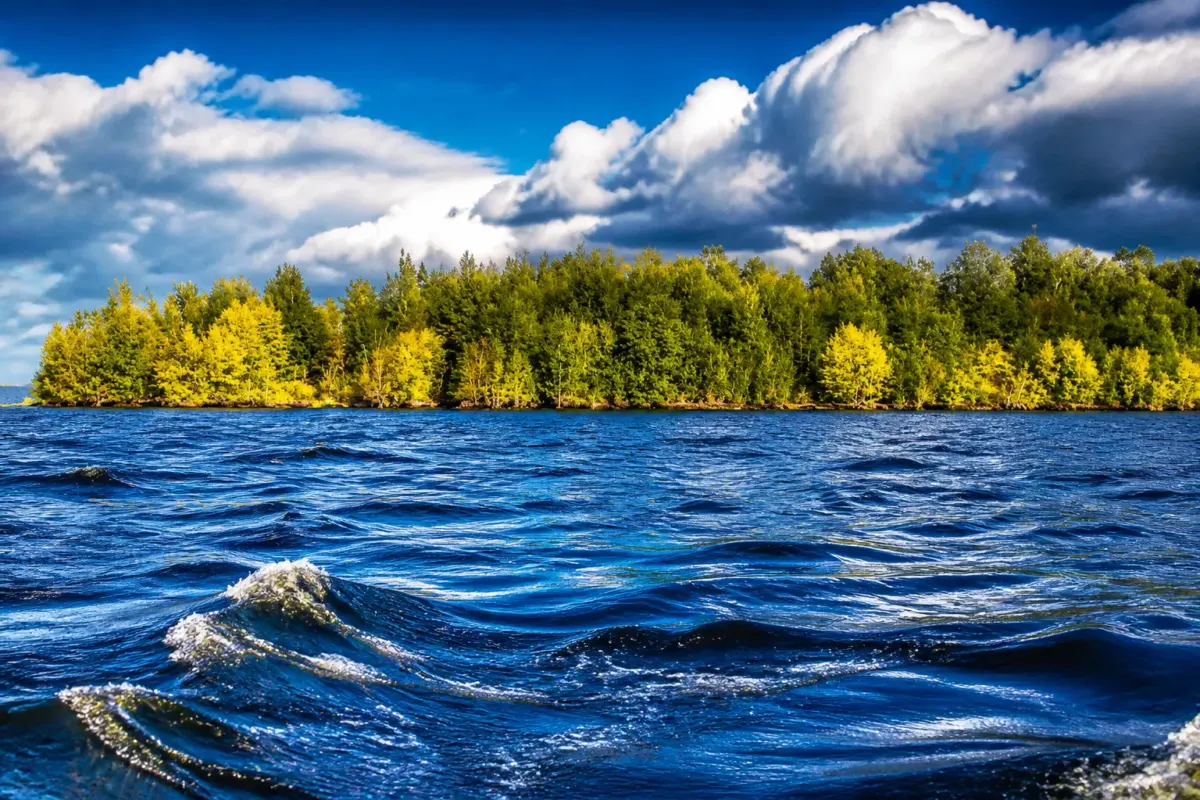
A floating island roughly the size of a Canadian football field has vanished from a northern British Columbia reservoir just two weeks after it first appeared, leaving officials with a working theory and social media awash in speculation.
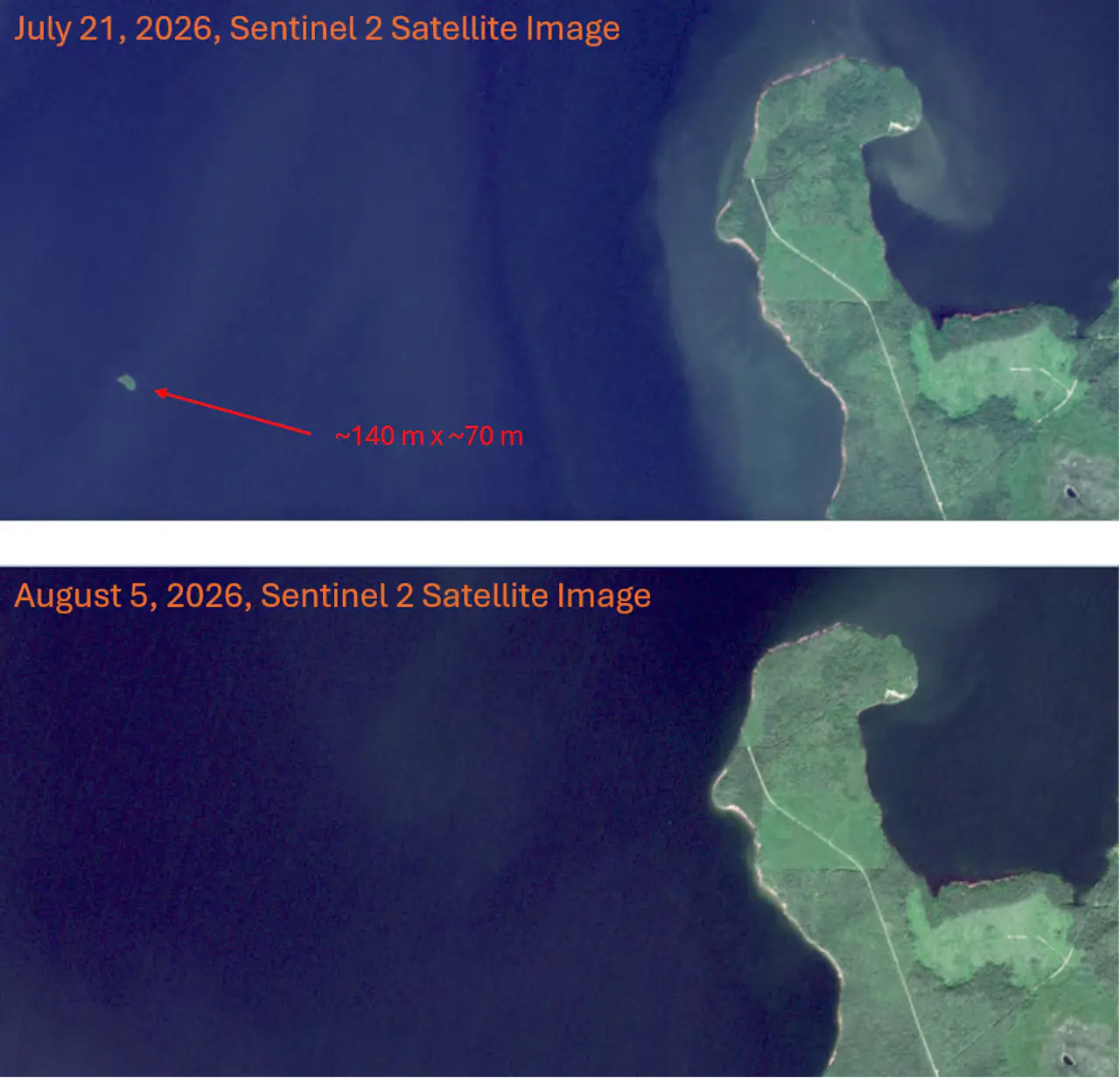
Local boater Rocky Avery, who has spent four decades in Canada, was among the first to document the bizarre landmass drifting in the Williston Reservoir last month. The forested formation measured approximately 76 yards wide and 153 yards long, and Avery captured footage that he later uploaded to social media.
“It was a pretty amazing sight to see, never seen anything like that in my 40 years in this country,” he told CBC News. Avery also flagged the potential hazard ahead of a major local fishing derby and notified BC Hydro in case the mass floated toward infrastructure.
BC Hydro spokesperson Bob Gammer initially greeted reports with skepticism, noting how prevalent AI-generated content has become. Satellite imagery soon erased his doubts, confirming the object’s sudden existence on July 21. By August 5, updated snapshots revealed nothing.
“We’ve been taking more updated snapshots and we can’t see the object anymore. So it’s disappeared now,” Gammer stated. He added a crucial caveat: “It doesn’t mean it’s gone to the bottom of the reservoir. It may have returned to a more sheltered area along the shoreline.”
Gammer’s explanation centers on natural accumulation. Driftwood likely piled up near shore over many years, remaining stationary long enough for heavy vegetation to take firm root. The Williston Reservoir had recently reached full capacity following intense snowfall and heavy rainfall, and those unusually high water levels probably dislodged the debris mat, allowing winds to push it into open water.
Social media users quickly split between grounded analysis and wilder theories. One commenter marveled at the ecological possibilities: “That’s wild. Imagine being out on the water and seeing a whole forest just drifting by. I wonder if any animals hitched a ride on it.”
Others offered technical pushback against the island designation itself. “It most definitely was not an island but a huge mat of trees floating on water and probably drifted to another area,” one user wrote. Another delivered a blunt assessment: “Flood a forest to make a dam lake and chunks of trees can break off and float… It’s just wet wood doing wet wood things.”
The more imaginative corners of the internet rejected such explanations entirely. “Two NFL fields of forest just noped out of existence in 3 weeks. That’s not a floating island, that’s a lid,” one conspiracy-minded user argued, before escalating: “And whatever was under it is now looking up. BC is hiding something big.”
Floating islands, while visually startling, are a documented phenomenon globally. Similar landmasses have appeared in Africa’s Lake Victoria and Lake Chippewa in Wisconsin, where vegetation mats break free and drift with wind and current.
The Williston Reservoir, created by the W. A. C. Bennett Dam, is one of the largest artificial lakes in North America and has seen fluctuating water levels throughout its history. The recent combination of heavy winter snowpack and sustained summer rainfall pushed those levels to capacity, creating the precise conditions that Gammer believes released the vegetative mass.