


NASA is gearing up to send astronauts on a journey farther into space than any human has gone before, but the mission’s complexities extend beyond just the rockets. The focus is also on the suits the astronauts will wear as they travel about 4,600 miles beyond the Moon during the Artemis II mission.
However, unexpected winter weather in Florida is causing a delay in the mission’s schedule.
Yes, you read that correctly—winter weather in Florida!
The state is expected to experience light snowfall and unusually cold temperatures, which has temporarily halted NASA’s ability to safely fuel its Space Launch System rocket.
In an announcement on X, formerly known as Twitter, NASA stated that the mission’s earliest possible launch is now pushed to Sunday, February 8.
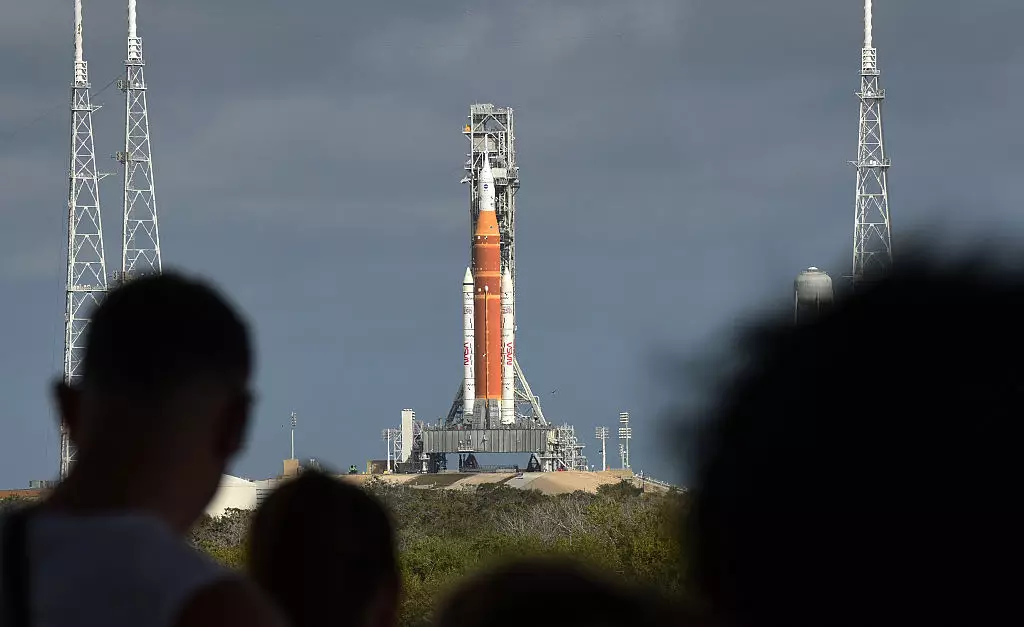
The mission was initially set to launch on Friday, February 6.
This mission marks the first crewed lunar expedition since Apollo 17 in 1972, making it 54 years since humans last ventured beyond low Earth orbit.
When astronauts Reid Wiseman, Victor Glover, Christina Koch, and Jeremy Hansen eventually embark on their journey around the Moon, they’ll be outfitted in next-generation lunar spacesuits designed by Axiom Space and Prada.
Designing a suit to withstand the harsh conditions of deep space has proven to be a significant challenge.
Peggy Whitson, a veteran astronaut who holds the record for the most cumulative days spent in space by a NASA astronaut—695 days—has emphasized the mission’s extreme conditions. In a recent social media post, she noted that temperatures at the Moon’s south pole are incompatible with human life, with NASA’s Lunar Reconnaissance Orbiter recording lows below −410F.
“…so extra thought has to go into every detail of the suit,” she wrote.
Peggy also pointed out that the sole of the suit’s boots is one of the ‘most complex problems.’
Describing the ‘significant engineering challenge,’ she said: “[It’s] maintaining direct contact with a surface potentially as cold as -410F while keeping the astronaut’s feet warm, flexible, and functional.”
That’s not the only issue with the suit.
According to Futurism, the new Axiom Space suit is heavier than the Apollo-era suits, weighing roughly 300 pounds on Earth.
Building a spacesuit that can protect against the temperatures of the Moon's south pole is an incredible challenge. The extremely cold temperatures are incompatible with humans (NASA’s Lunar Reconnaissance Orbiter has measured temperatures lower than -410°F) so extra thought has… pic.twitter.com/KeOJVrUapN
— Peggy Whitson (@AstroPeggy) January 22, 2026
Although the Moon’s lower gravity will mitigate some of that weight, concerns persist. In a conversation with Ars Technica, NASA astronaut Kathleen Rubins noted that while the suits are ‘definitely much better than Apollo,’ they remain ‘quite heavy,’ with flexibility issues that could cause astronauts to fall.
Getting back up after a fall is also challenging. Rubins explained that it requires a ‘jumping pushup’ motion, which she described as ‘non-trivial.’
However, not everyone shares these concerns.
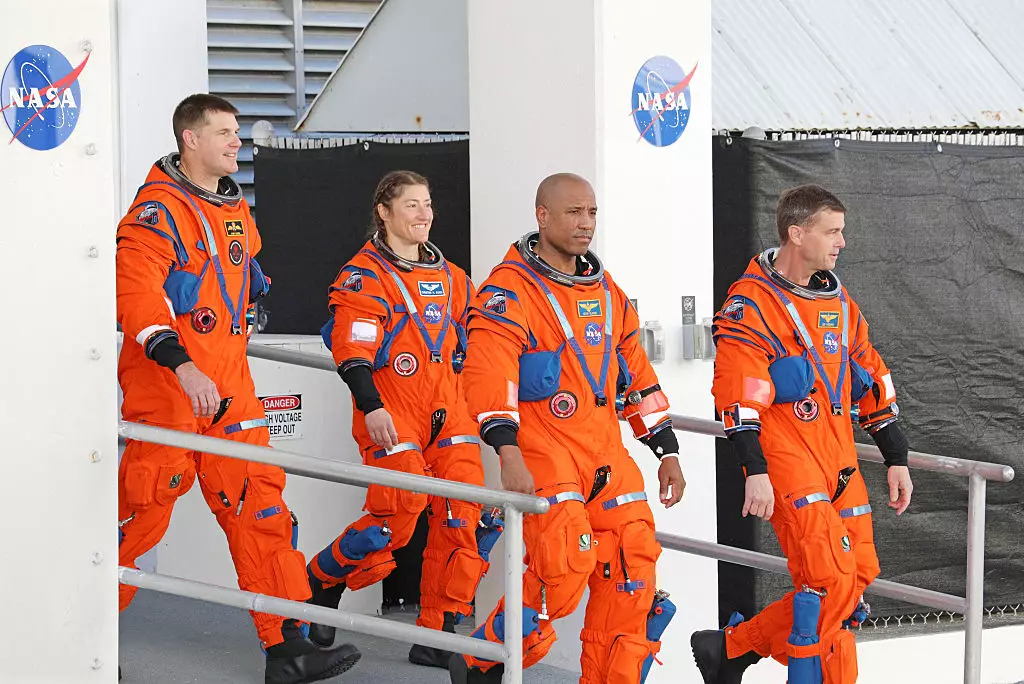
NASA astronaut and physician Mike Barratt stated during a committee meeting that the suit is ‘getting there,’ pointing out that astronauts have already completed about 700 hours of pressurized testing. He also mentioned that bending down in the suit ‘is really not too bad at all.’
With the launch just over a week away, everyone is hopeful that the suits will perform as expected.
NASA plans to live-stream the Artemis II launch on their YouTube channel.
You can watch it below here: