

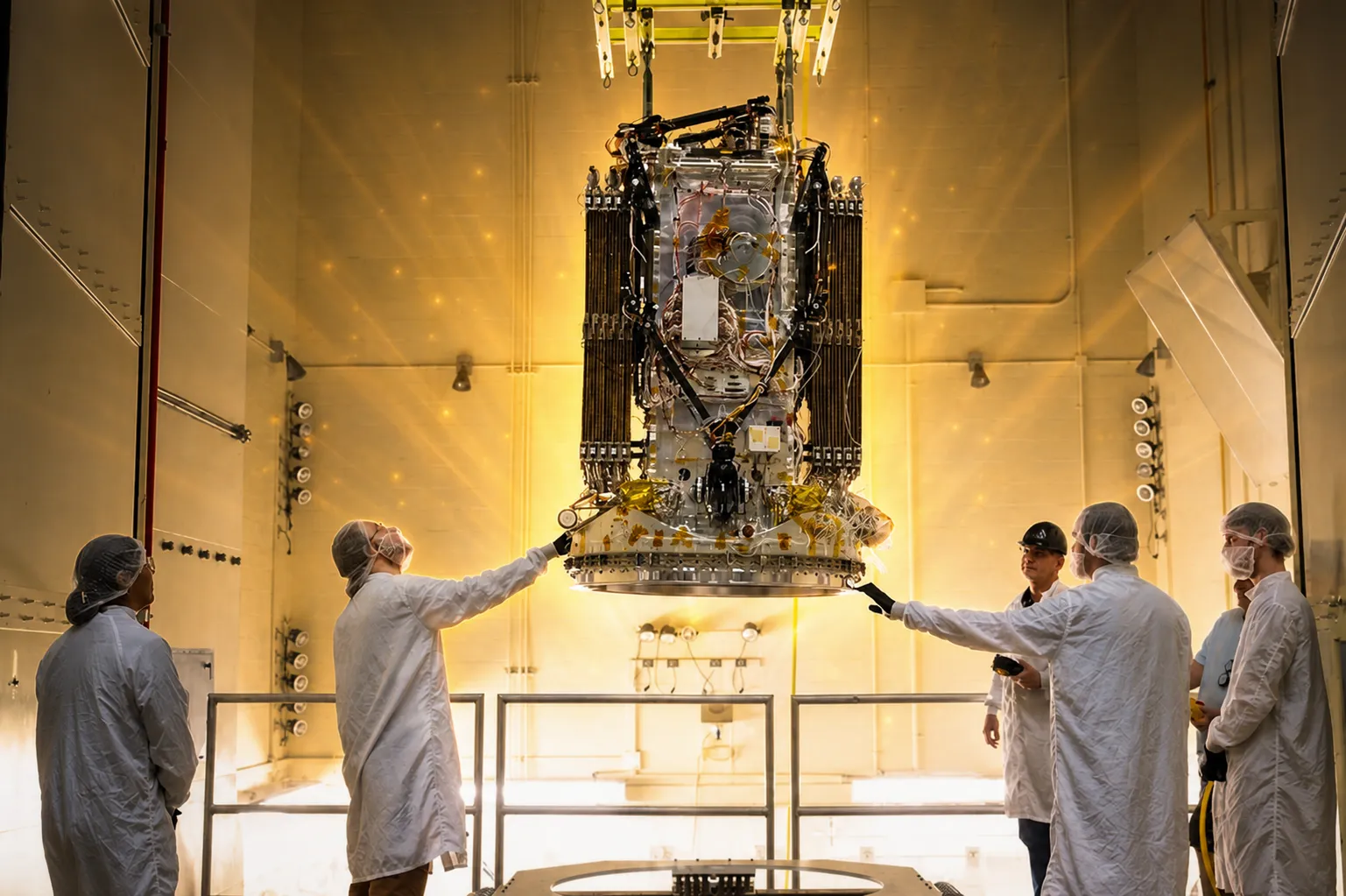
NASA is racing to save an aging telescope from falling back to Earth with a daring rescue mission. The Neil Gehrels Swift Observatory, which has been scanning the cosmos since its launch in 2004, has been sinking faster and faster because of recent intense solar activity that is dragging it toward our planet. To prevent its fiery demise, NASA hired startup Katalyst Space Technologies to execute an unprecedented rescue operation using a robotic spacecraft.
The $30 million salvage operation involves a specialized spacecraft called Link that will chase after Swift once it launches from Kwajalein Atoll in the Marshall Islands aboard a Northrop Grumman Pegasus XL rocket. Link is a three-armed robotic spacecraft about the size of a kitchen refrigerator, designed specifically to grapple with Swift and boost it to a higher, more stable orbit. The mission is historic because it represents the first time an American robotic spacecraft has been launched to capture and service an uncrewed government satellite.
Swift was originally placed in orbit at 375 miles above Earth when it launched more than two decades ago. Since then, it has gradually descended to roughly 224 miles. The spacecraft has no engines of its own to maintain its orbit, making it vulnerable to the natural drag caused by Earth’s atmosphere. However, in 2024, scientists realized Swift was losing altitude far faster than expected due to unusually intense solar activity. Record solar flare activity during this 11-year solar cycle peak expanded Earth’s upper atmosphere, creating significantly more drag on objects in low orbits than NASA’s original models predicted.
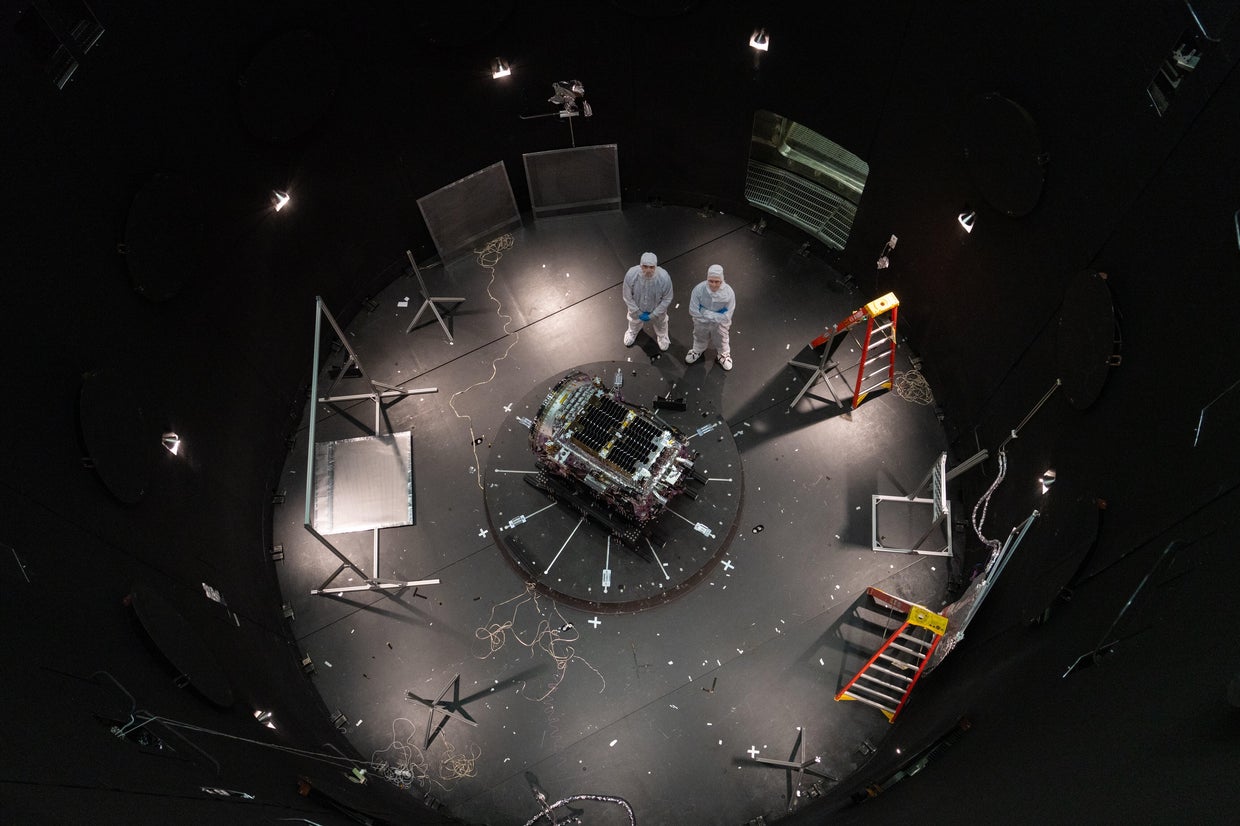
Time is running out. According to NASA’s calculations, Swift will fall below the critical altitude of 186 miles by October, at which point the rescue mission would become impossible to execute. Without intervention, the telescope would likely burn up in Earth’s atmosphere by year’s end. NASA’s science mission chief said the stakes are too high to let this happen. “If we let Swift reenter, we would lose that telescope. We would lose a lot of capability,” she explained, adding that “We don’t currently have the budget to build another one to replace that.”
The urgency of the situation is underscored by the unprecedented timeline. In September 2025, NASA awarded Katalyst Space a $30 million contract with an aggressive requirement: design, build, test, and launch a functioning rescue spacecraft within just nine months. The company delivered, shipping a completed robot to NASA’s Goddard Space Flight Center for testing by May. “No one thought it was going to be possible,” said NASA’s astrophysics director, noting that the successful preparation was remarkable given the compressed schedule.
Swift’s value to the scientific community justifies the extraordinary effort. The observatory is a first-of-its-kind multi-wavelength facility designed to study gamma-ray bursts, among the most powerful and violent explosions in the universe. The spacecraft houses three telescopes that observe gamma rays, X-rays, ultraviolet light, and optical wavelengths simultaneously. When Swift detects a gamma-ray burst, it can autonomously pivot within roughly 90 seconds to point its narrow-field instruments at the source, providing rapid alerts to astronomers worldwide. The telescope discovers approximately 100 gamma-ray bursts annually and typically receives about five requests per day for rapid follow-up observations of sudden cosmic events. No other space telescope possesses this combination of broad field coverage, rapid response capability, and multi-wavelength observation power.
The rescue operation faces significant technical challenges. Swift was never designed to be serviced in orbit and lacks docking ports or special grapple fixtures. Link must autonomously rendezvous with Swift and capture it using robotic arms that will grasp solid metal panels on the observatory’s corners. The capture is further complicated by the fact that no one has examined Swift up close for two decades, so engineers cannot be certain of the condition of the thermal insulation covering the spacecraft. Once Link successfully captures Swift, which should take about a month after launch, it will spend another couple of months using ion thrusters to slowly raise the telescope’s orbit from its current 224 miles back up to approximately 373 miles, restoring it to a stable altitude.
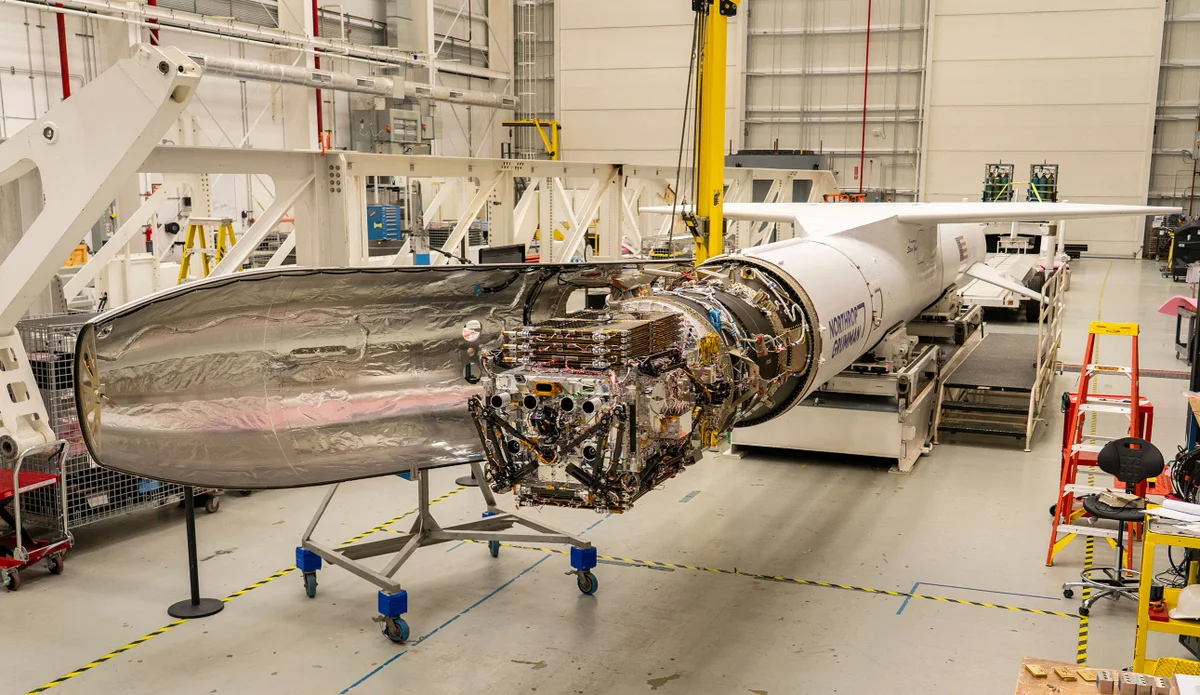
If Link succeeds in saving Swift, it will accomplish something entirely new. Only China has previously attempted a satellite-boosting mission, doing so four years ago. Katalyst Space sees this mission as the beginning of a commercial space servicing industry. The company’s executives envision hundreds of robots operating in orbit one day, not only rescuing and refueling aging satellites but also assembling solar farms and data centers in space.
Swift’s rescue also has implications for other aging telescopes. NASA’s Hubble Space Telescope, which has been an iconic observatory for decades, is also losing altitude due to solar activity. Space officials have indicated that Katalyst’s next-generation robot, still in development, could potentially save Hubble as well within a couple of years, though it would need to reach much higher altitudes than the current Swift mission.
The launch window has been narrow and challenging. The mission experienced multiple delays in late June and early July due to weather conditions and technical issues with the launch vehicle. Once Link finally reaches orbit, mission operators will conduct a series of tests before attempting the risky rendezvous and capture maneuvers. If all goes according to plan, Swift could be back in business and resuming its crucial observations by September, giving the telescope decades more life at a cost far less than building a replacement.