

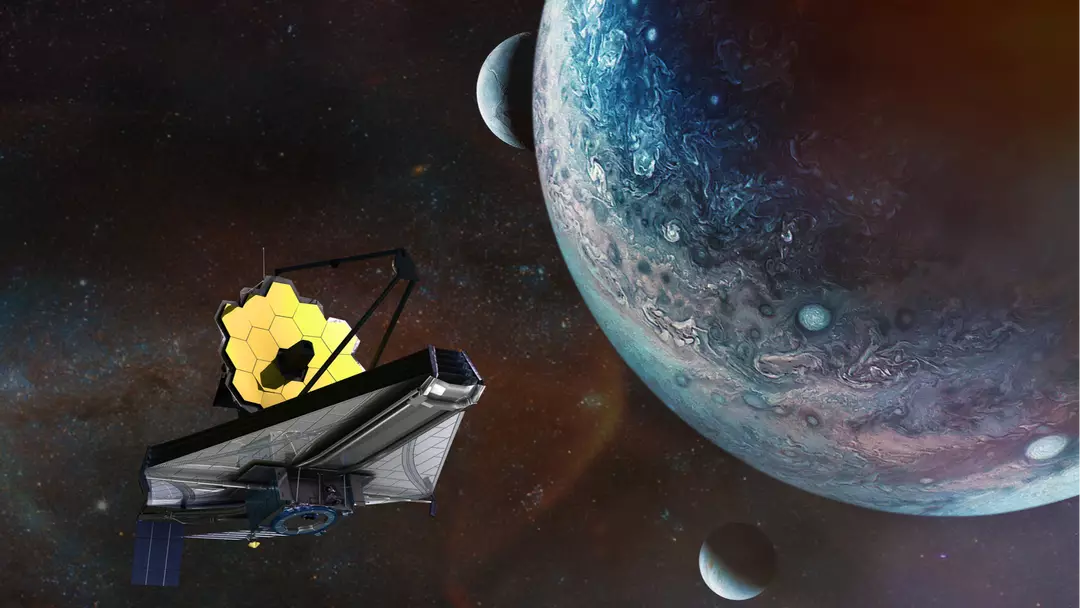
The James Webb Space Telescope (JWST) has been at the forefront of NASA’s most significant discoveries over the past few years, transforming our understanding of the cosmos.
Launched into orbit in December 2021, the JWST has captured stunning images of black holes and provided scientists with crucial insights into the formation of galaxies.
This state-of-the-art telescope, developed by NASA in collaboration with the European Space Agency (ESA) and the Canadian Space Agency (CSA), has also produced high-resolution images of a star being born 1,300 light-years from Earth and another on the brink of death.
Aside from capturing these remarkable images, the JWST is reshaping our knowledge of the universe, prompting experts to reevaluate what we once believed to be true.
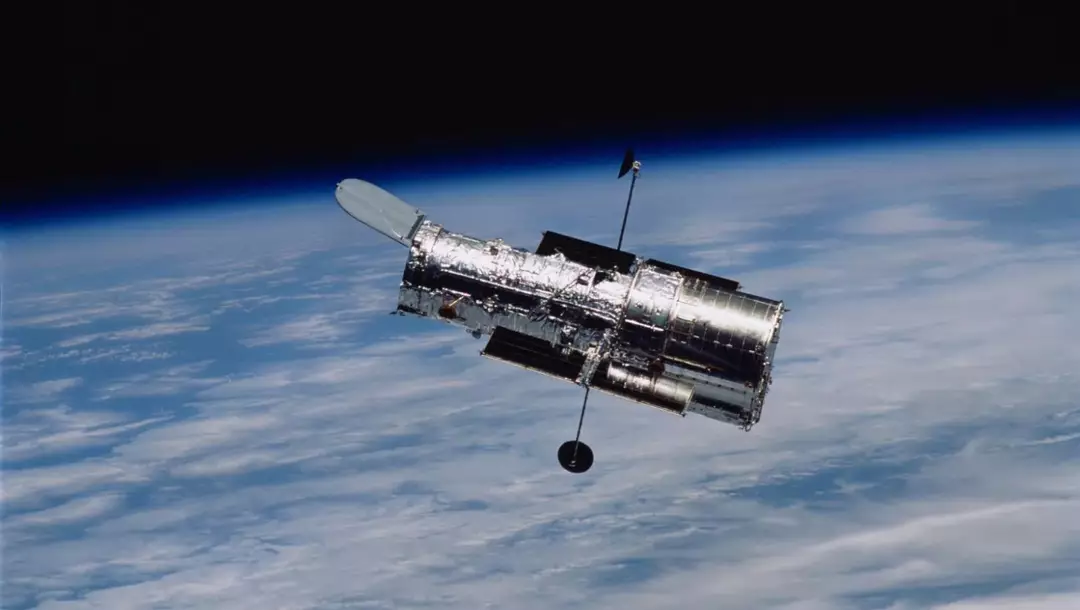
Prior to the JWST, scientists relied on the Hubble Telescope to determine the universe’s expansion rate, known as the ‘Hubble constant’.
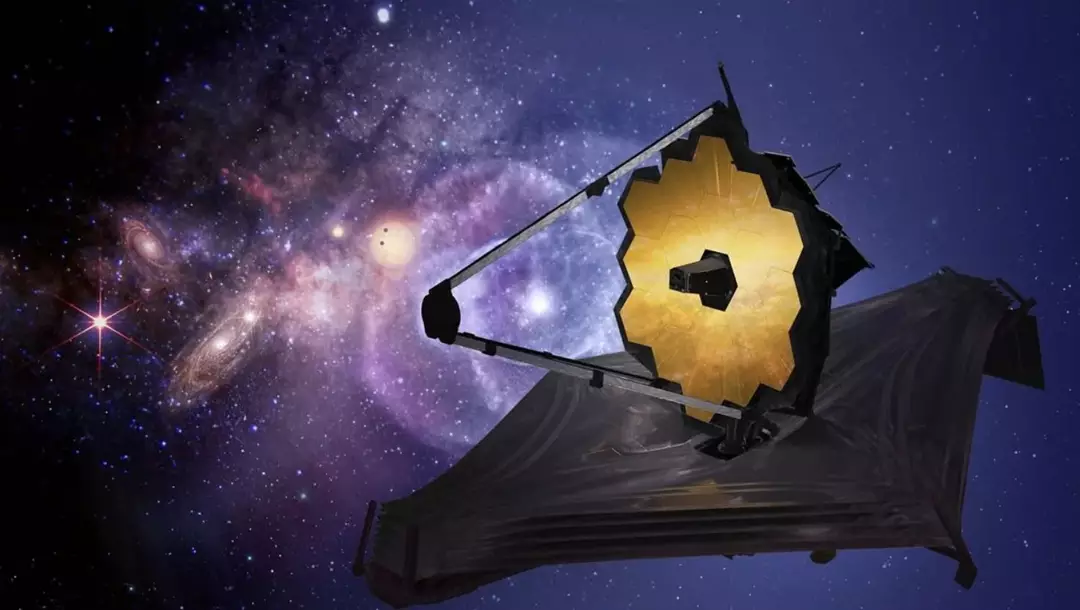
Nevertheless, as reported by Futurism, scientists have discovered that different instruments yield varying values, leading to what is termed the ‘Hubble tension’.
This inconsistency in the Hubble constant’s measured value was addressed by Nobel laureate and Johns Hopkins physicist, Adam Riess, who stated: “We’ve now spanned the whole range of what Hubble observed, and we can rule out a measurement error as the cause of the Hubble tension with very high confidence.”
In 2023, JWST corroborated the initial measurements from Hubble in 2019, confirming the longstanding theory that the expansion rate differs based on the location of measurement.
There are two primary methods to measure the Hubble constant, which quantifies the universe’s expansion rate.
The first involves examining the residual effects of the Big Bang, seen as minor fluctuations in the cosmic microwave background, while the second utilizes pulsating stars, or Cepheid variables, to gauge brightness through their outer layers.
Between 2009 and 2013, astronomers estimated the value using the first method to be around 46,200 mph per million light years, equivalent to about 67 kilometers per second per megaparsec (km/s/Mpc).
Riess and his colleagues, Saul Perlmutter and Brian P. Schmidt, later found the expansion rate to be roughly 74 km/s/Mpc by employing Cepheid variables to explore the universe’s past.
This revised figure is significantly higher than the previously accepted 67 km/s/Mpc.
This breakthrough has plunged the field of cosmology into a state of profound uncertainty.
Riess commented: “With measurement errors negated, what remains is the real and exciting possibility we have misunderstood the universe.”
Initially, it was believed that the discovery was due to a measurement error, confusing Cepheid stars with regular stars in Hubble’s view. However, this has since been disproven.
“We’ve now spanned the whole range of what Hubble observed, and we can rule out a measurement error as the cause of the Hubble Tension with very high confidence,” Riess further clarified. “Combining Webb and Hubble gives us the best of both worlds. We find that the Hubble measurements remain reliable as we climb farther along the cosmic distance ladder.”
In April, Scientific American reported that what was once the Hubble Tension is evolving into a more pressing ‘Hubble Crisis’.
Physicist Dan Scolnic of Duke University commented to the publication, “We’ve been at this ‘Hubble tension’ level for a long time. At some point the community needs to say, ‘This is more serious’. And the step up from ‘tension’ is ‘crisis’.”