


New Jersey has become the first state to enact legislation charging large employers with significant numbers of workers on Medicaid, establishing a controversial new funding mechanism that state officials say will help address a mounting crisis in public health spending.
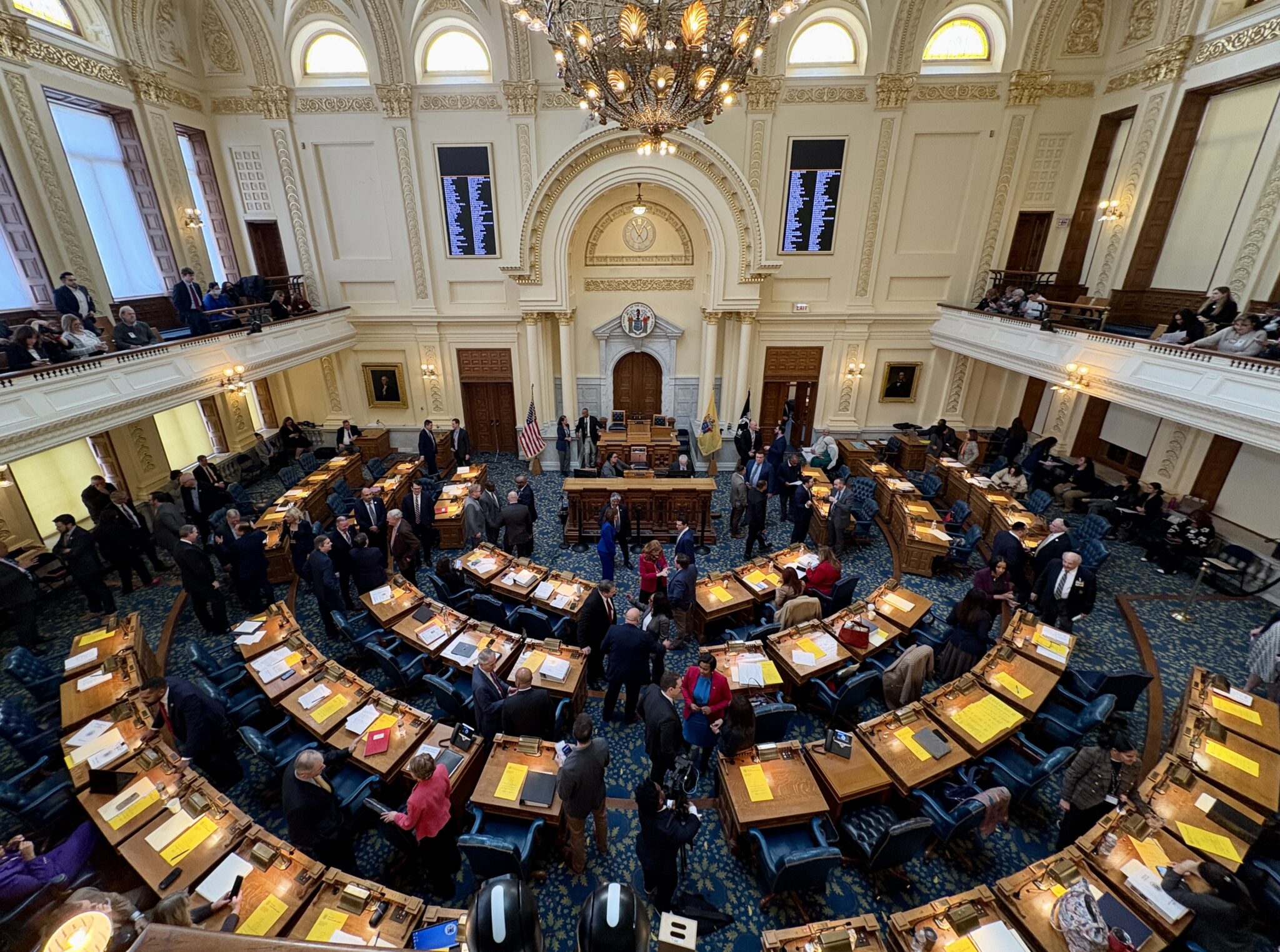
Governor Mikie Sherrill signed the measure into law this week, clearing the Democratic-controlled Assembly and Senate along party lines as part of her $60.7 billion budget proposal. The legislation, formally called the “Employer Healthcare Assistance Contribution,” requires companies with at least 50 employees enrolled in Medicaid to either provide affordable health insurance coverage or pay fees to the state.
The fees range from $325 to $725 annually per enrolled worker, with rates determined by the total number of workers covered by the public health program. The state expects the policy to generate approximately $145 million in annual revenue to help offset rising Medicaid costs at a time when New Jersey faces a projected $3 billion structural budget deficit.
A 2024 state Department of Human Services report identified nearly 750 companies, nonprofits, and government offices with 50 or more employees enrolled in the state’s Medicaid program, known as NJ FamilyCare. The report found that Medicaid claims for the roughly 382,000 people associated with these employers cost $427 million in just three months, with $137 million coming from state taxpayers.
Large employers dominate the list. Amazon, the state’s largest employer of Medicaid recipients, has approximately 5,600 workers with more than 10,000 dependents enrolled in Medicaid. Walmart employs over 10,000 workers and family members on the program, while Century II Staffing accounts for just over 9,000. Other major employers on the list include Wawa with roughly 7,600 individuals and their dependents, Target with approximately 5,200, and various logistics and retail companies including Home Depot, FedEx, CVS Pharmacy, and Dollar Tree.
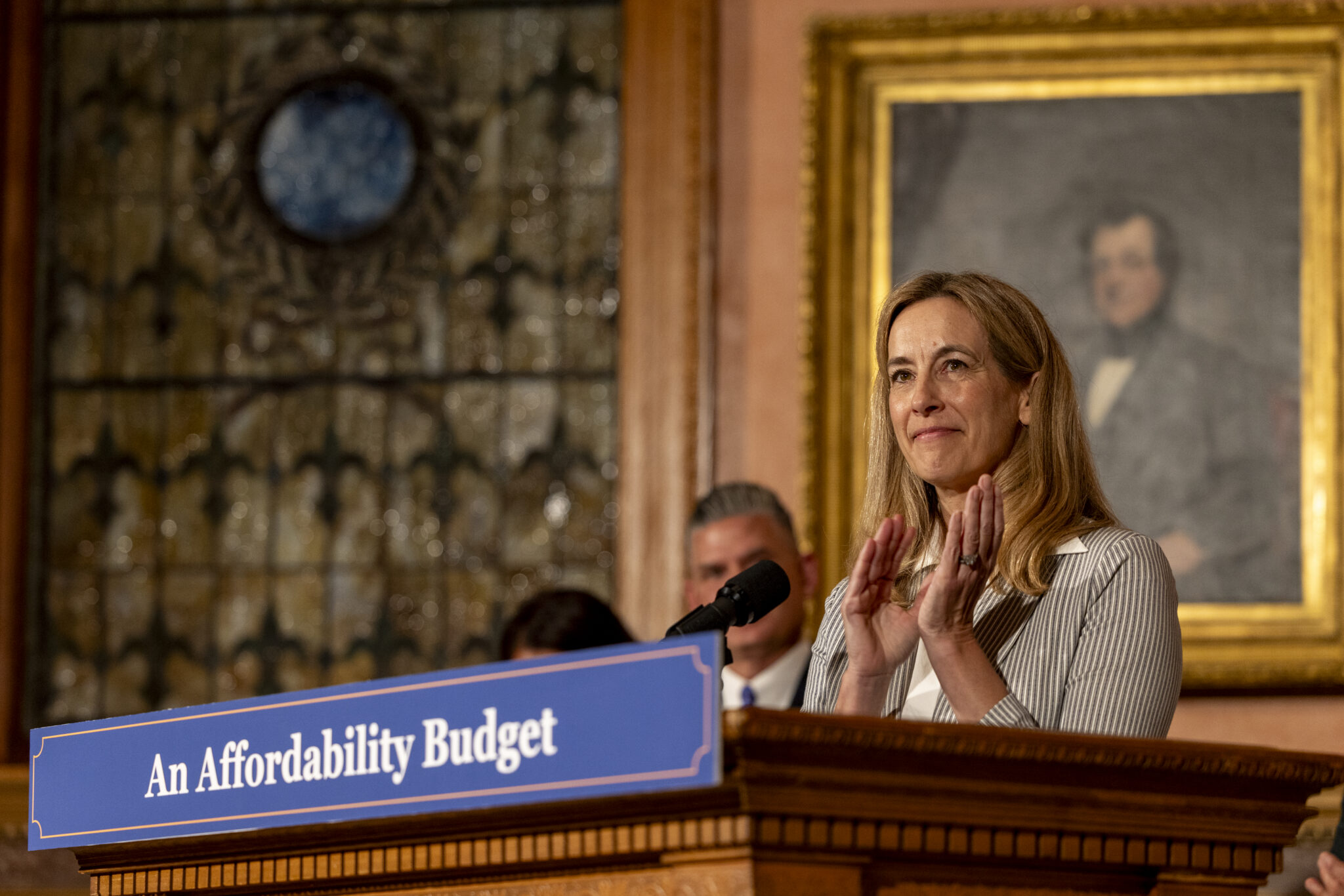
Sherrill introduced the proposal in her budget address in March, arguing that large profitable corporations should shoulder some responsibility for the health coverage costs of their low-wage workforce rather than shifting that burden entirely to taxpayers.
“Instead of asking taxpayers to foot that bill, this budget looks to large employers,” Sherrill said during her budget address at the Trenton Statehouse. “It asks any company with 50 or more employees on Medicaid to cover their workers, which they should do anyway, or pay a fine.”
The policy comes amid significant pressure on state budgets as New Jersey and other states prepare for federal changes to Medicaid. State officials project that changes ordered by the Trump administration could force more than 300,000 New Jerseyans off Medicaid and eventually cost the state $3.3 billion annually in hospital aid.
The initiative is not entirely new. Massachusetts has operated a similar program known as the Employer Medical Assistance Contribution (EMAC) since 2014. However, the Massachusetts model functions differently, applying to all employers with six or more employees and charging a percentage of wages rather than a per-worker fee. Massachusetts employers pay contribution rates ranging from 0.12% to 0.34% on the first $15,000 of each employee’s wages.
The New Jersey approach has drawn fierce opposition from the business community, which argues the policy will penalize job creators for circumstances largely beyond their control. Multiple business groups, including the New Jersey Business & Industry Association, the New Jersey Chamber of Commerce, and industry associations representing restaurants, retailers, and other sectors, have raised concerns about the proposal’s impact on competitiveness and employment.
“While we appreciate the Legislature’s ongoing efforts to address health care affordability and ensure the long-term sustainability of Medicaid, this proposal is fundamentally flawed and unworkable public policy that would make New Jersey less affordable, less competitive and less welcoming to employers and working families alike,” a coalition of industry groups wrote in a letter to lawmakers opposing the measure.
Walmart and Amazon both disputed the characterization that they fail to offer affordable coverage. Amazon said it recently announced a $1 billion investment to raise pay and lower health care costs for warehouse workers and drivers, maintaining that health care coverage is available to entry-level workers at minimal costs. Walmart emphasized its commitment to offering workers “affordable, robust” medical plans and questioned whether the policy would actually improve healthcare affordability for the state’s poorest residents.
Critics beyond the business community have also raised concerns. Jennifer Spiegel, a policy analyst with the progressive New Jersey Policy Perspective, acknowledged that while the state needs additional funding for Medicaid, the fee structure could inadvertently discourage companies from hiring people on public healthcare plans, putting low-wage workers at greater risk.
The policy reflects a broader debate about whether companies that pay wages low enough to qualify workers for Medicaid are effectively subsidizing their labor costs through government programs. When workers earn wages low enough to qualify for Medicaid, employers shift what would otherwise be a business expense—health insurance coverage—onto the state and federal governments.
Supporters argue the policy creates a financial incentive for employers to improve their wages and benefits rather than relying on public programs to cover their workforce. During the legislative debate, Assemblyman Avi Schnall called the measure “tax fairness,” noting that taxpayers currently cover an estimated $26 billion in Medicaid costs annually, with more than $7 billion from New Jersey state funds.
The practical mechanics of the policy remain complex. The fees will apply to both workers and their dependents covered by Medicaid, meaning a company’s liability could far exceed the number of direct employees on public coverage. Some business leaders expressed uncertainty about whether they could even accurately calculate their exposure, given that many employers do not systematically track how many workers have enrolled in Medicaid.
School boards emerged as an unexpected target of the policy. The state Department of Human Services report identified 80 school boards and other government agencies with 50 or more employees on Medicaid, primarily support and operational staff rather than teachers. Sherrill’s office declined to say whether the proposal would ultimately apply to government employers.
As for whether other states will follow New Jersey’s lead, the picture remains unclear. While Massachusetts has its own employer contribution system, no other state has adopted New Jersey’s specific approach of charging per-worker fees tied directly to Medicaid enrollment. Connecticut’s Governor Ned Lamont has proposed considering a similar concept, but that proposal died in committee in May 2026. The state’s structural budget challenges and pressure from federal Medicaid reductions may compel other states to examine the model more seriously, though business opposition and concerns about unintended consequences for low-wage workers are likely to slow adoption.

The Assembly approved the legislation 48 to 22, while the Senate approved it 22-15, with most Republicans opposing and all Democrats supporting the measure. The fiscal year for which the new fees will apply began July 1.