

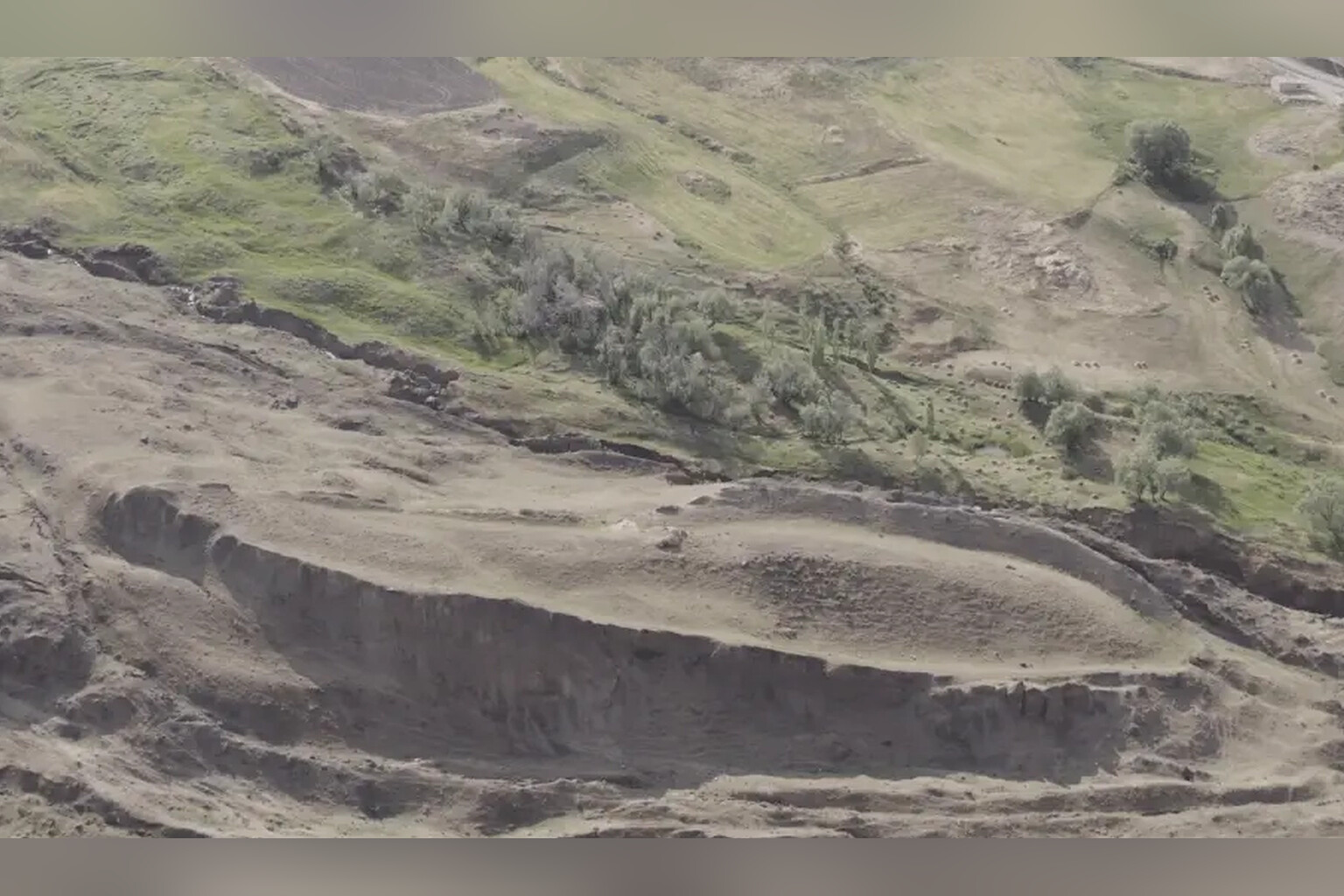
Researchers studying a boat-shaped formation in eastern Turkey say radiocarbon tests on charcoal samples date to roughly 4,300 years ago, a window that overlaps with the biblical timeline for Noah’s Flood.
Andrew Jones, 47, founder of Noah’s Ark Scans, announced the results earlier this month after his team extracted fragments from about 30 feet beneath the Durupınar site near Mount Ararat. The formation has drawn ark hunters for nearly seven decades, though mainstream archaeologists remain deeply skeptical that it represents anything more than a geological curiosity.
Jones said on the project’s platform that the discovery came after years of persistence. “Our project director, Professor Cenker Atila, found blackened wood inside the Durupınar formation in eastern Turkey,” he wrote. “We sent two charcoal samples for radiocarbon dating, and both point to wood that grew about 4,300 years ago. What caught my attention is that 2348 BC, the year Archbishop Ussher proposed for Noah’s Flood, falls within the most likely date range for each sample.”
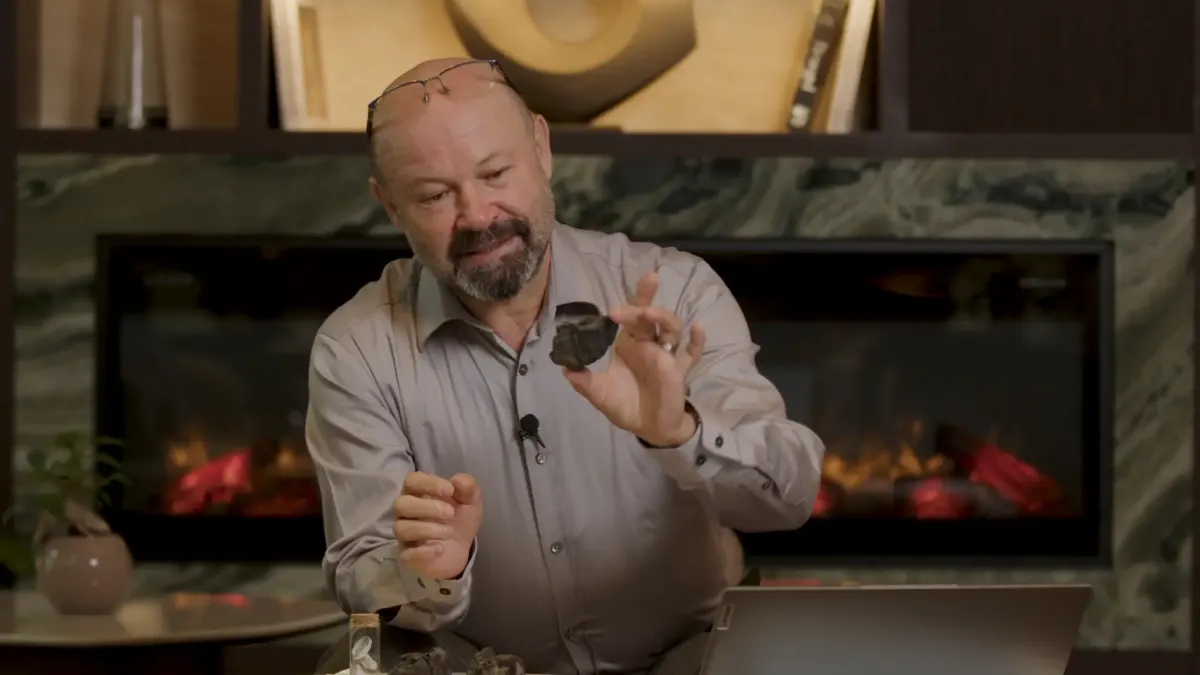
He added that the personal significance ran deep after decades of visits. “After nearly 30 years of visiting the Durupınar Noah’s Ark site, it’s exciting to hold a piece of wood from inside this formation and know it existed during the time of Noah’s flood according to the Bible.”
Atila, the project director, characterized the potential implications in sweeping terms. He said the find could be “one of the most significant archaeological discoveries in history,” though he did not claim definitive proof that the wood came from Noah’s vessel itself.
The Durupınar site, first identified as a possible ark location in the 1950s, has produced repeated cycles of excitement and disappointment. Previous teams have announced petrified wood, metal fittings, and other evidence only to see those claims challenged or debunked. The current researchers emphasize that their dating results establish chronological overlap with the biblical account rather than confirming the ark narrative directly.
Scientific critics note that even verified ancient wood at the site would not resolve deeper questions about the flood story’s historicity. Eric Vanden Eykel, a professor writing for The Conversation, placed the current search in a much broader scholarly context. “The current search at Durupınar, like those that came before it, assumes that behind the biblical story there is tangible evidence just waiting to be found,” he wrote. “For nearly 70 years this boat-shaped formation has kept that possibility alive.”
Vanden Eykel, who studies ancient flood traditions, pointed to cross-cultural parallels that complicate any literal reading. “Ancient flood stories and how they changed across cultures can reveal how people made sense of catastrophe, human violence and the possibility of starting over,” he continued. “A boat-shaped formation in eastern Turkey probably cannot.”
Most modern biblical scholars, he noted, understand Noah’s Ark as part of a widespread flood myth tradition in which multiple cultures tell similar stories of divine warning, vessel construction, and survival through deluge. The biblical version represents one telling among many rather than a unique historical report awaiting archaeological confirmation.
The genetic implications of a literal global flood have also drawn scientific scrutiny. A single breeding pair of every animal species would produce severe inbreeding depression, making repopulation biologically implausible—a point researchers generally acknowledge even when pursuing the ark search.
The team plans further analysis of additional samples from the formation.