


A new USC poll shows state Sen. Scott Wiener leading San Francisco supervisor Connie Chan in the race to succeed Nancy Pelosi, despite the former speaker’s heavy campaigning for her chosen candidate.
The survey of 454 likely voters, conducted from Oct. 16 to 19, puts Wiener, 54, at 47% support against Chan’s 41%, with 9% undecided. The margin remains within the poll’s error range, keeping the contest competitive with just two weeks until Election Day.

Christian Grose, the USC professor who oversaw the poll, told the San Francisco Standard that Pelosi’s voter base is fracturing in unexpected ways. “Pelosi has endorsed the person who has far left support … so her endorsement is not translating to Chan support,” Grose said. “On the other hand, Chan might be losing by a lot without the endorsement.”
The poll reveals a stark ideological divide between the two Democrats. Wiener draws his strongest backing from voters who identify strictly as Democrats, while Chan’s core support comes from those describing themselves as “very liberal” or aligned with the Democratic Socialists of America. Grose noted that Wiener’s backers tend to be higher-income and more reliable voters in midterm elections. “He’s drawing support from the kinds of people who tend to vote in midterm elections and who tend to have higher turnout in general,” Grose said. “Her base seems to be really progressive, very liberal.”
Pelosi, 84, who is set to retire from Congress, remains personally popular in the city she has represented for decades. The USC survey found 55% of San Francisco voters approve of her performance against 32% who disapprove. That personal standing, however, has not transferred to Chan in the way the former speaker’s operation likely anticipated.
The endorsement itself carried significant weight during the primary season. Pelosi’s backing helped Chan advance past other competitors to secure a spot in the general election against Wiener, who entered the race as the frontrunner. The former speaker has since campaigned heavily for Chan, making clear her preference for who should inherit the seat she first won in 1987.

The relationship between Pelosi and Wiener has been strained for years. Tensions reportedly escalated after Wiener made plain his interest in Pelosi’s seat before she announced her retirement plans. Pelosi’s decision to back Chan rather than the more established state senator was widely interpreted as a deliberate snub.
That friction surfaced publicly during the campaign when Pelosi and Chan condemned Wiener for deploying an AI chatbot that mocked Chan’s policies. The two women labeled the tool “racist” and “sexist,” turning a technology gimmick into a flashpoint in the closing months of the race.
Pelosi, at a Politico event on Aug. 11, avoided direct questions about her intervention in the contest and her assessment of Wiener. She said at that event she endorsed Chan because she wanted to see more women in Congress.
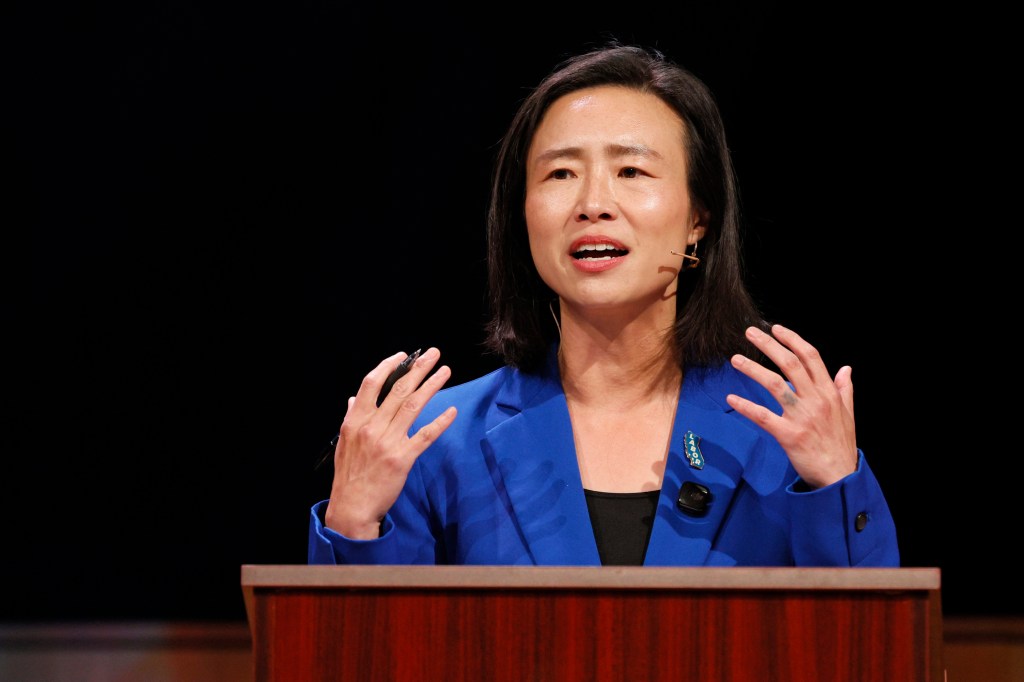
The demographic patterns in the USC poll suggest Wiener may hold a structural advantage as the election approaches. His voters’ higher turnout history and party-regular status could prove decisive in a low-salience race where motivation matters. Chan’s more progressive coalition, while vocal, has historically shown less consistency in non-presidential election cycles.
The California congressional seat represents one of the most watched succession battles in national Democratic politics, testing whether Pelosi’s legendary political operation can still dictate outcomes in the post-Trump era.