


—
A second upstate New York resident has reported being warned by federal officers after criticizing U.S. Immigration and Customs Enforcement, adding to mounting concerns about the agency’s response to online speech and activism.
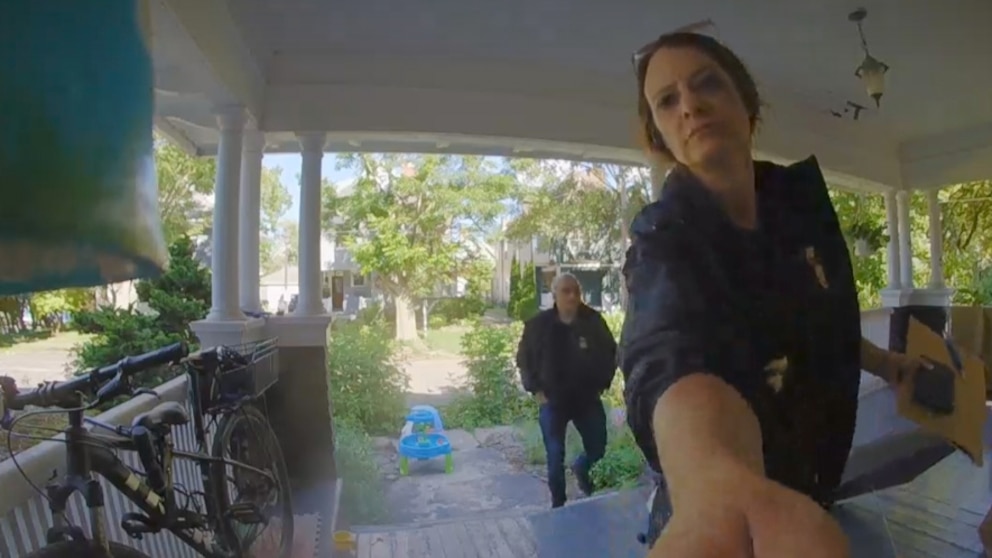
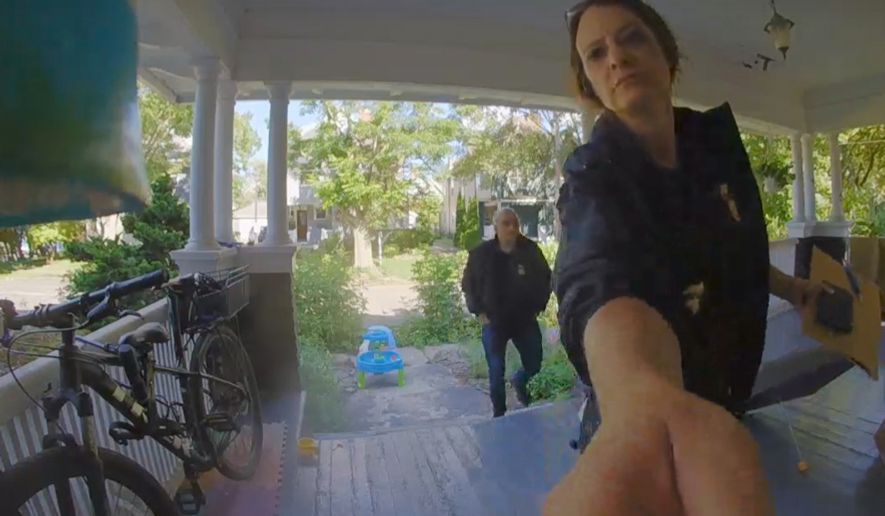
David Streever, a Rochester resident, was visited at his home by two federal officers who presented his wife with a warning notice while he was traveling in Finland. The officers claimed that an email he had sent months earlier constituted a threat. Streever sent the email to Todd Lyons, who was then serving as the acting director of ICE, in January following a fatal shooting in Minneapolis.
The warning came in the same week that Paigelynne Gonyea, a poll worker from Syracuse, reported that two federal officers confronted her at a voting location during New York’s primary elections to discuss a social media post she had written criticizing ICE. The two incidents have sparked significant debate over free speech protections and federal law enforcement tactics.
Streever’s email to Lyons was written after an ICE agent fatally shot Renee Good, a 37-year-old American citizen, during an anti-ICE demonstration in Minneapolis on January 7. In his email, Streever called Lyons “a monstrous human being” who “will never know peace.” The message also stated: “The way you are protecting the obvious execution in Minnesota, even as we see the videos, will lead to your downfall. Even Trump will turn on you before the end, and you will be a sad, despised man who eats himself alive with shame at your own pathetic weakness.”
Adam Steinbaugh, an attorney with the Foundation for Individual Rights and Expression representing Streever, has argued that the email constitutes protected political speech. Federal agents even attempted to confront Streever at a hotel in New York City when he returned from Finland, though hotel staff turned them away.
Streever stated in a response to the warning: “Like many Americans, I was deeply upset after the shootings in Minnesota and I felt compelled to do something. Writing a letter to the head of ICE seemed like the least I could do to express my sense of outrage. I never dreamed it would lead to a knock on my door by federal officers.” He has not contacted the Department of Homeland Security since receiving the warning and does not plan to do so.
Gonyea, the poll worker, believes her warning was related to a social media post from January in which she posted a picture of Jonathan Ross, the ICE officer who shot and killed Good. In the post, Gonyea wrote: “I think today is a great day for Jonathan to be indicted.” The post was made after Ross had been identified publicly by news media and remains online.
However, a Department of Homeland Security spokesperson claimed that Gonyea posted Ross’s address in a separate social media message, alleging that she had committed a federal crime by doxxing an ICE officer. The agency stated: “if you doxx our officers, we will investigate you, and you will be brought to justice.”
It is illegal under federal law for armed federal law enforcement to enter polling places, and New York has also recently enacted a state law barring immigration agents from entering voting sites. A local election commissioner acknowledged that it was “a mistake” for the agents to enter the polling place and questioned why they needed to confront Gonyea about her social media post on Election Day.
Free speech advocates have characterized both incidents as examples of federal law enforcement infringing on constitutionally protected expression. Nathan Freed Wessler, deputy director of the American Civil Liberties Union’s speech, privacy and technology project, stated that the First Amendment guarantees the right to criticize government officials. He expressed concern that citizens are being “tracked down at their home or hotel room by federal agents in retribution for sending an email merely expressing frustration and opposition to the government’s actions.”
Civil liberties experts have emphasized that demanding government accountability for the death of an American citizen is a highly protected form of political speech. They argue that if the administration intends to prosecute such speech, it represents an attempt to fundamentally redefine the scope of the First Amendment and permissible public debate.
The Good shooting sparked national protests and multiple investigations. The Hennepin County Medical Examiner classified the death as a homicide. Federal officials defended the shooting as self-defense, claiming Good attempted to run over an ICE agent, though video evidence and the Minneapolis mayor disputed this characterization.
ICE declined to provide comment on either Streever’s or Gonyea’s cases, citing an ongoing investigation. The agency stated that it “investigates all credible threats towards its employees and officers, including threats to the ICE Director.”
The New York Attorney General’s Office acknowledged awareness of both residents’ contacts with federal agents and said it has been reviewing the interactions. These incidents come amid broader tensions in New York regarding federal immigration enforcement operations and whether local law enforcement should cooperate with ICE activities.
Steinbaugh’s legal argument focuses on the distinction between protected political speech and true threats. He contends that a true threat constitutes a serious expression of an intent to commit violence, and that Streever’s email does not meet this standard. Instead, he characterizes it as political speech and an act of petitioning the government—core forms of expression protected by the First Amendment.