

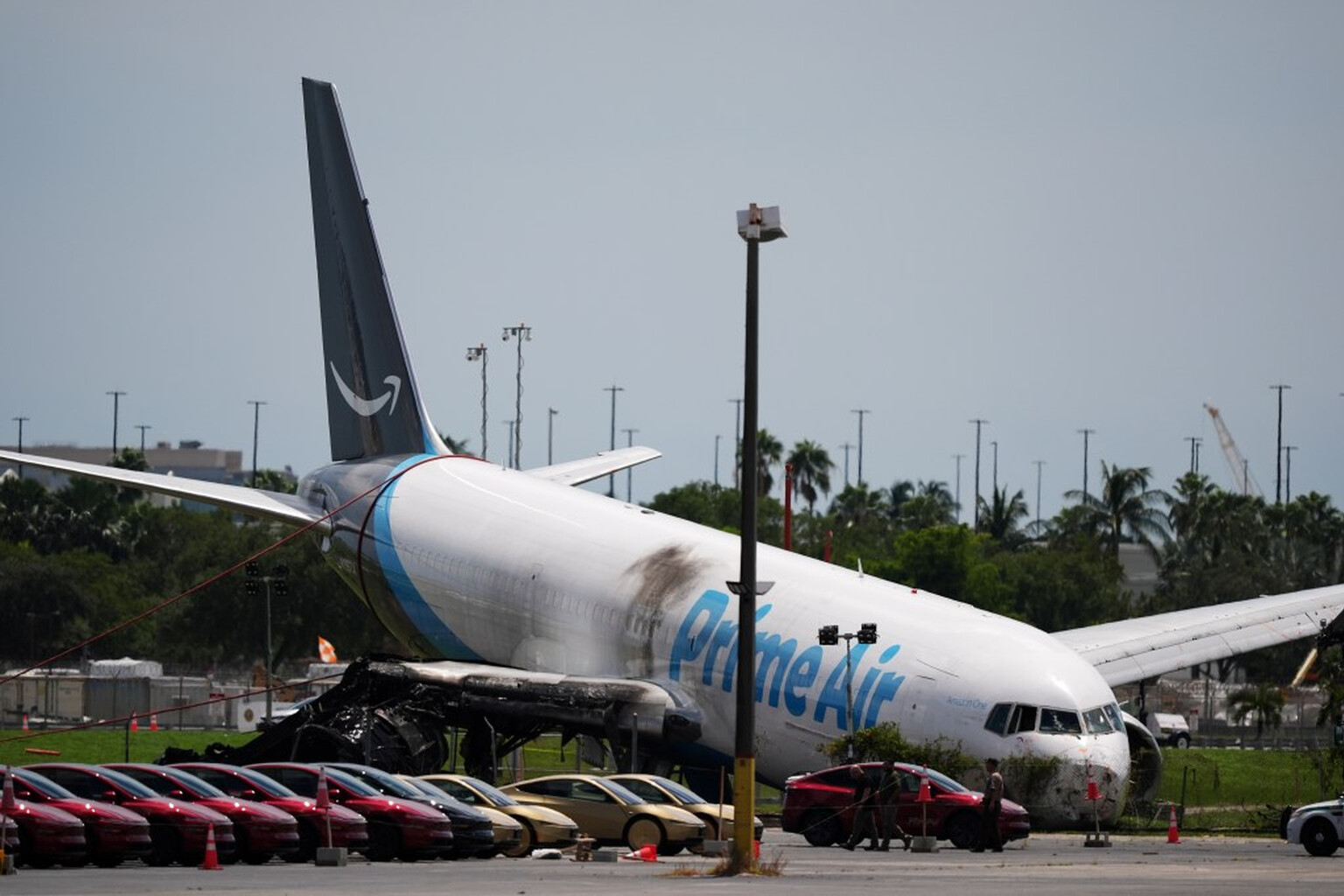
Federal investigators revealed Tuesday that critical braking systems failed to activate during a deadly cargo jet crash at Miami International Airport that killed five people.
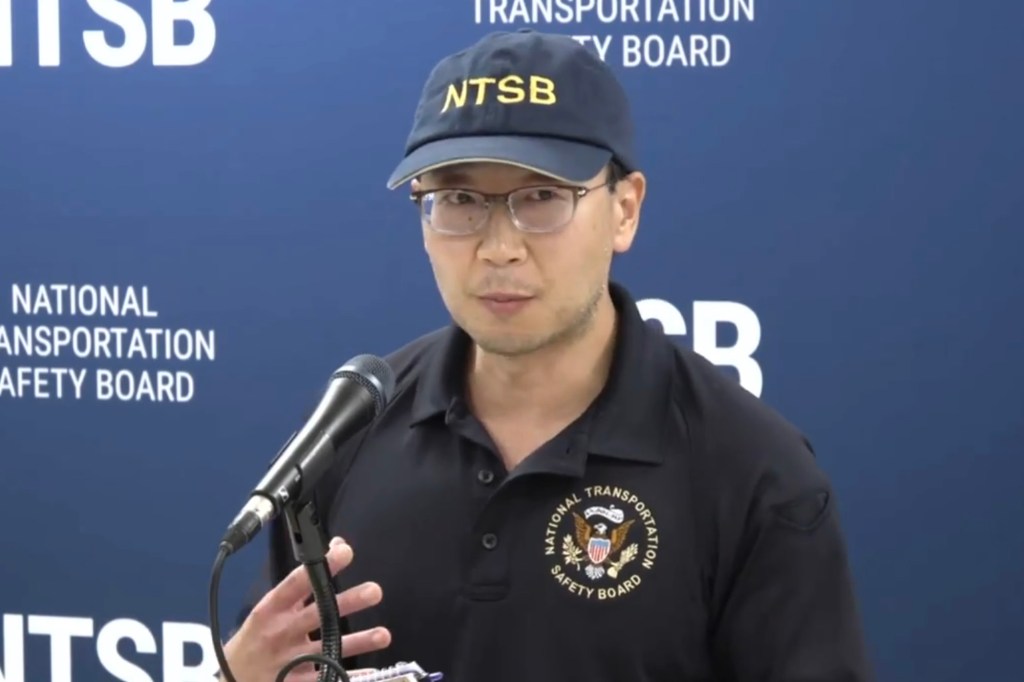
The National Transportation Safety Board said data from the downed aircraft shows that while wheel brakes engaged, both speed brakes and thrust reversers did not deploy as the Amazon Prime Air flight overran the runway last Sunday. NTSB investigator Chihoon Shin delivered the finding during a briefing on the probe into Flight 7598.
“There was no indication in the recorded data that speed brakes or thrust reversers were deployed,” Shin said.
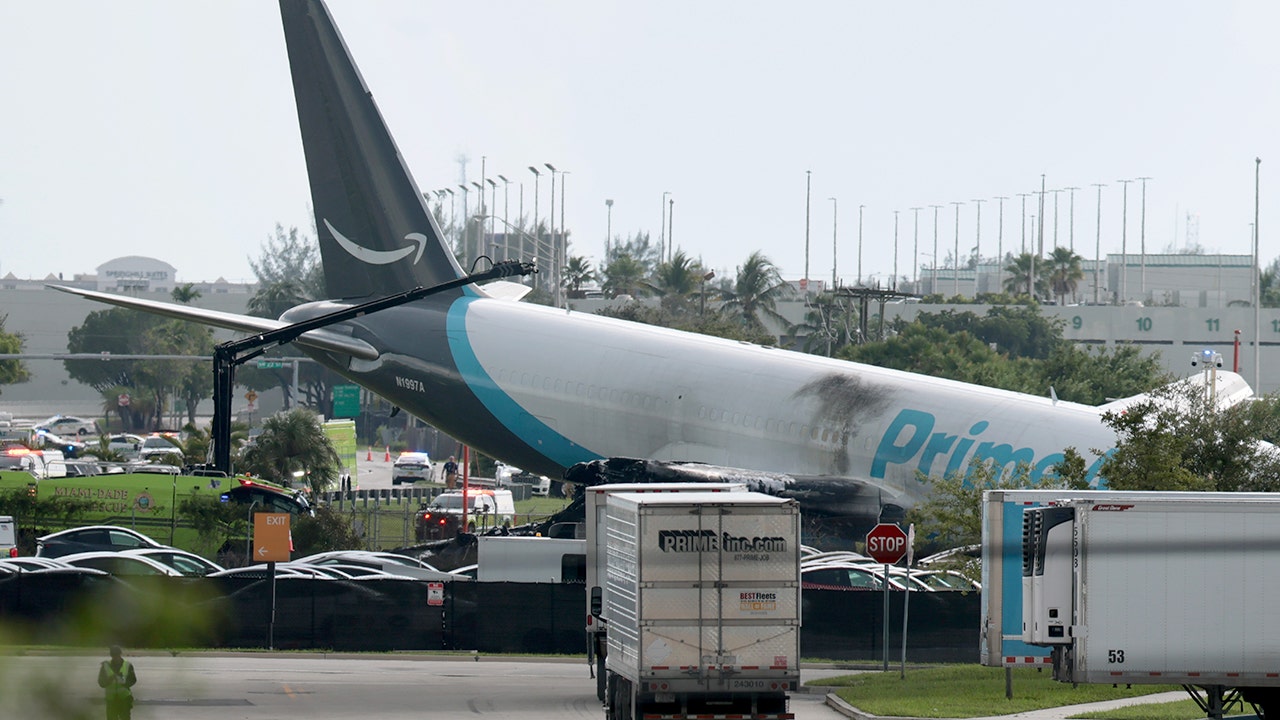
The Boeing 767-300, operating for Amazon’s Prime Air service, barreled past the runway, crushed a van carrying seven people on airport property, then plowed through a fence and struck a second vehicle before halting near a parking lot. Five people died and five others were injured in the fiery wreck, officials confirmed.
Shin said investigators intend to interview the pilots to understand how they manipulated the controls during the landing attempt. He cautioned against premature conclusions about whether the crew followed proper procedures.
“When we analyze the full list of parameters, we’ll have a better idea of the aircraft’s performance during this landing. Was it normal? Was it not? And what was working and what was not. So I’m not going to speculate on what should have been right now,” he said.
The investigator emphasized that crew interviews are essential to completing the picture. “What we need to do is talk to the crew and get their account to understand how they’re manipulating the controls in order to get a better understanding of the situation,” he said. “That’s something that we need a complete understanding of.”
NTSB Chairwoman Jennifer Homendy provided details about the flight crew’s experience. The captain, 55, had logged 7,145 flight hours according to his Class 1 medical certificate dated March 31. The first officer, 37, had accumulated 2,655 flight hours per his certificate from April 13. Officials did not publicly name either pilot.
Homendy also addressed the cargo manifest, confirming no hazardous materials were aboard the aircraft. The load consisted primarily of contact lenses weighing 32,222 pounds, plus a standard flight kit.
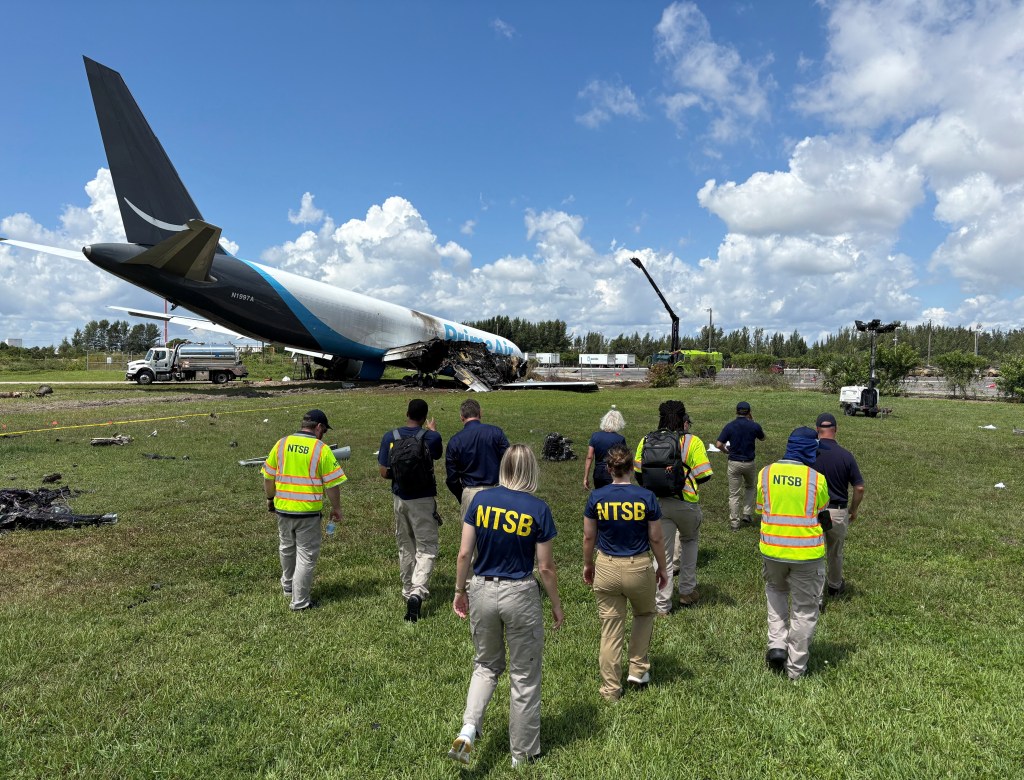
The crash occurred when the converted freighter, arriving as Prime Air Flight 7598, failed to stop on the runway. The van struck on airport property took the brunt of the impact, with seven occupants inside. The aircraft continued past the airfield perimeter, breaching the fence and hitting a civilian vehicle in the area beyond before finally coming to rest.
The NTSB has not indicated how long the full investigation will take. Shin noted that complete data analysis will be necessary before investigators can determine whether the landing profile was normal and which systems functioned as designed.