

The Department of Justice has subpoenaed four the outlet journalists over their reporting on security concerns with President Donald Trump’s new Qatari-gifted Air Force One, marking what press freedom advocates are calling an unprecedented threat to the nation’s free press.
Federal agents delivered subpoenas Friday evening to journalists Julian Barnes, Eric Lipton, Tyler Pager and Eric Schmitt, ordering them to testify before a federal grand jury in Manhattan on Wednesday. The subpoenas were issued by U.S. Attorney Jay Clayton of the Southern District of New York, who was recently nominated by Trump to be the next national intelligence director.
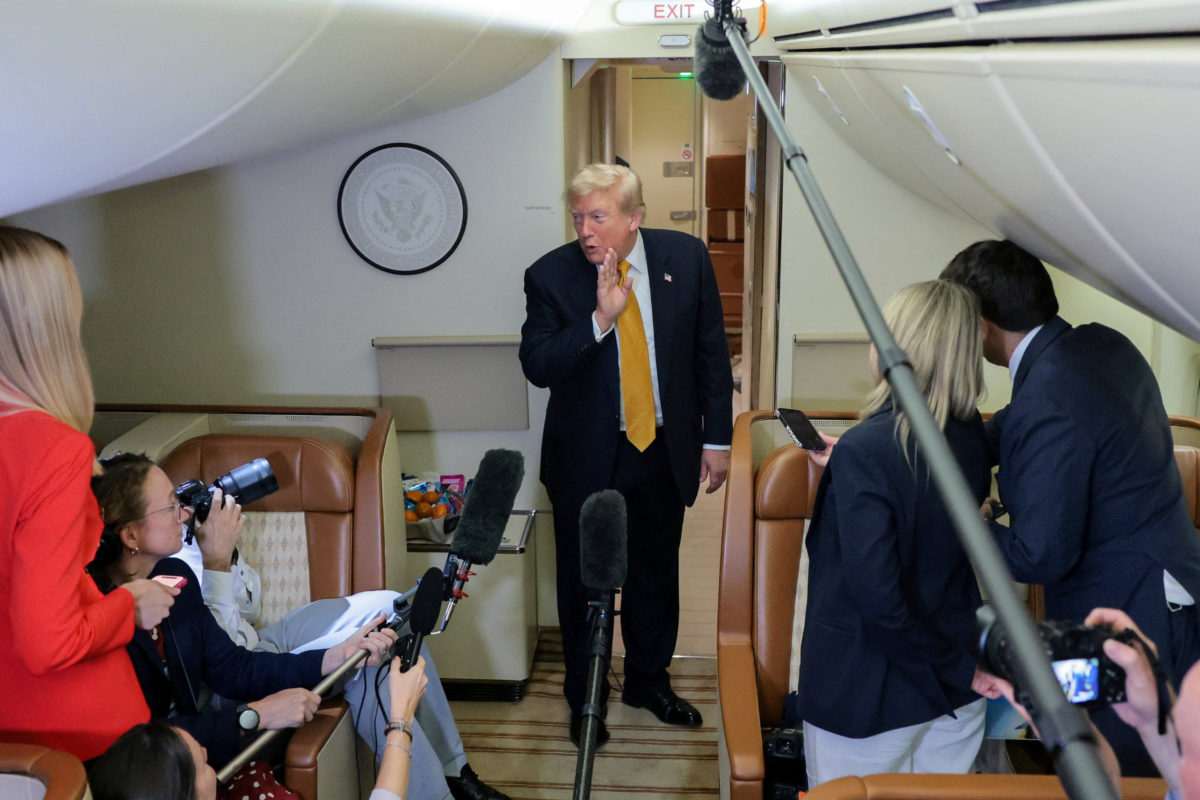
The Times published its initial report Wednesday, citing anonymous sources to report that the Secret Service urged President Trump to leave a NATO summit in Turkey on an older Air Force One instead of the new Boeing 747 donated by Qatar due to security concerns. The following day, the newspaper reported again, citing anonymous sources, that the new jet lacked defensive countermeasures and advanced antimissile capabilities that were present on the older aircraft.
The subpoenas seek to compel the journalists to testify regarding what prosecutors describe as “an alleged violation of federal criminal law,” though the court documents lack specifics. The move represents the latest escalation in the Trump administration’s assault on media outlets, drawing swift condemnation from press freedom organizations and lawmakers who say it represents a direct assault on the First Amendment.
“The appearance of federal law enforcement agents on the doorstep of news reporters should shock the conscience of any American who believes in the Constitution and the press freedom it protects,” David McCraw, the Times’ senior vice president and deputy general counsel, said in a statement. He characterized the action as “an attempt to prevent the public from knowing what is happening in their country by intimidating journalists from doing their jobs.”
The subpoenas also come after the FBI contacted the Times before publication of the initial Wednesday story, asking that the article be withheld on national security grounds, though the official declined to specify what security concerns existed. The FBI official also requested that the newspaper disclose its sources, which the Times refused to do.
Bruce D. Brown, president of the Reporters Committee for Freedom of the Press, characterized the subpoenas as breaking with longstanding Department of Justice policy. “The subpoenas issued to journalists at the outlet break from longstanding Justice Department practice to protect the public interest and press independence by requiring prosecutors to only seek information from reporters as a last resort when all other avenues have been exhausted,” Brown said in a statement.
The subpoenas represent a significant shift from prior policies. In April 2025, Attorney General Pam Bondi rescinded a Biden-era policy that had protected journalists from having their phone records secretly seized during leak investigations, giving prosecutors renewed authority to use subpoenas and search warrants against members of the press. The move was long decried by news organizations and press freedom groups.
It is extremely rare for the government to attempt to compel journalists to testify before a grand jury and reveal their sources. Adam Steinbaugh, senior attorney for the Foundation for Individual Rights and Expression, said the tactic “sends a chilling message to journalists and whistleblowers alike: Watch what you say, or expect a knock on the door.”
The Trump administration said in a statement that the reporters are not targets of the investigation, but rather prosecutors are seeking to identify government officials responsible for leaking classified information about the new Air Force One. “Every administration has addressed the crime of leaking national security information,” a Justice Department spokesperson said.
Trump, aboard the new Air Force One during the flight from Turkey, denied security concerns, claiming on social media that the plane switch was made to allow military service members at RAF Mildenhall to view the aircraft. When asked about potential Iran threats, he stated, “I have a threat all the time. I’m No. 1 on their list.”
The subpoenas represent the latest in a broader pattern of Trump administration actions against the media. Earlier this year, the Justice Department issued subpoenas seeking to compel testimony from reporters at the outlet and The Wall Street Journal, though it later withdrew those subpoenas. In January, FBI agents searched the home of the outlet reporter Hannah Natanson as part of a leak investigation into a Pentagon contractor.
The Times has announced it will fight the court order, with executive editor Joseph Kahn saying the newspaper “expects to prevail” and “have the best legal team in the business,” while pledging that “all of us as their colleagues, and the full resources of The Times, are behind them.”
Jodie Ginsberg, chief of the Committee to Protect Journalists, called the subpoenas “an extraordinary escalation in President Trump’s efforts to threaten and intimidate independent news organizations, and have a chilling effect on the work of journalists across the country.”
Stephen J. Adler, chairman of the Reporters Committee for Freedom of the Press, emphasized the public interest at stake. “When the public’s right to know is crushed, as the Trump Administration is trying to do with its subpoenas against the outlet, all of us suffer irreparable harm, as does the freedom upon which this nation is built,” he said.
The White House did not respond to requests for comment about the subpoenas. The Senate is scheduled to hold a hearing on Clayton’s nomination as intelligence director on Wednesday, the same day the reporters are ordered to appear before the grand jury, raising questions about whether lawmakers will address the subpoenas during his confirmation proceedings.