

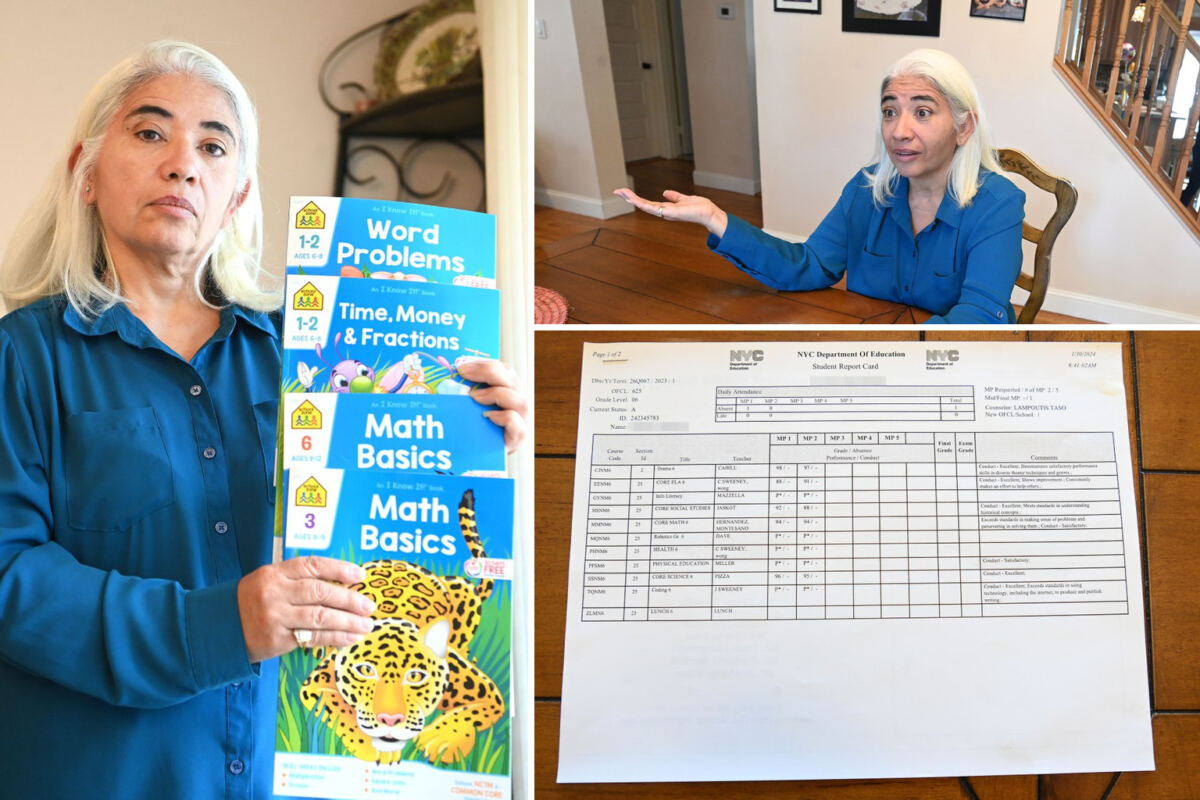
Adriana Aviles confronted Schools Chancellor Kamar Samuels at a town hall over her son’s phony math grades.
Aviles, 47, a Queens representative on the Citywide Council on High Schools and former NYPD officer, sat down with her 14-year-old son two weeks ago to help him review for his second high school math exam. The freshman, who had just scored a 78 on his first test at a top-rated Queens high school, broke down in tears as he stared blankly at basic algebra and fractions on the worksheet. She told The Post’s David Spector that he could only answer the first couple of questions.
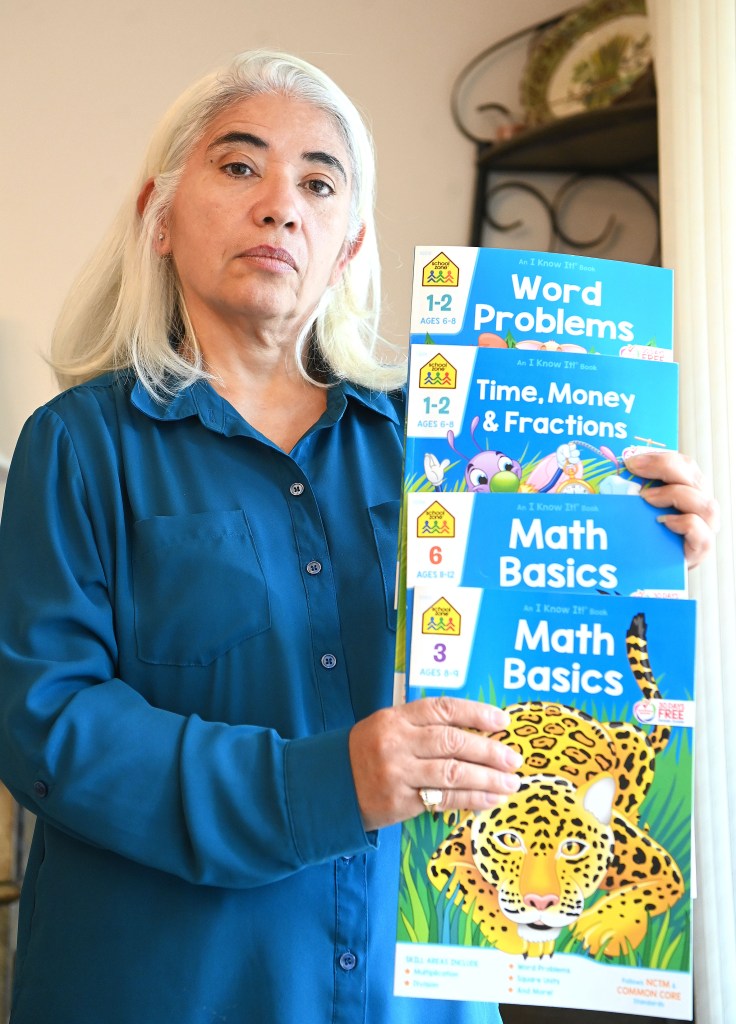
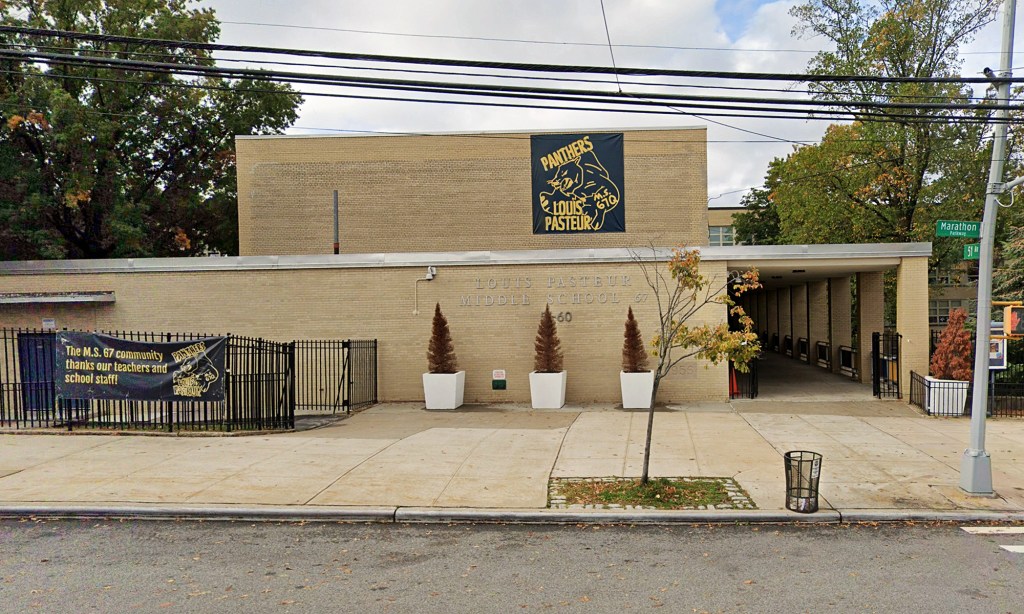
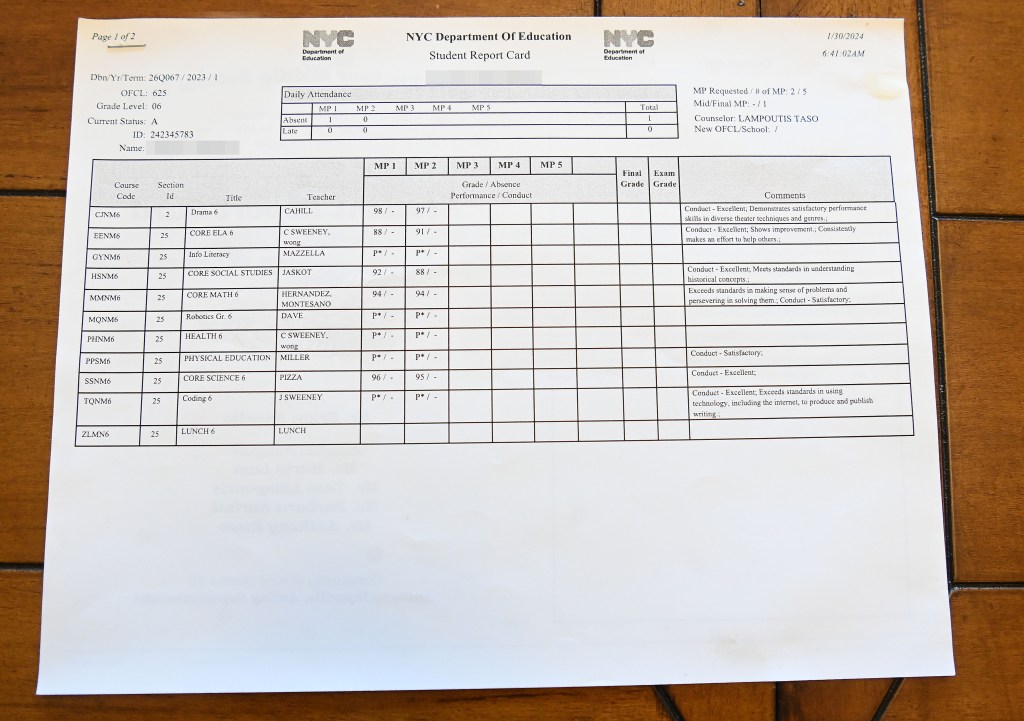
“He couldn’t solve basic algebra. He couldn’t do geometry. He couldn’t compute elementary-school fractions,” she said. At PS 221Q North Hills Elementary and MS 67Q Louis Pasteur Middle School in Little Neck, his report cards had told a radically different story: A’s and B-pluses, with math grades of 92 in sixth grade, 89 in seventh, and 93 in eighth. “The NYC education system had betrayed my son to make itself look better,” she added.
The shock of that tutoring session sent Aviles digging through years of records she had trusted without question. Only then did she discover her son had been flagged “not proficient” on his seventh-grade state math exam — while simultaneously earning an 89 in the subject. She had never scrutinized state test scores, she admitted, because the report cards seemed to tell her everything she needed to know.
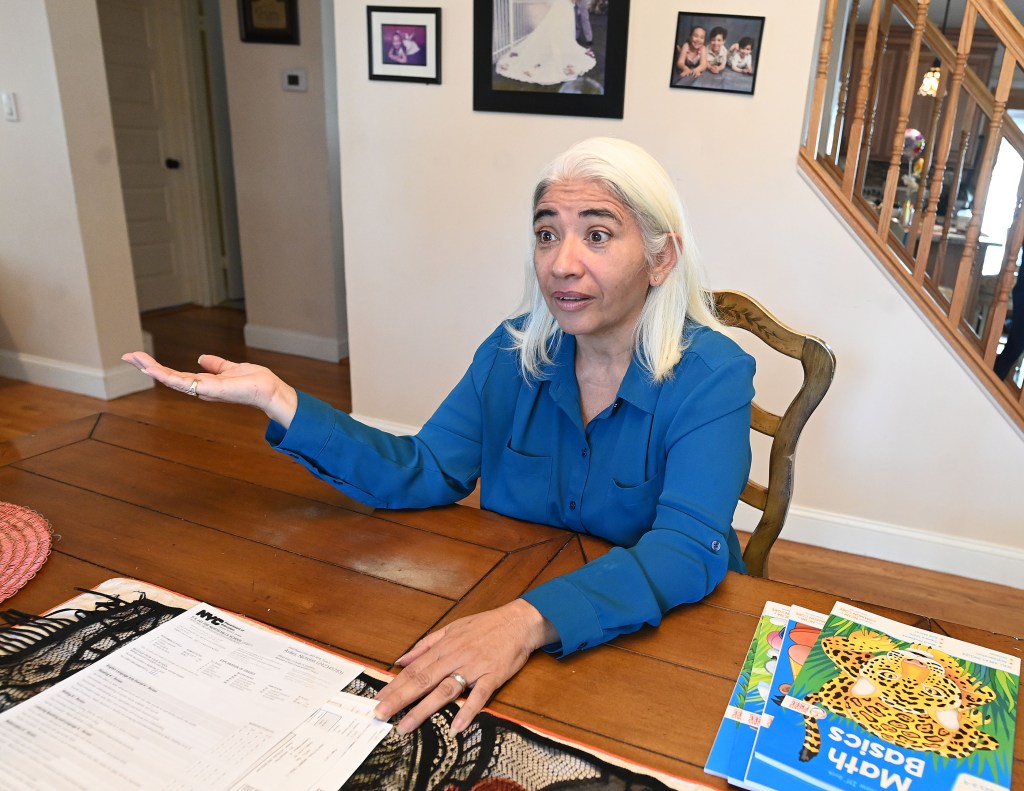
Looking backward, Aviles spotted patterns she had missed. Teachers assigned minimal homework. Her son was permitted to revise test answers after grading and receive a new score. Missed assignments drew surprisingly little concern. “Had my son’s teachers just told me he was having trouble, we could have gotten him the help he needed early on,” she said. “He would have done the work. But we were never told that. And the grades never gave us a clue.”
The fallout has been immediate and grinding. Her son’s high school teacher called after his next exam: two of ten multi-part questions correct, a 10 out of 100. The school is now scrambling to provide the elementary and middle school math education he never actually received. Aviles has purchased review books intended for first through fourth graders to pinpoint where his learning stalled. He misses lunch Tuesday through Friday for tutoring; Saturdays will follow once baseball season ends.
Aviles is not a detached observer. She served as PTA president and Community Education Council president before joining the Citywide Council on High Schools. She moved to Douglaston in District 26 specifically for its schools when she married her husband, also an NYPD officer, in 2005. She knew the principals, the teachers, the administrators — and believed her involvement insulated her family from exactly this kind of failure. “I thought I was fully aware of how my son was doing in school,” she said. “I failed too.”
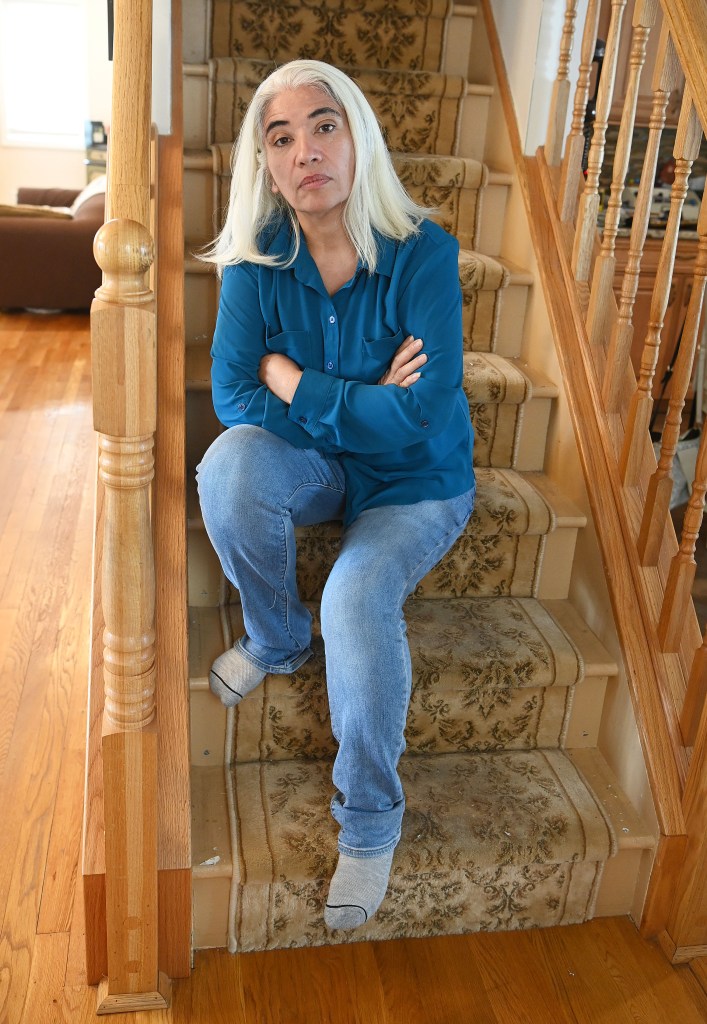
The discovery that other families were experiencing the same thing pushed her from private anguish to public confrontation. After her son’s October test, she contacted parents at his high school about algebra struggles; the responses overwhelmed her. One mother of an eighth-grade girl in District 26 fumed that her daughter received one page of homework daily and was racing to get her into Catholic school.
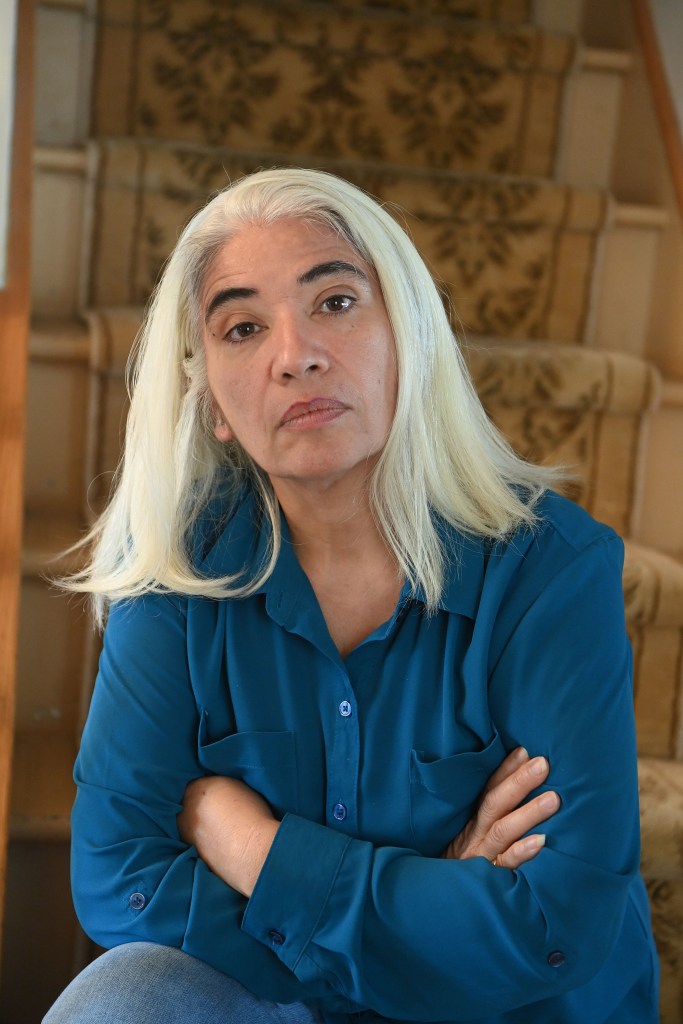
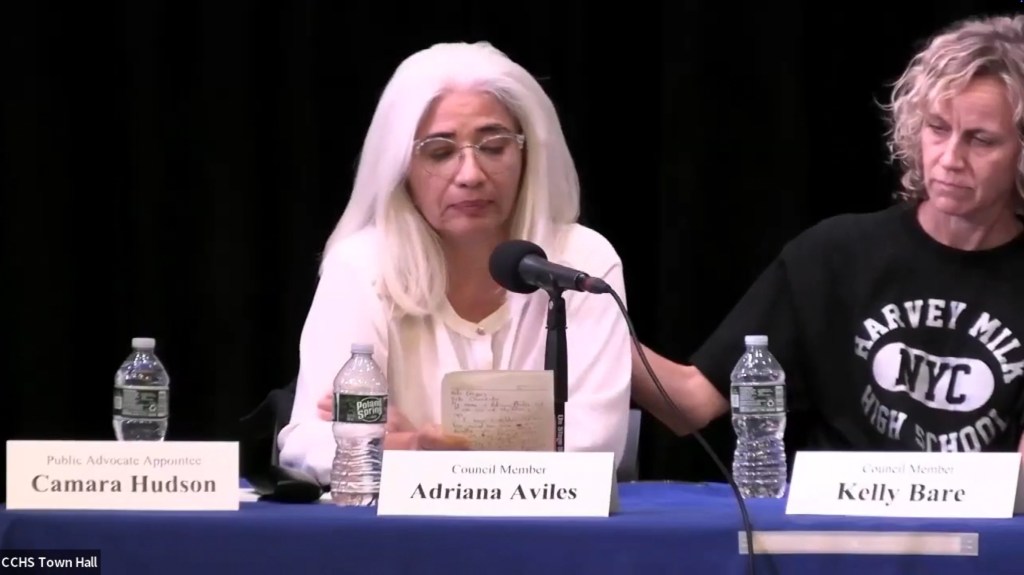
On Monday, Oct. 26, at a Community Council on High Schools town hall in the Art and Design High School Auditorium, Aviles took the dais and addressed Samuels directly. She framed the systemic failure through a childhood game: “This school system is failing our children…. I equate this to the childhood game ‘Kick the Can.’ My my son is the can. Where did he land?”
She pressed further, her voice breaking: “In high school, where they are expected to help him graduate with the necessary tools to succeed, will they continue to kick the can all the way to college, where I will be expected to pay for a remedial class that does not count toward a degree?”
Her final question targeted the Department of Education’s planned shift away from Regents exam requirements toward a “Portrait of a Graduate” model that leans more heavily on subjective teacher evaluation. She demanded to know how thousands more students wouldn’t face identical betrayals when grades depend even more on “the subjective judgments of biased teachers and principals.”
Samuels’s response, in her account, compounded the injury. “He didn’t even acknowledge my question. He didn’t know what to do with himself. He was stammering and didn’t know what to say. It just sounded like mumbo jumbo,” she said. “As a parent, and a longtime parent leader, I was entitled to a real response.” She walked off stage without staying for the customary photographs with officials — something she had done after every previous event.
Aviles’s critique extends beyond her family’s pain to working-class families citywide who lack time to monitor every assignment and must trust grading rubrics to reflect reality. She argues the DOE enables failure in minority communities by lowering standards rather than grading accurately, failing to collaborate with families, and neglecting chronic absenteeism. “How can our kids get jobs if they can’t read or do math, or are even taught the value of showing up?” she asked.