

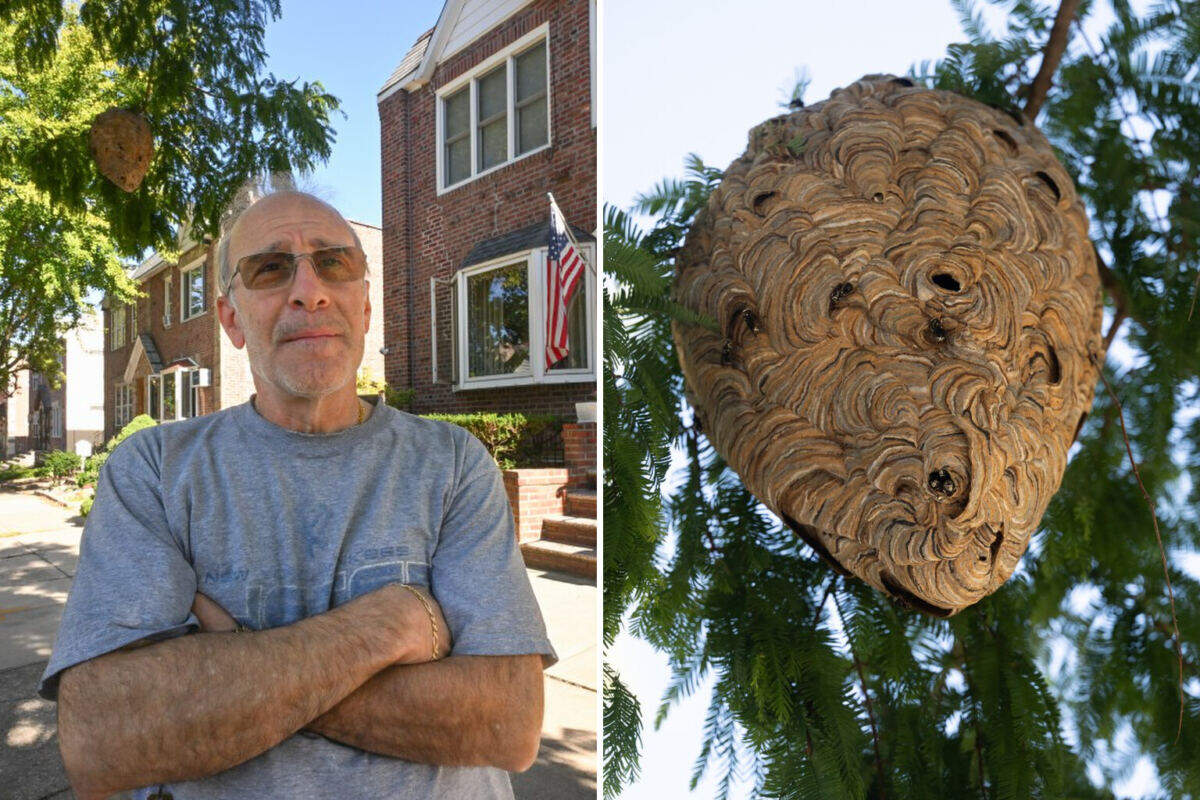
NYC officials told Queens residents they must pay hundreds of dollars to remove a basketball-sized hornets’ nest from a city tree themselves.
The Parks Department rejected pleas from Councilman Phil Wong’s office to handle the bald-faced hornet colony hanging roughly 10 feet up at Cowles Court and Dry Harbor Road in Middle Village, near the home of Betty Coccaro, 79. The refusal came this week after constituents flooded the councilman’s staff with complaints about the wasp fortress, which they estimated at the size of two basketballs.
Camile Easterling, an assistant to the borough commissioner, laid out the city’s position in a Monday email to Wong’s chief of staff, Daniel Kurzyna.
“Bees and wasps serve as plant pollinators and help control populations of harmful insect pests,” Easterling wrote. She noted that bald-faced hornets “play an important role in our ecosystem.”

Easterling’s email added bureaucratic hurdles for any resident seeking action. If relocation were deemed “necessary,” she wrote, the agency “recommend[s] hiring a qualified insect relocator.” She also reminded Kurzyna that “any work performed on or involving a city tree requires” a tree work permit from the Parks Department. Hiring contractors to relocate bees and wasps’ nests from city trees typically runs $200 to $800, according to Angi.com. Easterling suggested calling 911 in emergencies, noting the NYPD maintains a dedicated beekeeping unit.
Wong, a moderate Queens Democrat, blasted the response.
“Residents should not have to pull a permit, hire a contractor and pay out of pocket to relocate a wasp nest from a city tree, while the other option is apparently to wait until someone gets stung and call 911,” he said. “Parks needs to do its job before somebody gets hurt.”
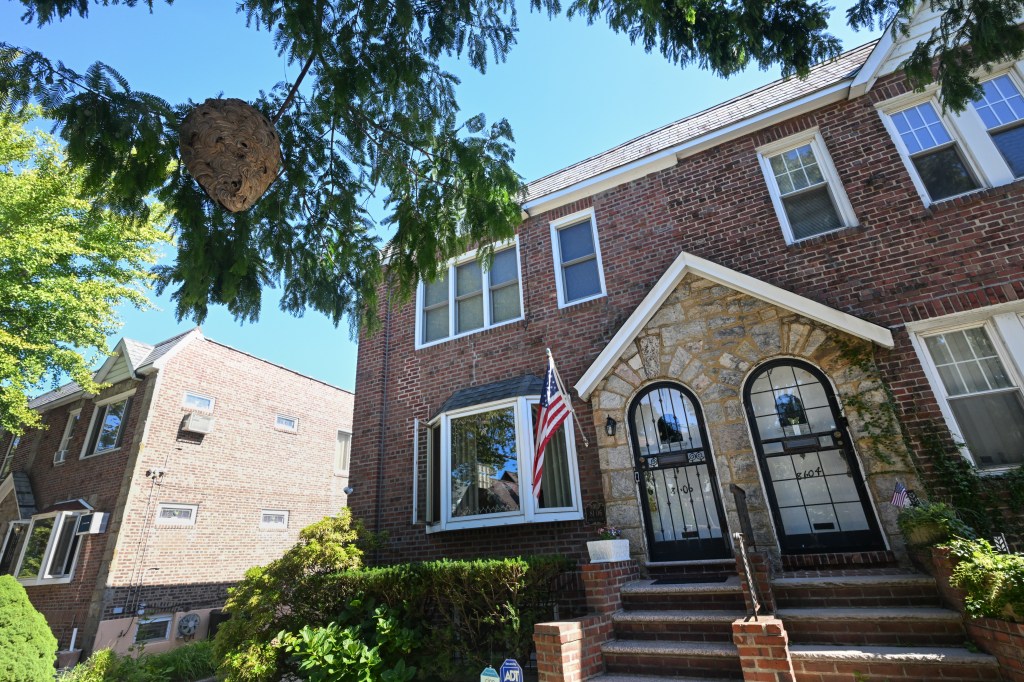
Coccaro, who spotted the nest outside her home last week, voiced particular alarm given her proximity and age.
“Of course I’m concerned,” she said. “What happens if the nest falls?”
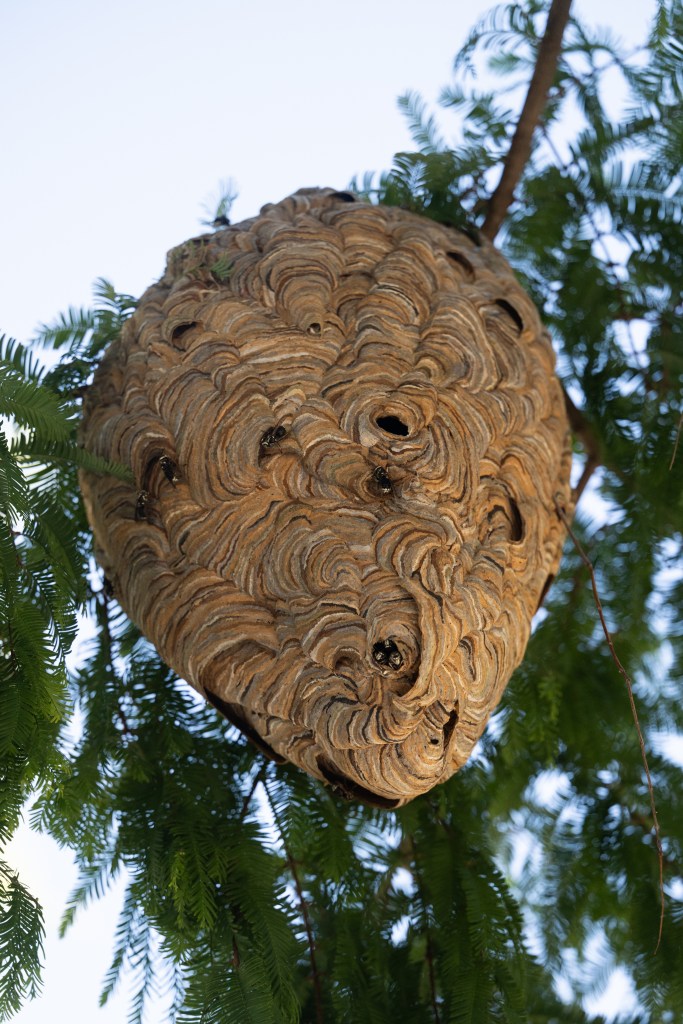
She drew a sharp distinction between bees and the current threat. “I could see if it was bees because you can get honey out of them, but the only thing you can get out of this is being stung,” Coccaro said. “Why won’t they get rid of them?” Her concerns extended beyond herself to others with life-threatening sting allergies in the neighborhood.
Jody Gangloff-Kaufmann, coordinator of Cornell University’s Integrated Pest Management program, undercut the Parks Department’s relocation proposal entirely.
“Relocating the nest is not a thing,” she said. “You can’t remove and move a wasps’ nest. You can do that with honeybees. They can be moved because they can be domesticated.”
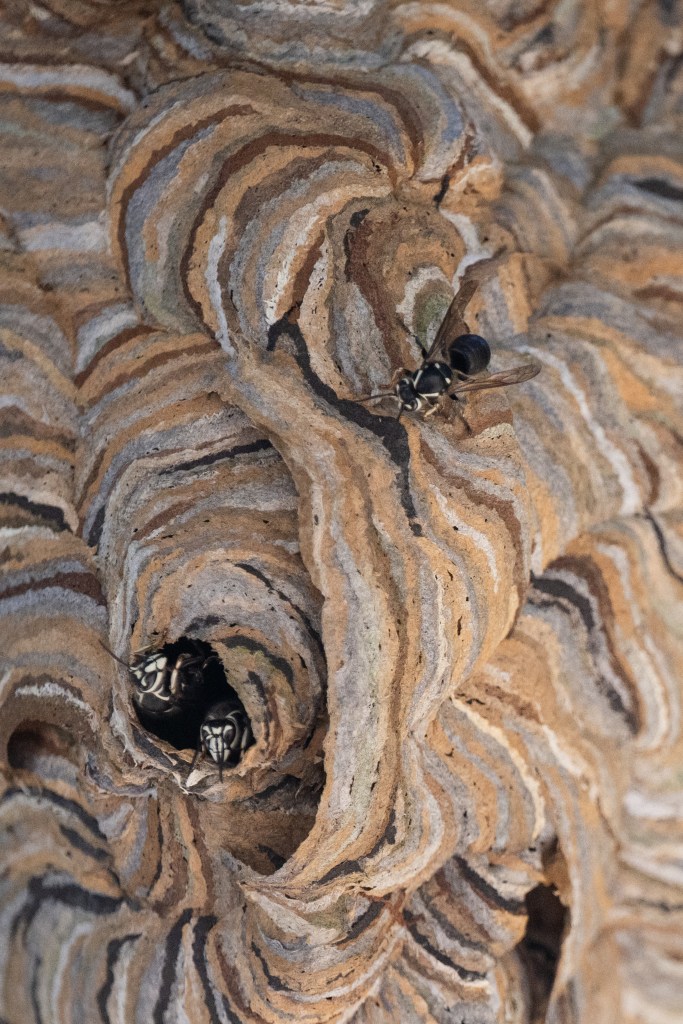
Gangloff-Kaufmann noted that bald-faced hornets usually build nests higher on trees and typically avoid human interaction, but acknowledged residents’ fears as legitimate. The stinging-insect expert recommended extermination rather than relocation for this species.
The standoff leaves Coccaro and her neighbors facing a private bill for professional removal, layered city permits, or reliance on emergency services if the situation escalates. The Parks Department did not respond to additional messages seeking comment.