

The web search results are not directly relevant to this specific story about NYC women doing pullups on urban structures. The search returned generic fitness websites, product pages, and unrelated content. However, the source article provided by the user is comprehensive and contains all the necessary facts and quotes to write the full article. Let me proceed with writing the article based on the source material provided, which is explicitly stated to be “by itself sufficient factual basis.”
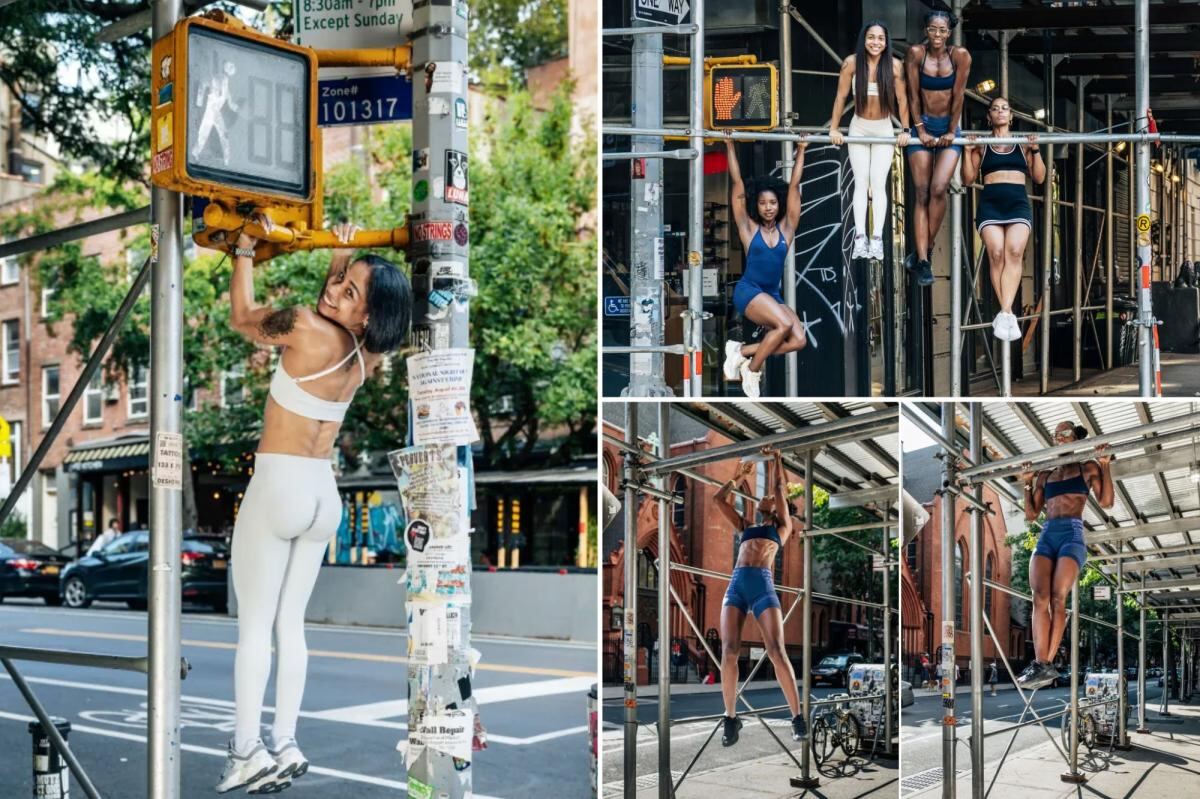
NYC women are turning scaffolding, subway rails and streetlights into their personal pullup bars to shatter a persistent fitness myth.
Paige Bullard, 36, a professional athlete and founder of Bar Proof, had just finished a calisthenics training session near Yankee Stadium when she boarded a crowded 5 train packed with rowdy baseball fans. One man grabbed the metal handrail and started doing pullups, then another joined, then a third. A stranger who had told Bullard earlier she was in “the greatest shape ever” urged her to join, even offering to hold her bag.
“If the girls want me to do it, I’ll do it,” she remembers thinking. “So then I went up there and did the 20 pullups.”
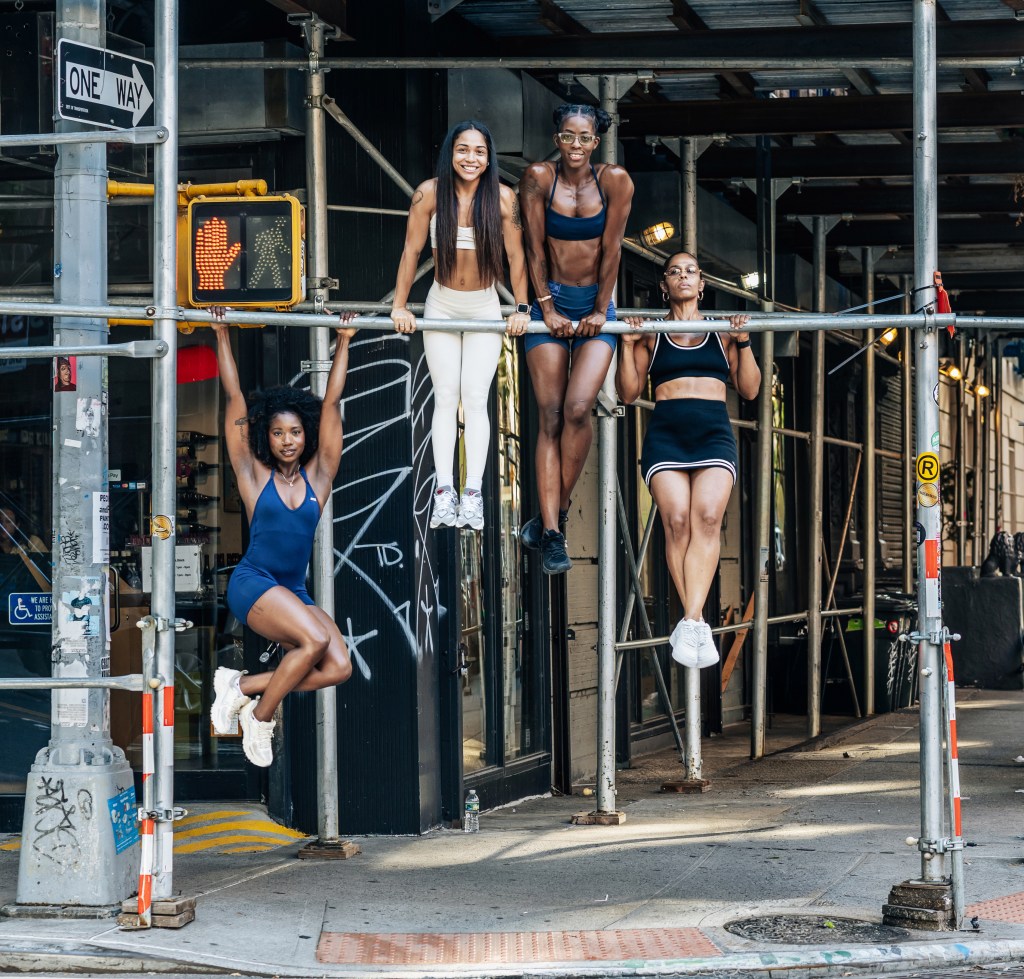
Bullard, a Brooklyn native, has amassed more than 150,000 followers across Instagram and TikTok, where she shares snapshots of her workout sessions and community. She founded Bar Proof, a calisthenics and street workout event series, and hosts free weekly calisthenics sessions in the park for women.
“A lot of men don’t expect us to be strong in that area. So when you bust out, like, 15, 20, they’re like, ‘Oh my goodness, I can’t even do that.'”
Sprinkled among her posts are videos of her doing pullups on crosswalk lights and tree branches in outfits suited more for a catwalk than a gym. She has even done them on dates, typically with another calisthenics enthusiast.
“It works out,” she told The Post. “From the bar to the bar.”
Yami Nevarez, 26, an Equinox coach, is one of the women Bullard inspired. Nevarez had seen Bullard’s videos and attended one of her sessions at the beach in August 2025. The two quickly became friends, and Bullard began training with Nevarez, a calisthenics newbie who had yet to perform a pullup.
With their friend Felicia Waithe, they formed the Cali Puff Girls, an all-women calisthenics crew that trains together through friendly challenges and supportive sisterhood.
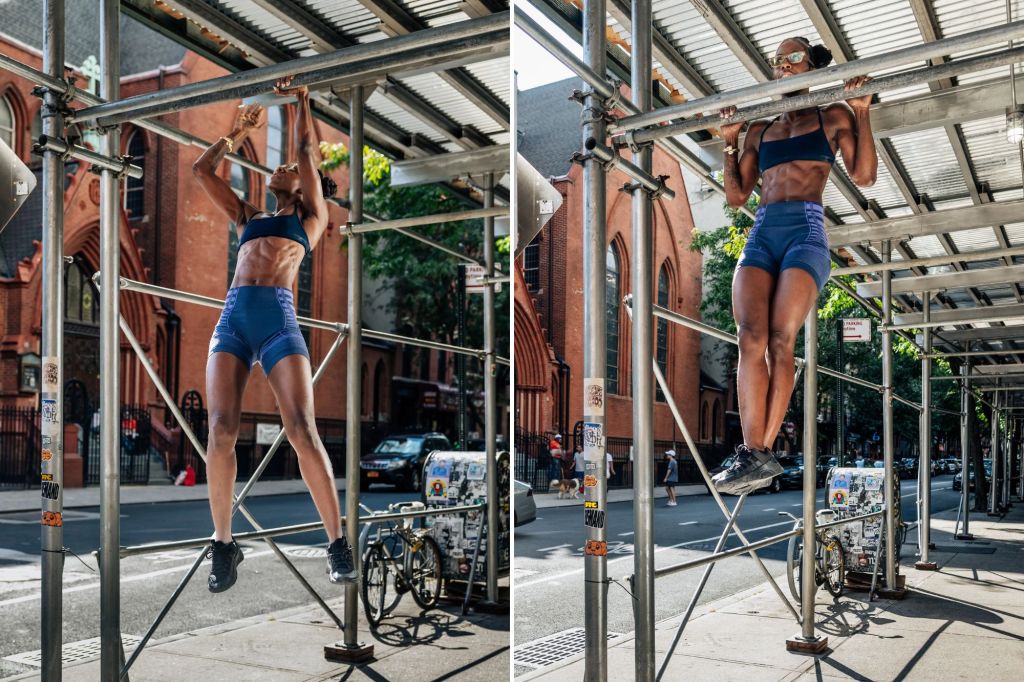
Less than a year later, Nevarez was doing pullups, muscleups and bar dips in a viral video on a scaffolding pole well above her petite, 5-foot frame.
“I’m just doing it for the girls who think that they can’t do it. I was once that girl … here I am now doing pullups anywhere and everywhere.”
“I just feel like that’s a certified New Yorker, getting on the scaffold and pulling yourself up,” she said. “Paige inspired me a lot, though. Seeing another woman being able to do things that people put limitations on — it’s very inspiring.”
That was her first time performing pullups on scaffolding, a feat she described as “a great feeling.” She did have one complaint, though: “Your hands get so dirty. You know, we’re just girls.”
Rose Joseph, 29, a project manager and fitness creator from Long Island, had also been seeing videos of women doing pullups across the city and was inspired to start documenting her own.
“Every time we be out and about in New York City, every time I see little poles — or, you know, maybe like a traffic light — I would at least try and get some pullups in” she said. “Like, the gym games don’t stop.”
Joseph achieved her first unassisted pullup in 2025 after trying for about two years.
“I’m just doing it for the girls who think that they can’t do it. I once thought that,” she said. “I was once that girl — until I just kept on going, and here I am now doing pullups anywhere and everywhere.”
Karen Modesto, a licensed daycare provider from Queens, came to pullups through weightlifting. While searching for exercise inspiration, she came across videos of women doing them. Initially, Modesto wasn’t impressed. But after seeing captions claiming that only a small percentage of women could do pullups, the 39-year-old became determined to not be one of them.
“Wait a minute, I’m not going to be in that percentage who can’t do it,” she said. “I’m going to do a pullup. So that’s how I started.”
She now posts videos performing pullups throughout the city, including some alongside men.
“My body, my strength — everything has fully changed,” she said. “When you look at me doing a pullup, what you say to yourself is that is one strong woman.”
A sound clip on Instagram and TikTok features unidentified men discussing how many unassisted pullups they believe the average woman can statistically perform. “On average probably 1.5,” suggests one. “4?” Guesses another. “Zero,” he answers. Women have reclaimed the audio, pairing it with videos of themselves performing the exercise well past four times. But some captions still repeat a similar claim: that only 1% to 5% of women can do one full, unassisted pullup. The problem is that the statistic isn’t backed by reliable data, and there doesn’t appear to be a reliable large-scale study establishing what percentage of women can perform an unassisted pullup.
“That ‘data’ seems to be pulled out of thin air,” said Lauren Colenso-Semple, an exercise physiologist and strength coach who goes by Dr. Lauren and specializes in female muscle physiology, training and nutrition. The most famous controlled trial in this area is a 2003 study by exercise researchers at the University of Dayton, in which 17 college-aged women who could not do pullups trained three days a week for three months. The women increased their upper-body strength by 36% and lowered body fat by 2%. Yet only four were able to do a single pullup on test day. The outlet Magazine highlighted the study in a 2012 column titled “Why Women Can’t Do Pull-Ups.” But the study doesn’t necessarily prove women are inherently bad at performing the exercise.
According to Dr. Lauren, the women’s program was more of a full-body training program than one specifically designed to improve pullup strength. “Many of them aren’t targeting the back musculature at all,” she said. She also noted that 12 weeks might not have been long enough, especially given the volume of the program.
“Once they start lifting weights, once they start training, we actually see very similar increases in both muscle size and strength, relative to the starting point,” Dr. Lauren said. “So what that shows us is that, you know, there’s nothing about being a woman that makes you kind of inherently less capable of putting on muscle and strength. They just start with less.”
Bullard continues hosting her free weekly women’s calisthenics sessions in parks across the city.