


Oil prices surged on Wednesday after fighting resumed between the United States and Iran, lifting crude to its highest levels in weeks even as a sharp sell-off in artificial intelligence stocks dragged the overall stock market lower in a day of jarring contrasts on Wall Street.
The price of Brent crude, the global oil benchmark, jumped 7.4% to $90.35 per barrel after President Donald Trump declared the U.S. Would retaliate against Iran for launching ballistic missiles at American forces in the Middle East. West Texas Intermediate futures, the U.S. Benchmark, also climbed about 7.4% to $85.11. Trump said that Iran “is going to get a beating” following the attack from Iran’s Islamic Revolutionary Guard Corps.
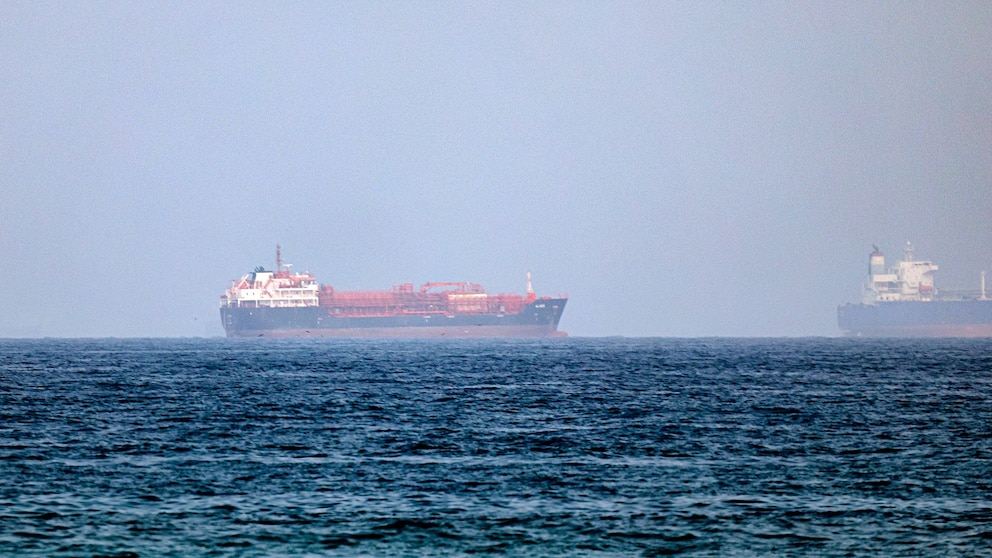
The escalation represented a dramatic reversal from earlier in the week, when hopes for renewed ceasefire negotiations had sent oil prices tumbling and briefly raised optimism among equity investors. The latest military action shattered that fragile calm and reignited concerns about the security of global oil supplies, particularly through the Strait of Hormuz, a crucial maritime chokepoint that handles roughly one-fifth of the world’s oil traffic.
Even as energy markets surged, the stock market’s response told a different story. The S&P 500 fell 0.8%, the Nasdaq Composite dropped 1%, and the Dow Jones Industrial Average sank 1.6%, or 850 points. The divergence between oil and stocks reflected investor anxiety about multiple headwinds simultaneously battering the market. Rising oil prices typically weigh on corporate profits and consumer spending, while higher energy costs can fuel inflation concerns that complicate the Federal Reserve’s monetary policy decisions.
The sell-off in semiconductor and artificial intelligence stocks provided the main drag on equities. The iShares Semiconductor ETF extended recent losses, leaving chip stocks down nearly 7% for the week. Nvidia, the world’s largest company by market capitalization and a bellwether for the AI sector, dropped 1.9%. Advanced Micro Devices fell 2.9%, while memory chip makers Micron and Seagate extended their losses. Other AI-exposed names like Tesla also faced pressure.
The weakness in chip stocks reflected a broader reassessment of the artificial intelligence investment boom that has dominated markets for months. Investors have grown increasingly skeptical about whether massive capital spending on AI infrastructure will generate sufficient returns, especially after several companies reported disappointing guidance on AI profitability. Reports earlier in the week that Nvidia was in talks to guarantee up to $250 billion in financing for OpenAI’s data-center buildout intensified concerns about what some call “circular financing” concerns in the AI capex cycle.

South Korean chipmaker SK Hynix reported that its second-quarter profit rose 557% year-over-year but still fell short of Wall Street’s expectations, fueling concerns that the artificial intelligence boom may be slowing. The mixed earnings signal prompted a reassessment of how much profit AI infrastructure companies could realistically extract from their enormous capital commitments.
The tension between oil market strength and equity weakness played out against the backdrop of the Federal Reserve’s decision on interest rates. Investors were closely watching the central bank’s policy announcement on a day already marked by geopolitical uncertainty and sector-specific turbulence. Higher oil prices typically increase pressure on the Fed to maintain higher interest rates to combat inflation, which weighs on stock valuations overall.
The day illustrated the complicated cross-currents roiling financial markets. While energy companies and oil exporters benefited from elevated crude prices sparked by Middle East tensions, technology investors faced a reckoning about the sustainability of the artificial intelligence narrative that had propelled stocks higher throughout the first half of the year. For most investors watching both their energy stocks and tech holdings, it was a day of difficult trade-offs with few clear winners.