

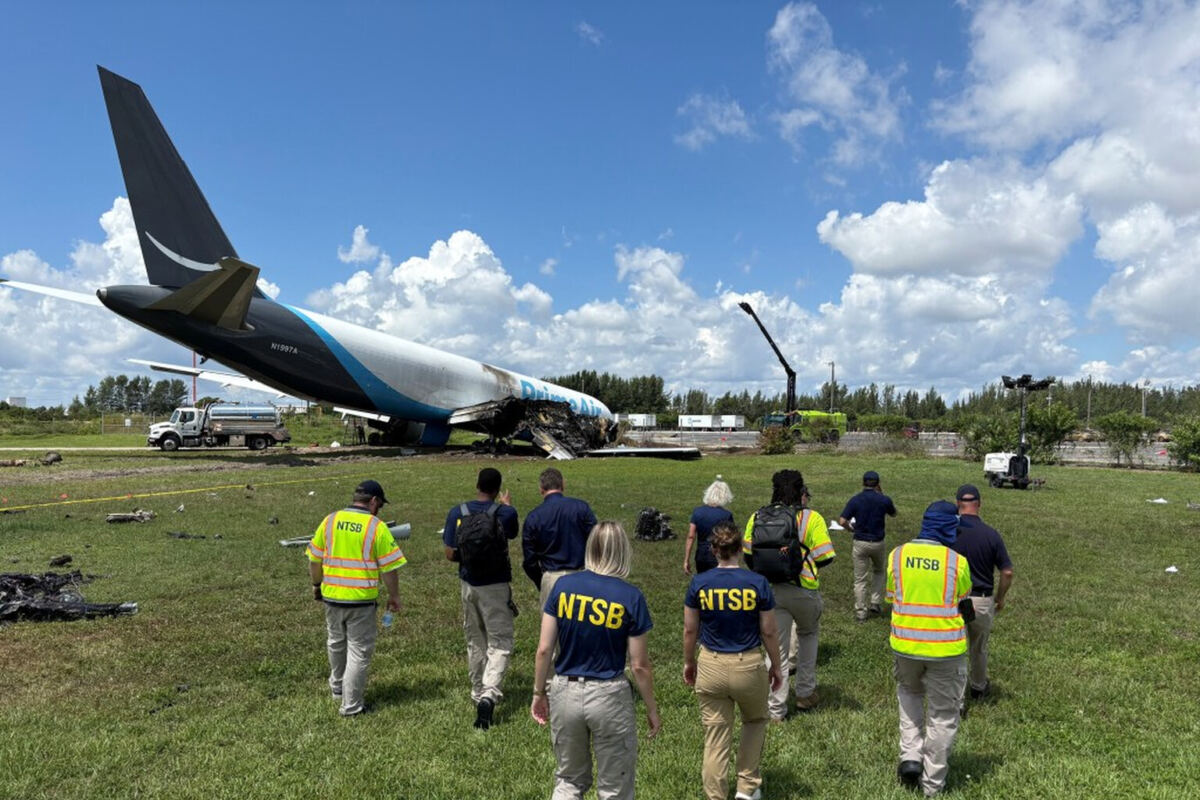
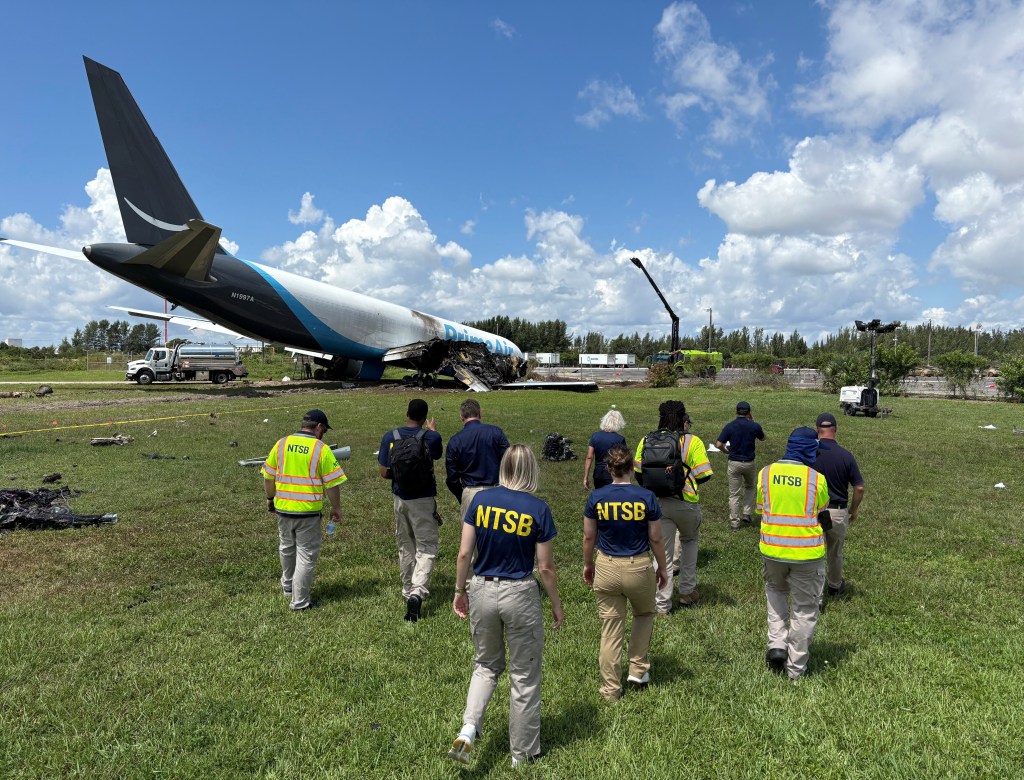
The operator of the Amazon Prime Air cargo plane that crashed in Miami last Sunday, killing five people, is now facing scrutiny from former employees who say they warned about safety problems for years.
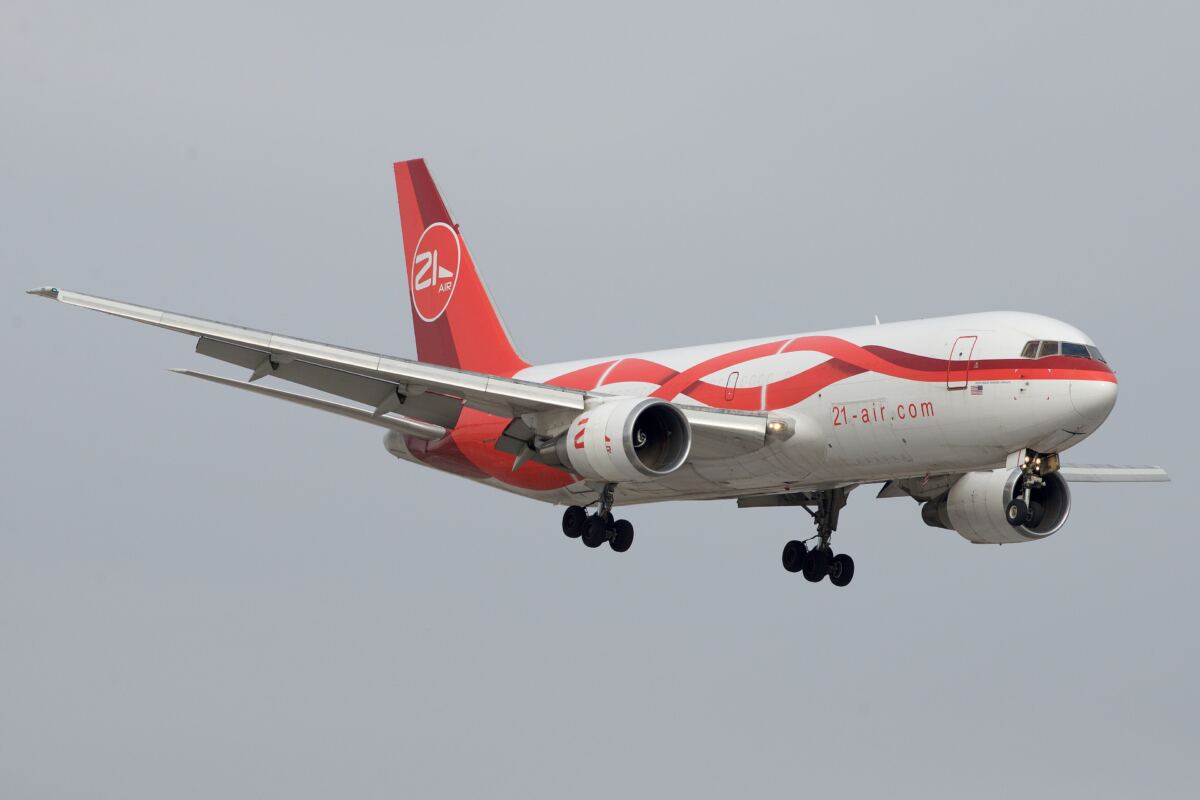
21 Air, a North Carolina-based cargo carrier controlled by Houston Astros owner Jim Crane through an LLC, has been the target of numerous whistleblower complaints filed with federal regulators. Several senior staffers who worked at the airline say they long feared a tragedy like the one that unfolded when a 33-year-old Boeing 767 went down near Miami International Airport.
“It’s something a lot of us ex-21 Air pilots have been anticipating for a while,” retired 21 Air pilot Tony Bless said. He cited perennial concerns including “maintenance safety issues, the pressure out of the chief pilot’s office, and the quality of pilots they would hire.”
Whistleblowers have alleged a sweeping pattern of safety lapses at the carrier. Their complaints range from failing to properly document safety concerns to hiring pilots who could not speak English, and from pressuring crews to complete routes too quickly to allowing inadequate rest between flights.
“Unfortunately, 21 Air has a long-established history of safety problems,” Karl Seuring, a veteran pilot who filed a legal complaint against the company, said.
Seuring claimed that when he raised safety concerns directly with management, a 21 Air manager told him, “It’s not going to change.” He alleged he was fired over his complaint, though the Occupational Safety and Health Administration initially rejected his claim. His appeal remains pending before a Department of Labor tribunal, where a federal judge will hear the case.
The safety concerns extend beyond Seuring’s experience. A former fighter pilot who reviewed safety policy for 21 Air wrote in his resignation letter that company executives were merely “paying lip service” to safety protocols “then doing exactly nothing” when presented with concerns.
Bruce Joseph, a former chief pilot for 21 Air, testified in his own Labor Department tribunal that he had “personal knowledge of people being discouraged” from recording safety concerns. He alleged the firm’s former director of safety once told him “don’t put anything” in the company’s safety management software before speaking with then-CEO Mike Mendez. Joseph told a judge in 2024 that if he had entered concerns without clearance, it would have incurred “the wrath of Mike.”
Mendez, testifying in the same proceedings, fired back at Joseph. He accused the former chief pilot of trying to “make up” damaging claims about the company, and stated Joseph “was fired from 21 Air and left under very bad circumstances.” Mendez flatly denied any retaliation claims, insisting he followed safety protocols by the book.
“My responsibility is to make sure we run a safe airline, not to hurt people and not to hide anything,” he testified.
Seuring raised a specific incident in his tribunal testimony that underscored his fears. In 2022, while seated in the jump seat of a 21 Air Boeing 767, he experienced a mechanical issue that caused the plane to rapidly accelerate after takeoff. The speeds reached levels that could cause wing flap damage, leaving him “concerned for my own safety.” He pointed to a “breakdown of communication” between the captain and first officer, noting there was no debrief or discussion afterward.
“We had no debrief. No discussion. Assume it didn’t happen,” Seuring said.
Michael Anello, Seuring’s lawyer, said at the tribunal that another 21 Air pilot, Johnny Salmonson, “was being pressured to fly in periods of time that were too short to comply with the proper amounts of rest, and that implicated safety,” Anello added that “the layovers were too short. The management was pushing the pilots, and the result was he was retaliated against.”
Seuring said pilots were largely on their own when it came to ensuring adequate rest between flights. “None of these airplanes had good crew rest on board,” he said. “My vice president of the union actually bought sleeping bags for airplanes to give the pilots a reasonable way to get some crew rest on long nighttime flights.”
Bless, the retired pilot who said he anticipated an accident, described routine deferred maintenance and frequent problems with the airline’s aging fleet of converted passenger planes. He claimed his 21 Air plane’s radar once stopped working in 2022 when he was flying from Bermuda to New Jersey, moments after the crew navigated the worst turbulence he had experienced in his four-decade career.
“I let the company know in no uncertain terms that I would not fly that plane again until they put a new radar in,” he said.
“We’ve had fuel leak issues. We’ve had radar problems and circuit breakers, smoke in the cockpit,” Seuring said. “Pilots were coached on how the write-ups should be done.”
The Boeing 767 that crashed in Miami was approximately 33 years old. Many airlines begin phasing out aircraft once they reach 20-25 years in service.
The five people killed in the crash were part of a cleaning crew in a van struck by the plane, Miami-Dade County Sheriff Rosie Cordero-Stutz said. Captain Joseph Carroll, 55, and First Officer Jaime Felipe Silva Molina, 37, were identified as the pilots. Both survived but were hospitalized.