

Modern research often suggests that sexual orientation is not limited to just two categories but spans a broad spectrum.
With this understanding, a variety of terms have been developed to articulate how individuals identify and who they feel attracted to, if anyone at all. Terms like pansexual and asexual capture the myriad ways people experience or don’t experience sexual attraction.
Labels often serve to provide individuals with the vocabulary needed to express their identities and feelings, many of which have been around for a long time without specific terminology.
As society progresses and our understanding deepens, new terms emerge, including ones you might not have heard of yet, such as one that is starting to gain traction but has not been officially recognized.
A term that is becoming more recognized within LGBTQIA+ circles is orchidesexual. This microlabel was coined by a FANDOM user known as Ringotheman in 2021, and its origins can be found on its dedicated Wiki page.
The term is gaining attention, and according to this page, which is not an official psychological source, orchidsexual is part of the asexual spectrum. It describes someone who feels sexual attraction to another person but has no desire to pursue those feelings through sexual encounters or relationships.
“An individual identifying as orchidsexual might find others sexually attractive, yet lack the desire to engage in sexual experiences, possibly being sex-averse or repulsed,” the page notes.
Orchidsexuality pertains to people who feel sexual attraction but lack any urge to participate in sexual activity. This differs from situational abstinence, which might be due to celibacy for personal or religious reasons, feelings of sex-repulsion, body or gender dysphoria, confidence issues, or worries about potential consequences. Instead, it’s viewed as an inherent aspect of their sexual orientation.
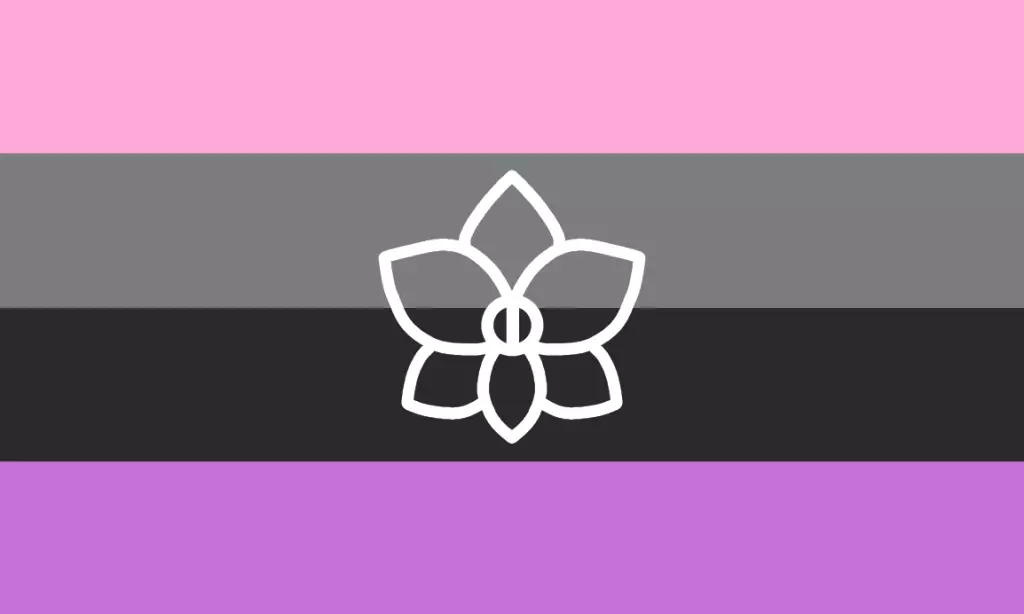
The flag, created by Ringotheman, features colors such as pink (symbolizing attraction), gray (representing the asexual spectrum), purple (indicative of sexual relationships), and black (denoting the absence of desire).
It includes an orchid flower at its center. The orchid flower is often a symbol of love, sex, and fertility, providing an interesting contrast to what the term orchidsexuality represents.
There is ongoing debate about whether experiencing sexual attraction excludes someone from the asexual spectrum.
The Wiki page highlights this debate: “There is discussion about whether orchidsexuality falls under the asexual umbrella or if it should be classified more accurately as an allosexual microlabel.”
On Reddit, a conversation in the asexuality forum questioned the validity of the orchidsexual label. “I just don’t see how orchidsexuality isn’t different from celibacy and don’t understand it at all,” one user commented.
Another Redditor responded: “I don’t fully grasp many microlabels. My view is that if it helps you define yourself, that’s fantastic! If you’re comfortable with a broader term, that’s also great! Humans are complex, and we don’t always fit neatly into predefined categories, and that’s okay.”
Other Reddit users proposed that the label is actually a microlabel for those who do experience sexual attraction, known as allosexual, rather than a label for asexual individuals.
“I was initially confused until someone explained that Orchid is essentially a micro label for Allos,” another Reddit commenter explained, emphasizing the need for understanding and inclusion. “But because Orchids have a unique relationship with attraction, the Aces [asexuals] embrace them within the community, empathizing with their feelings of alienation and isolation.”