

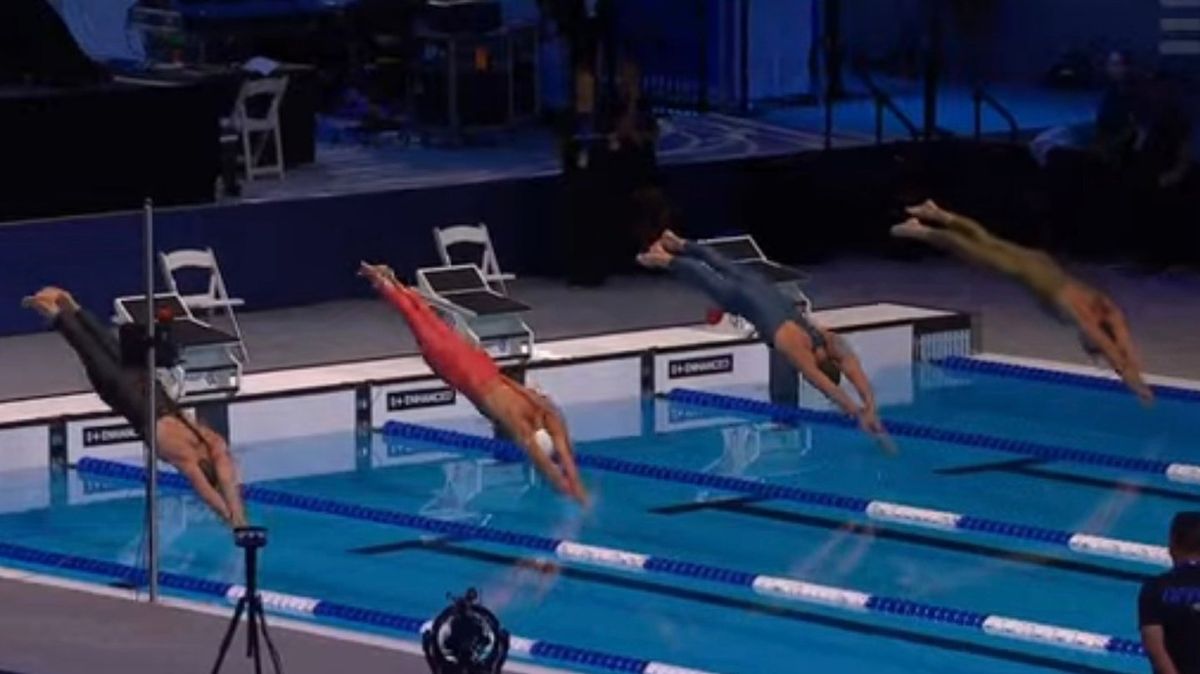
After huge spending, nonstop hype, and a promise to upend elite sport by allowing performance-enhancing drugs, the Enhanced Games’ first night still managed to feel strangely flat.
Promoted as an alternative to the traditional Olympics, Sunday’s debut instead drew widespread ridicule, with the evening producing only a single world record.
‘world-record-shattering’
That’s the kind of spectacle viewers were repeatedly told to expect in the run-up to the broadcast and throughout the commentary. In reality, the meet delivered a smattering of personal bests, but little of the record-breaking avalanche many had been sold.
“Olympics on steroids”
The lone top-line moment finally arrived in the closing event, when Greek swimmer Kristian Gkolomeev broke the Men’s 50m freestyle world record with a 20.81-second swim, edging the previous 20.88 mark.
While the late headline gave the night a dramatic finish, plenty of viewers still took to social media to complain that the overall standard didn’t match the promises, leaving them underwhelmed by what they saw.
“Many people have tuned in expecting world records to drop, but let me explain something. These athletes have been training for four months, they’ve been able to enhance for two months. This is a baby step into the new world to say ‘we’re going to allow these performance-enhancing drugs into a protocol’.”
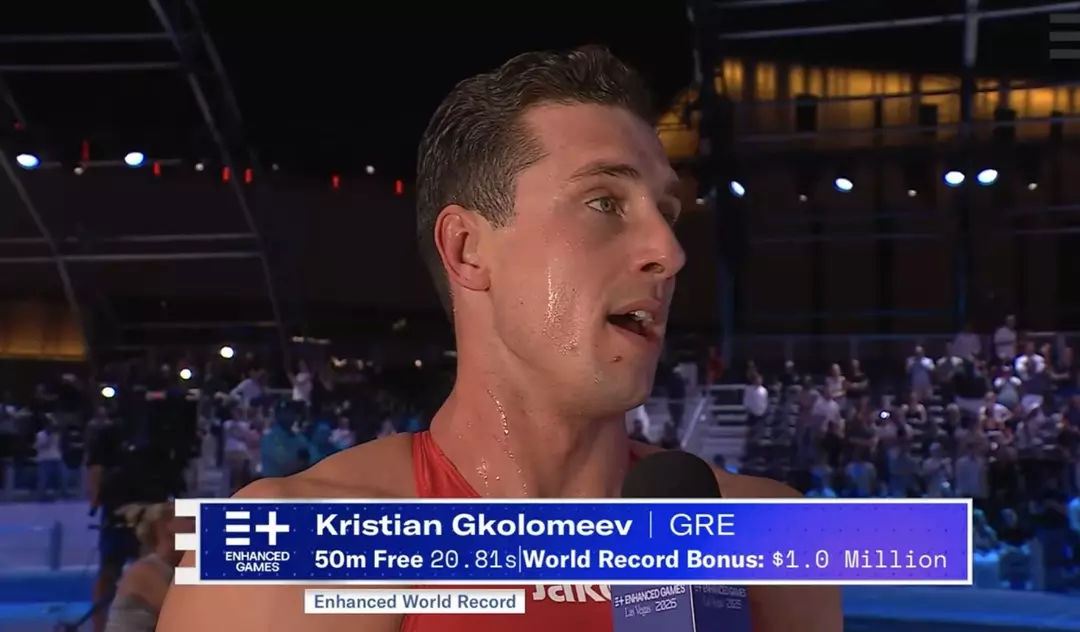
“So it’s not a defeat, it’s an example of a venture into a protocol, with enhancement, with clinical oversight. I wouldn’t be discouraged. I think we’ll see some performances tonight that will set world records, but it’s opening up the possibility that you can have performance-enhancing drugs, in a measured way, in sport.”
For many watching, though, the central appeal was straightforward: if athletes were allowed to chemically enhance, records from the Olympics and World Championships should fall quickly and emphatically. As the meet went on and most benchmarks stayed intact, the event inadvertently highlighted how decisive talent, genetics, and elite training still are—even in a permissive, drug-allowed format.
The competition does permit the use of performance-enhancing substances—such as testosterone, anabolic steroids, hormones and growth factors (including HGH and EPO), metabolic modulators and stimulants—but it is not presented as an anything-goes free-for-all.
Athletes are limited to substances approved by the Food and Drug Administration (FDA), meaning illicit and non-prescription drugs like cocaine and heroin are banned.
Organisers have also said competitors using enhancements will be medically supervised, including ongoing physiological monitoring and profiling intended to reduce the risk of dangerous overuse.
And participation isn’t restricted to those who choose to enhance: ‘un-enhanced’ athletes can also compete, setting up a direct comparison between medically augmented performances and entirely natural physical limits.