

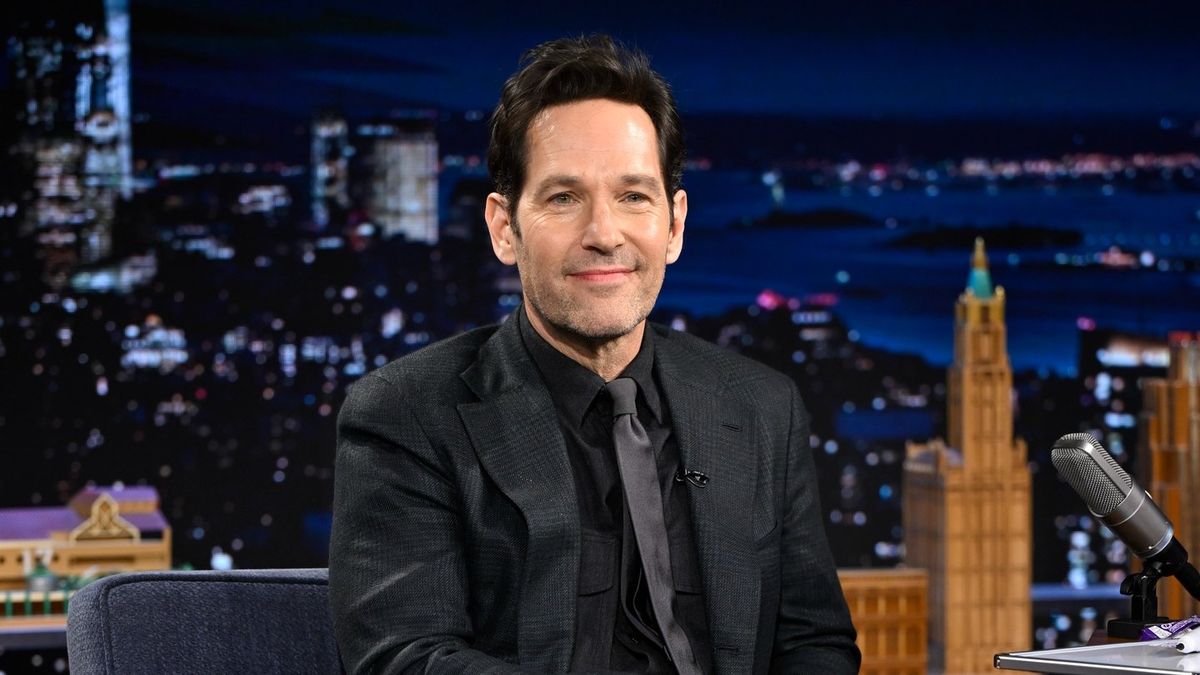
Paul Rudd has branded airplane mode ‘nonsense’ among other in-flight rules, as an expert has weighed in on the severity of failing to switch it on.
Anyone who’s flown more than a handful of times will know cabin crew are careful about enforcing the standard safety routine.
From the pre-take-off briefing on brace positions to being told to stow tray tables, raise window blinds, and keep armrests down, there’s plenty for passengers to remember.
But Ant-Man actor Paul Rudd recently suggested many of these instructions are unnecessary while speaking on an episode of the Therapuss with Jake Shane podcast.
“When they say put your seat up and your tray table up and put your computer away and turn your phone on airplane mode, I think all of that is nonsense,” he said.
Rudd added that he’d read the worry is less about a major failure and more about signals potentially crossing over with cockpit systems, leading to what he described as the occasional irritation for pilots.

However, a travel industry expert has stressed there’s still a reason airlines continue to ask passengers to enable airplane mode, even if the likelihood of serious disruption is low.
Gavin Lapidus, company director at eShores, explained: “Airplane mode is designed to temporarily disable a phone’s wireless signals, such as cellular,
Wi-Fi and Bluetooth, which in the past had the potential to interfere with aircraft communication and navigation systems.
“Nowadays, modern aircrafts are extremely well shielded, so the risk of direct interference today is considered very low.”

Even so, Lapidus said the rule remains in place as an added safeguard.
He added: “It also helps reduce network congestion, as devices constantly searching for signal at altitude can place unnecessary strain on ground networks.”
And if someone forgets to switch it on, Lapidus suggested it’s rarely a major issue in practice.
“Usually nothing dramatic happens. A single phone (or even several) not on airplane mode is very unlikely to affect the pilot, navigation, or safety of the aircraft.”
As for other cabin instructions, such as stowing tray tables for take-off and landing, one flight attendant has previously said it’s about reducing injury risk and keeping exit routes clearer if an evacuation is needed.
They wrote: “Landing and take-off are the times when an accident is most likely. Having the tray down and the seat back will give you more things to hit when you lurch forwards, and also make evacuating the plane more difficult.”