


– The study was published in Perspectives on Psychological Science in 2026
– Authors: Valeria Pfeifer (University of Missouri-Kansas City) and Matthias Mehl (University of Arizona)
– Study title: “Sliding Into Silence? We Are Speaking 300 Daily Words Fewer Every Year”
– Data from 22 studies conducted between 2005-2019 with ~2,200 participants
– Decline of 338 words per day annually, which equals about 120,000 words per year
– From ~16,000 words in 2005 to ~12,700 in 2019 (28% decline)
– Young people (under 25) show steeper decline
– Reasons cited: self-checkouts, GPS, touchscreen kiosks, digital communication, spending more time alone
– Coverage from Fortune, BBC Science Focus, Psychology Today, The Atlantic (Olga Khazan), Time, Yahoo, Phys.org, University of Arizona News
Valeria Pfeifer of the University of Missouri–Kansas City and Matthias Mehl of the University of Arizona found that the average person has spoken about 338 fewer words a day per every year that’s passed since 2005.
Over the 14 years covered by their data, that adds up to nearly a 30% (28%) drop in daily spoken words, from an average of 15,959 words a day in 2007 to 12,792 in the most recent estimate.
The researchers combined data from 22 separate studies conducted between 2005 and 2019, covering 2,197 participants ages 10 to 94, mostly in the U.S. But also in Mexico, Australia, and Europe. Each participant wore a device that passively recorded snippets of their day, which researchers later used to estimate how many words they spoke.

Matthias Mehl, a psychology professor at the University of Arizona, has spent his career studying how people communicate in everyday life. When he set out to replicate his landmark 2007 Science paper on gender differences in talkativeness, the results pointed to something he hadn’t gone looking for: a steady, years-long decline in how much people speak each day.
The discovery was accidental.
When researchers plotted the daily spoken word counts against the year each study was collected, they found a consistent linear decline. Every year, the estimate of daily spoken words dropped by 338. That is how you get from around 16,000 in 2005 to around 12,700 by 2019.
Speaking 338 fewer words every day adds up to more than 120,000 fewer words per year.
These studies were conducted for entirely different purposes—coping with breast cancer, adjustment after divorce, the social effects of meditation, relationship dynamics. None of them were designed to track how much people talk over time.

“Small changes in daily behaviour accumulate over time,” said first author Dr Valeria Pfeifer, assistant professor of linguistics and psychology at UMKC. “A gradual decline in spoken conversation might not be obvious from day to day, but over many years, it could change how people connect with one another.”

“Speaking less means spending less time connecting with others,” said Pfeifer. “If people are having fewer conversations, they may be losing both the immediate emotional benefits of social interaction, and the long-term benefits of maintaining strong relationships.”
Age patterns varied significantly.
Participants aged 25 or younger showed a markedly steeper decline in speech, perhaps related to their greater use of technology.
Young people younger than 25 lost words about 44% faster than older individuals.
“We estimated the difference at about 330 fewer words spoken per day for each year during that time period,” says Matthias Mehl, a professor of social psychology at the University of Arizona. That adds up to roughly 120,000 fewer words spoken during the course of a year, and millions of fewer words spoken during the 15-year study period. “It’s a substantial loss,” he says.
In a society increasingly shaped by self-checkouts, GPS navigation and touchscreen ordering kiosks, new research shows face-to-face conversation may be quietly fading.
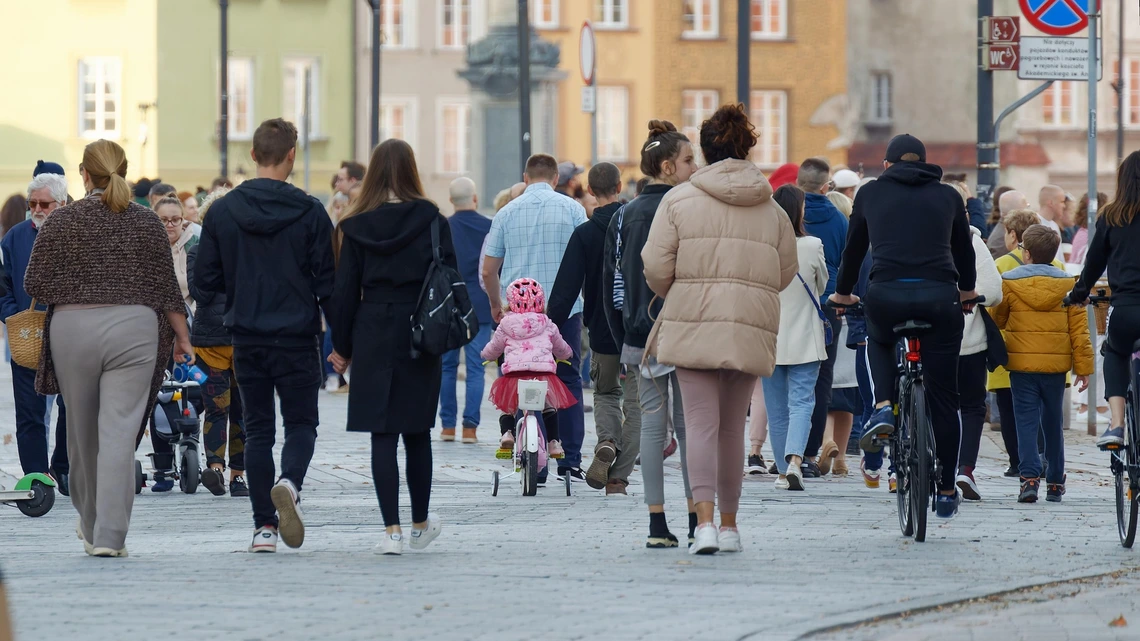
Two forces seem to be driving the drop: We’re spending more time alone, and we’ve quietly replaced countless small interactions—with cashiers, receptionists, and bank tellers—with apps, texts, and online forms.
The study couldn’t pinpoint why the spoken word was in decline, but noted that its timeframe – 2005 to 2019 – coincided with the rise of texting, email and social media, so some lost conversations may now take place digitally. “Whether typed conversations provide the same social benefits as spoken conversations is still an open question, and one that future research needs to address,” Pfeifer said.
The lost words aren’t concentrated in one missing conversation a day, Pfeifer said, but scattered across dozens of small exchanges that used to happen without anyone noticing. She compared it to how a fitness tracker counts steps.
“We know that having more conversations is tied to more positive emotions and to higher psychological well-being,” she continued. The loneliness epidemic costs the U.S. Economy an estimated $406 billion a year in lost productivity and health care spending, and researchers have found that chronic isolation carries a mortality risk on par with smoking 15 cigarettes a day.
Face-to-face talk appears to build empathy and emotional connection in a way digital messaging doesn’t, and even throwaway chats with “weak ties” matter.
Even an additional 300 words a day can mean a simple chat with a neighbor or a joke among loved ones — and thus help reduce loneliness.
Pfeifer’s study ended in 2019, before the pandemic reshaped how people work and socialize. She suspects the trend has worsened due to the pandemic, when remote work and social distancing dismantled some of the last regular occasions for casual, in-person talk.
There’s no data past 2019, but Mehl said he’d be “surprised” if the trend had reversed.