

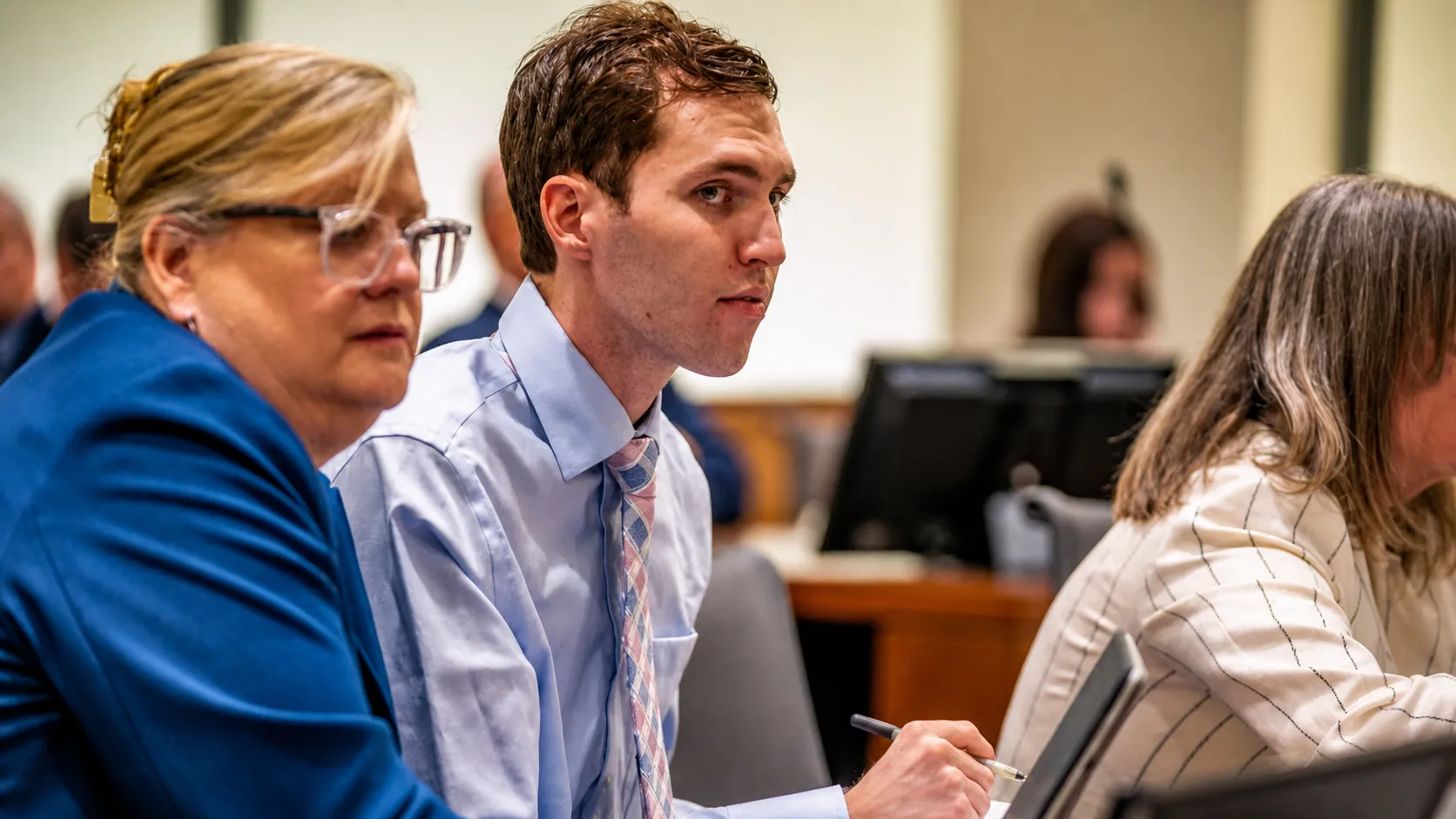
Folding chairs, sleeping pads and blankets litter the entrance to the Utah courthouse each day as crowds gather in hopes of securing one of just 14 public seats available for the preliminary hearing of Tyler Robinson, the 23-year-old accused of killing conservative activist Charlie Kirk. People have been lining up early, sometimes sleeping outside overnight, in hopes of getting a wristband that will allow them access to the courtroom in Provo.
The preliminary hearing, which began Monday and is expected to conclude by Friday, has attracted intense national and significant international attention. Kirk’s assassination in September at Utah Valley University during a speaking event shocked the nation and reignited debates about political violence in America. The case has drawn high-profile spectators to the courthouse, including Donald Trump Jr., who attended the opening day alongside Kirk’s parents and widow.
“Being in the courtroom is a different thing because you’re able to actually feel the emotions, see the expressions on people’s faces that aren’t shown in the public feed,” said Joshua Carr, an independent journalist who waited in line starting at 2:30 a.m. Thursday to secure a seat. A friend held his spot from 9 p.m. The night before. Court staff warned earlier in the week that some people had purchased colored wristbands to sneak into the proceedings, forcing officials to begin labeling the wristbands for security verification.
Billie Webb, who made the trip from Salt Lake City, has been following the investigation since Kirk was shot on September 10. She arrived at 5 a.m. Wednesday and found herself eighth in line, only to miss the cutoff on Thursday despite arriving at 3 a.m. “If I have to camp for 24 hours, I will,” Webb said, determined to get in Friday.
Chris Palmer, the court’s director of security, warned Thursday morning that people can no longer bring tents or other camping supplies to the courthouse steps and that there would be no saving places in line. “These people come here to get justice,” Palmer told those waiting. “They don’t need to feel like they’re under a microscope when somebody’s sitting behind them or ahead of them.”
It’s a kind of controlled chaos, as sheriff’s deputies and court staff hand out wristbands each morning. Beyond the line, reporters and bloggers armed with cellphones scan the entrances hoping to document the arrival of Kirk’s family, Robinson’s family, or other notable names such as the president’s son.
The hearing marks the most significant presentation of evidence in the case so far. Prosecutors are laying out their case to establish probable cause that Robinson should stand trial for aggravated murder. Robinson turned himself in the day after Kirk’s shooting and has been charged with aggravated murder, felony use of a firearm, committing a violent offense in the presence of a child, witness tampering and obstruction of justice. Prosecutors have said they intend to seek the death penalty.
Kirk, 31, was one of the most influential voices in young conservatism. He founded Turning Point USA in 2012 when he was just 18 years old, building it into one of the largest and most powerful conservative youth organizations in the United States. The organization grew to have chapters at roughly 900 college campuses and 1,200 high schools by the time of his assassination, with an annual revenue of approximately $389 million. Kirk was a key ally of President Donald Trump and played a pivotal role in mobilizing young conservative voters to support Trump’s return to the White House.
Prosecutors have presented DNA evidence they say links Robinson to the suspected murder weapon, a Mauser Model 98.30-06 caliber bolt-action rifle with a mounted scope that was found wrapped in a towel in woods near campus. Law enforcement video and witness testimony have also been presented, with a former Utah Valley University police officer describing the chaos that erupted when the shot was fired. Prosecutors plan to play redacted audio clips of law enforcement interviews with Robinson’s roommate and former romantic partner, Lance Twiggs, who allegedly received a note from Robinson saying “I had the opportunity to take out Charlie Kirk and I’m going to take it.”
According to court documents, Robinson also sent text messages to Twiggs stating he “had enough of his hatred” and “some hate can’t be negotiated out.” Twiggs told investigators that Robinson expressed regret after the shooting, saying he wished he hadn’t done it.
The defense has repeatedly objected to exhibits prosecutors tried to introduce and has raised concerns about news coverage of the proceedings, arguing it could impair Robinson’s right to a fair trial. Robinson’s attorneys have called three forensic experts to testify during the hearing. Judge Tony Graf must determine whether there is sufficient evidence to proceed to trial, a threshold that legal experts say the prosecution should easily meet given the lower standard required at preliminary hearings compared to trials.
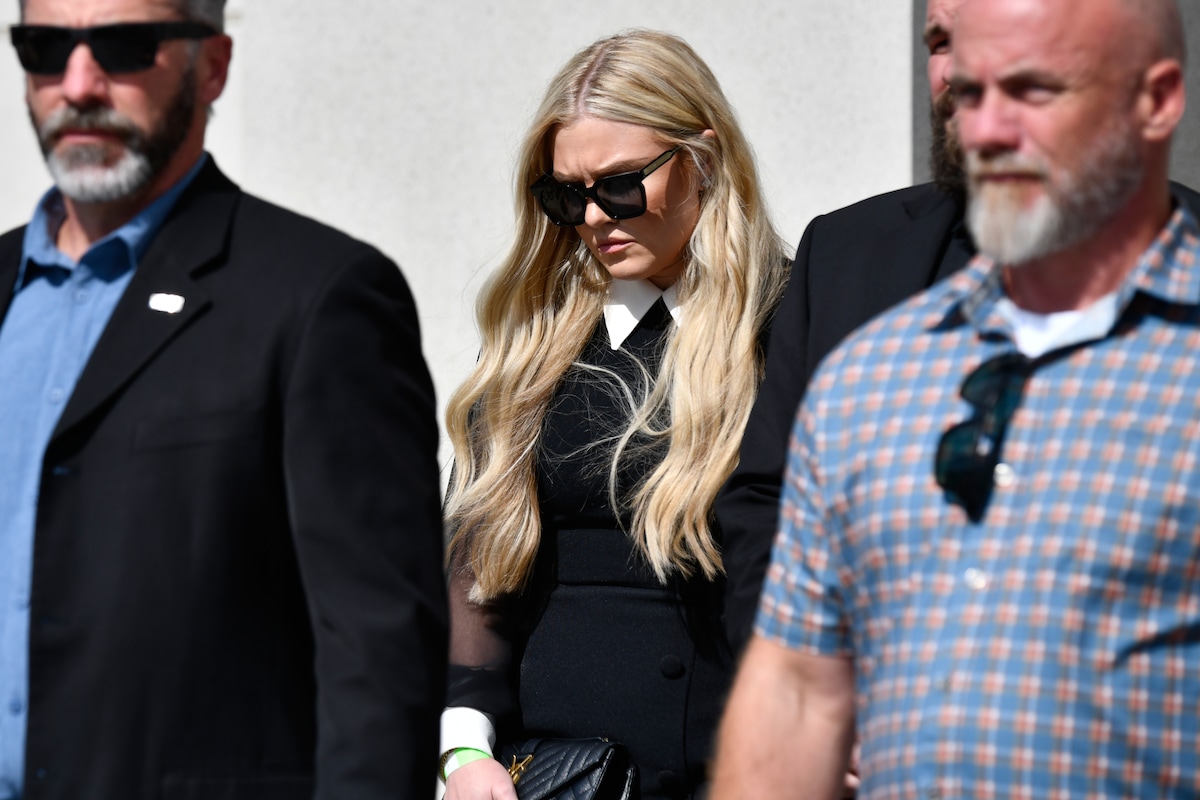
Erika Kirk, the victim’s widow, has attended the hearing with her husband’s parents, Robert and Kathryn Kirk. She said during Kirk’s memorial service that she forgives Robinson. The courtroom gallery tells its own story of the case’s impact: Robinson’s parents sit a few rows behind Kirk’s family, the two families separated yet bound by the tragedy that brought them to the same room for the first time.