


What does it mean to go through life without an internal monologue?
It’s a question that has sparked plenty of discussion online, especially because many people assume everyone experiences thought in the same way they do. But when people start comparing notes, it quickly becomes clear that isn’t the case.
The mind works in all sorts of different ways, and thinking is far less uniform than it might seem. Human cognition is layered, personal, and often difficult to describe, which is why the subject continues to fascinate both scientists and everyday people alike.
Psychologists have long tried to understand why different people process thoughts differently. Research into inner speech, self-talk, mental imagery, and “unsymbolized” thinking suggests that people do not all rely on words in the same way when they think.
That opens the door to all kinds of interesting questions. If a person is fluent in more than one language, which one appears in their thoughts? Do some people rely more heavily on images than words? And for some, is there no internal voice at all?
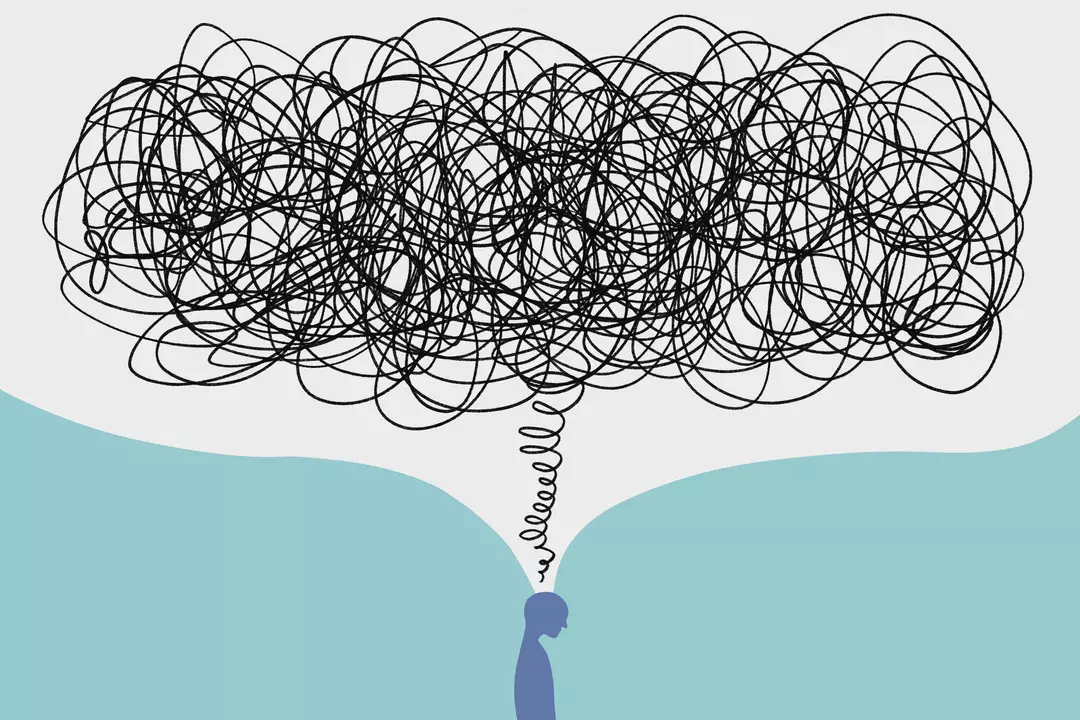
That was exactly the topic raised by one Reddit user, who turned to the platform to ask whether their experience was unusual.
“Today, I told my mom that I have no internal monologue and she stared at me like I have three heads. Is having one common?”
They explained that they had always assumed internal monologues were simply a storytelling tool used in films and television shows such as Dexter or Bridget Jones’ Diary. Because of that, they were surprised to discover that many people genuinely do experience thoughts in that way.
Another user tried to describe the phenomenon with a relatable example:
“If your boss asks you to do something right at the point you were planning to leave work you don’t think ‘oh f***ing s**t b*lls what a pain? In your head, while saying ‘No problem at all boss,’ out loud?”
In response, the original poster said they would ‘just get kinda frustrated’, but ‘I don’t really think to myself’.
So what actually counts as an internal monologue? The answer, it turns out, is not especially straightforward.
Psychology professor Russell Hurlburt has described inner speech as the experience of silently speaking to yourself in your own mind, but researchers also emphasize that the term is used in several different ways. For some people, it may feel like a running verbal commentary; for others, it may show up only when planning, rehearsing, reading, or problem-solving.
When people describe hearing a voice in their head, it usually isn’t like having a separate narrator following them around or a constant broadcast playing in the background. Even if a song gets stuck in your head, that is not necessarily the same thing.
Instead, internal speech can be something more deliberate: mentally reminding yourself to put the bins out, replaying an annoying moment on the bus, or wondering what to eat later.
Researchers now tend to treat inner speech as one part of a broader landscape of inner experience rather than a single all-or-nothing trait. That broader landscape can include mental imagery, wordless thinking, emotional reflection, and inner dialogue that shifts depending on context.
Some studies using experience-sampling methods have found large individual differences in how often people report inner speaking, and questionnaire-based work has suggested that people may fall along a spectrum rather than splitting neatly into two groups. In other words, some people are much more verbally engaged with themselves than others.
There is also an important caveat: not reporting an inner monologue does not mean a person is not thinking. Many people who say they do not “hear” words in their heads still plan, remember, reason, and imagine in other ways.
Language can still play a role in thought without being experienced as a constant internal voice. A bilingual person may notice different languages in different contexts, while someone else may rely more on pictures, feelings, or abstract, wordless impressions.
That is why scientists caution against treating inner monologue as a universal default. The better question may not be whether someone has one, but what form their inner experience takes and when it appears.
So if you do not have a nonstop voice narrating your life, that does not make you odd. It may simply mean your mind prefers a different style of thinking.