

Residents in Philadelphia and surrounding counties began cleanup efforts Sunday after a severe series of microbursts tore through the region Saturday afternoon, bringing straight-line winds that damaged buildings, knocked down trees and left tens of thousands without power.
A succession of at least four distinct microbursts struck the Philadelphia area between approximately 2:44 p.m. And 3:15 p.m., producing wind gusts of 60 to 70 miles per hour that carved a damage path roughly 12 miles long from Lower Merion Township through West and South Philadelphia. The storms created widespread destruction across seven ZIP codes, with West Philadelphia and South Philadelphia suffering the heaviest impact.
The National Weather Service confirmed the damage was caused by straight-line winds from the microbursts, not a tornado, despite initial speculation that a twister might have struck. A microburst is a concentrated column of sinking air that falls from a thunderstorm, then spreads outward in all directions like water hitting the floor. Inside the thunderstorm, rain evaporates in a layer of dry air, cooling the air and making it heavier before that mass crashes downward to the ground.
The storms inflicted severe structural damage across the city. A Philadelphia Housing Authority apartment building near 55th and Vine streets in West Philadelphia sustained major roof damage and extensive water intrusion affecting 11 residential units. All residents were safely evacuated using SEPTA buses as temporary shelter while emergency responders assessed the building. Residents have since been relocated to a nearby hotel with access to food and other immediate support while the authority evaluates the damage.
An auto service building near 58th and Lansdowne partially collapsed under the storm’s force, scattering bricks across parked cars and blocking the street. The debris stranded several SEPTA trolley cars at that location. A residential building at the 2400 block of Washington Avenue also sustained structural damage that required the evacuation of 12 occupants. Additionally, a vacant building near South 24th Street that had been empty for 20 years suffered partial collapse, with bricks falling on a vehicle.
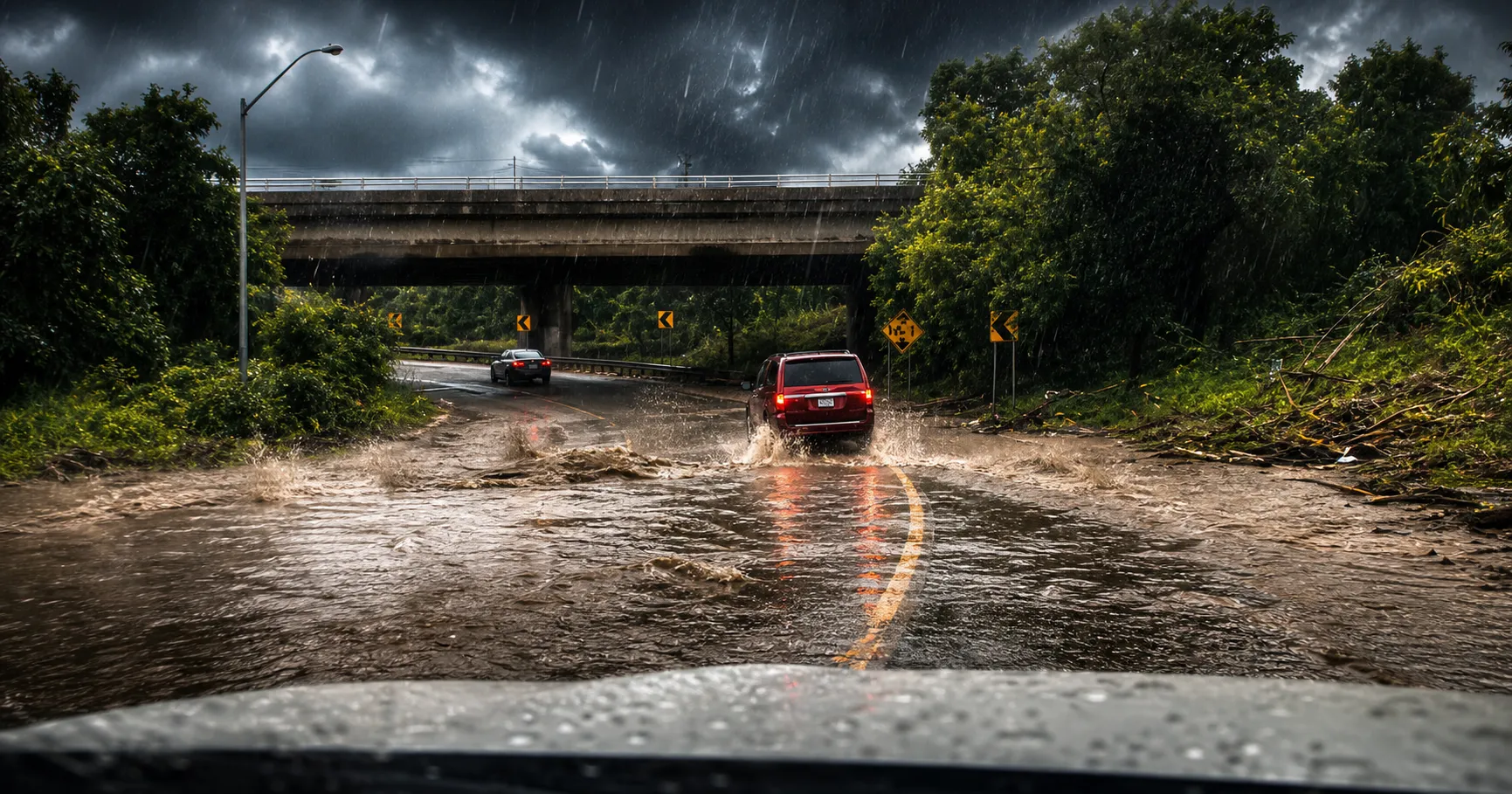
The storms also caused significant flooding. In the Winfield neighborhood near 57th and Lebanon, residents reported a dozen or more vehicles partially submerged in several feet of standing water before it receded, leaving roads coated in mud. Flooded basements were reported throughout affected areas, with Philadelphia Water Department crews responding to flooded intersections and clogged storm drains across the city.
Trees were snapped and uprooted throughout the region. At 55th and Cedar Avenue, a large tree tore up a section of sidewalk before crashing down on a resident’s SUV. Carroll Park in West Philadelphia was severely damaged, with multiple trees felled. By Sunday morning, officials reported that 55 streets remained blocked or partially blocked by downed trees and debris, requiring extensive cleanup efforts led by Philadelphia Parks and Recreation crews and outside contractors.
The power outages were extensive. As of Saturday night, over 26,000 PECO customers were without electricity, including more than 16,000 in Philadelphia proper. By Sunday afternoon, approximately 7,500 PECO customers remained without power, with the majority of outages concentrated in West Philadelphia and Montgomery County. The Philadelphia Fire Department responded to approximately 125 calls involving downed power lines and four separate incidents with vehicles caught in floodwater.
The emergency response was immediate and intensive. Police received about 3,000 calls for service between 2 p.m. And 7 p.m., including about 800 from West Philadelphia alone. Two SEPTA trolley lines, the T1 and T2, were taken out of service due to storm damage, with shuttle buses substituted for regular service. Officials shifted from an initial emergency response phase into broader damage assessment as overnight work continued Saturday into Sunday.
Mayor Cherelle Parker toured affected neighborhoods throughout Saturday afternoon and evening, meeting with displaced residents and receiving operational briefings from city leaders. On Sunday, she issued a Declaration of Disaster Emergency, allowing the city to more quickly mobilize resources, bypass certain regulations and potentially obtain state or federal assistance. The declaration recognizes the scale of the disaster and the resources needed for recovery.
“Every level of government is working together today, tonight, and for as long as it takes to respond to this storm, restore services, and help our residents recover. That is our commitment,” Parker said.
City officials urged residents to report damage and seek assistance through available channels. Those needing emergency help, including downed trees blocking roadways or immediate threats to life and property, should call 911. Non-emergency issues should be reported through Philadelphia’s Philly311 system by app, online or phone. The city asked residents with storm-related property damage to complete an online damage survey to help officials assess the complete scope of the disaster.
The microbursts in Philadelphia were part of a broader pattern of severe weather across the United States that weekend, which also included heatwaves, flooding and wildfires in other regions.