

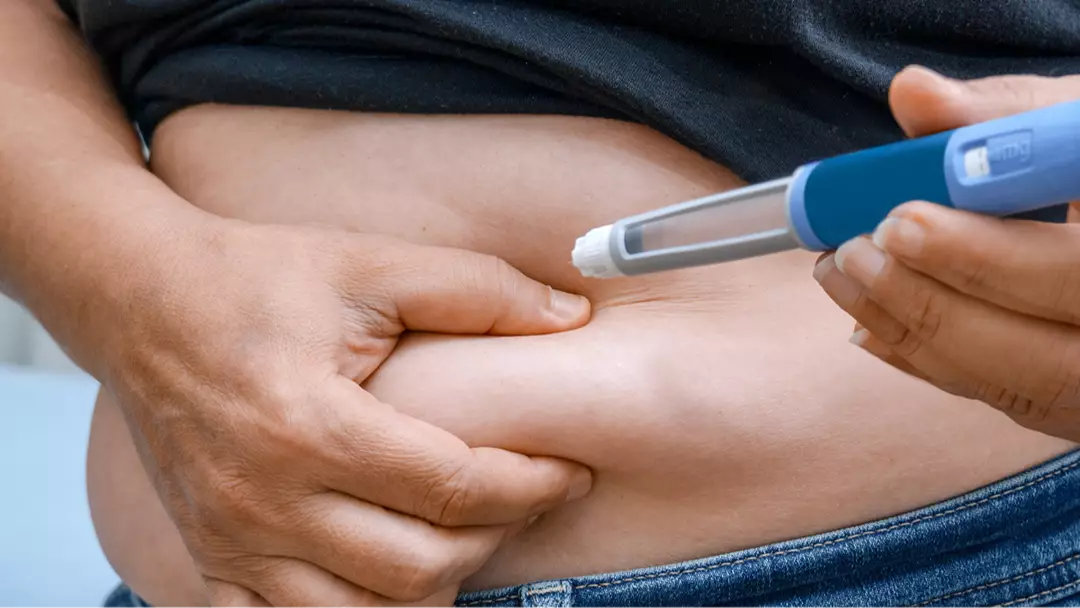
Some health professionals are calling for a change in the packaging of weight loss medications due to the potential for serious consequences.
In recent years, the use of weight loss drugs has gained significant traction, with approximately 12 percent of Americans, or around 15-20 million individuals, now using these medications.
These drugs typically operate by mimicking the hormone glucagon-like peptide-1 (GLP-1), which is naturally released in the gut after eating.
The hormone helps regulate blood sugar levels, promotes feelings of fullness, and consequently aids in weight reduction.
However, concerns are being raised by experts about these medications. Dr. Zoe Ross-Nash, a licensed clinical psychologist, has suggested that these medicines should include a warning similar to those found on cigarette packages.
She expressed her views to The New York Post, stating, “I think there should be a button that you have to click saying ‘I am consciously making a choice that could really harm my health’.”
“Like on cigarette boxes, it says, ‘This could cause cancer.’ OK, well, this [drug] could cause an eating disorder.”
These medications typically assist individuals in weight loss by promoting smaller meal portions and prolonging the feeling of satiety. However, Dr. Thea Gallagher, a clinical psychologist at NYU Langone, warns that while beneficial to some, these effects could potentially lead others down a ‘slippery slope’.
“A lot of people with restrictive eating disorders — what they’re looking for is to not be hungry,” she explained.
“So I think the idea is like, ‘Oh my gosh, wouldn’t it be nice to not have that food noise, because I’m trying to not eat at all, or really very minimally?’ That could be very dangerous.”
Dr. Gallagher shared an example of a patient who manipulated their weight information to obtain a prescription for the medication.
She also mentioned another patient who, having lost a significant amount of weight using GLP-1, is now developing a ‘phobia of food’.
In response, Novo Nordisk, the company behind Wegovy and the type two diabetes medication Ozempic, issued a statement emphasizing their commitment to patient safety.
“Patient safety is of utmost importance to Novo Nordisk. We do not condone, suggest, or encourage misuse of any of our medicines outside of their approved indications. We do our best to ensure patients and doctors are educated about the appropriate use of our products and encourage healthcare providers to only prescribe the right product for the right patient.”
“We recognise that eating disorders are serious conditions and deserve specialised clinical attention from healthcare providers who treat them, and we trust that healthcare providers are evaluating a patient’s individual needs in determining which medicine is right for that patient according to approved label.”
If you are experiencing issues related to eating disorders and need to talk to someone, you can reach out to the National Association of Anorexia Nervosa and Associated Disorders (ANAD). Their free hotline is available at 1(888)-375-7767, Monday through Friday, from 9 am to 9 pm CST.