

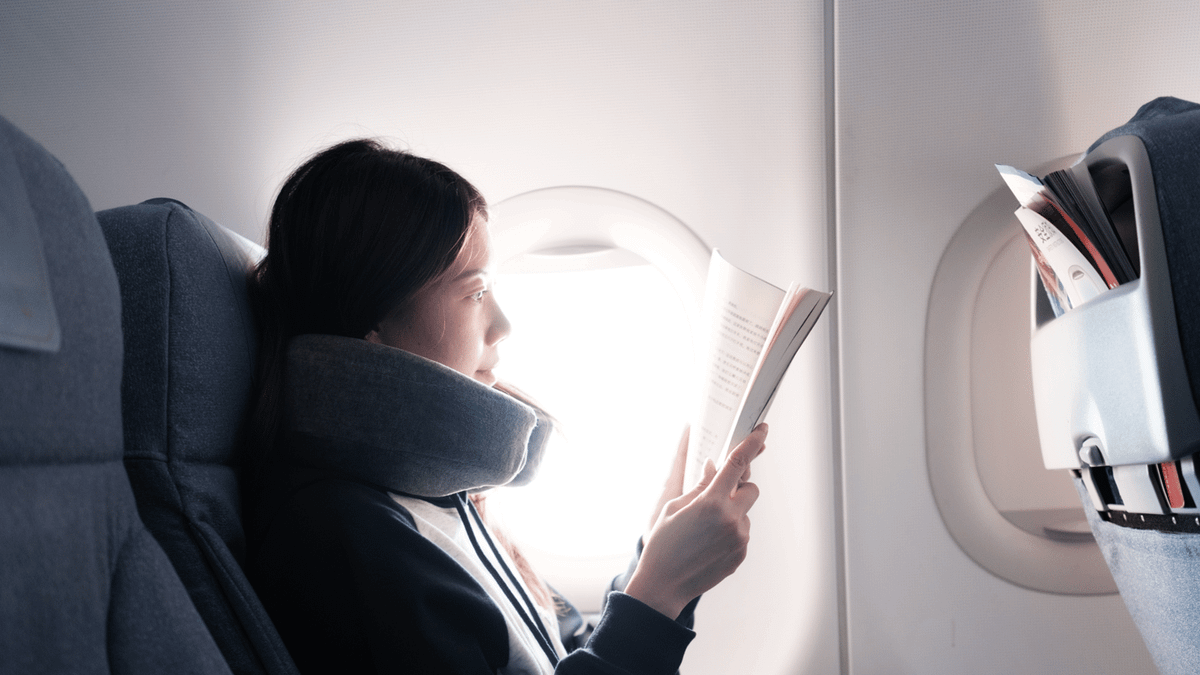
Spotted the tiny pinhole in an airplane window? It’s not a defect — it’s there for safety.
With summer travel ramping up, plenty of passengers will be aiming for the window seat to enjoy the view (and lean against the wall for a bit of extra comfort).
In the rush of airports and boarding, most people don’t think twice about the small hole in the window. But that little detail plays a key role in keeping the cabin environment stable and passengers protected.
That pin-sized opening is commonly called a “bleed hole” or “breather hole,” and despite its size, it’s an important part of how aircraft windows are designed.
Even if the window seat can feel a bit cold at cruising altitude, airplane windows aren’t just a single pane. As Mentour Pilot explains, they’re built with three layers.
The breather hole is located in the middle layer — and the layered design is all about managing pressure and protecting the structure.

The pilot says the outer pane is “made to handle impact and pressure difference,” while the middle pane is there to support and safeguard the outer components. Between those layers is a small air gap — and that’s where the breather hole becomes essential.
Because air sits between the outer and middle panes, changes in outside temperature and cabin pressure can create stress. “Differences in pressure and temperature would otherwise start causing forces to build up between the layers, trying to bend them inwards or outwards,” the pilot explains — something airlines definitely want to avoid.
“That little hole is put there to allow air to flow through slowly and relieve that potential pressure difference,” which is exactly why it’s known as a breather hole.
So why isn’t there a hole in the inner layer too?
According to Mentour Pilot, the inner pane is installed in a way that still lets air circulate around it, so it doesn’t need the same type of pressure-relief opening.
And pressure management isn’t the only benefit. The hole also helps keep your view clearer — useful for anyone trying to enjoy the scenery or snap photos from above the clouds.
As the pilot explains in a YouTube video: “It makes it more difficult for moisture to become trapped between the layers, and start fogging up your window.”
That said, the hole won’t solve everything. The pilot notes it doesn’t prevent grime on the outside of the aircraft window — which is often what spoils those crisp sky shots.
Still, there are always filters.
The breather hole isn’t the only easily missed cabin detail, either.
If you often sit by the window, you may have noticed a small black triangle above certain windows.
Those markings are there to help crew members quickly identify the best viewing position for checking the wings, giving them a clear, unobstructed line of sight.
So if you end up seated near one on your next flight, you’ll know exactly what it’s for.