

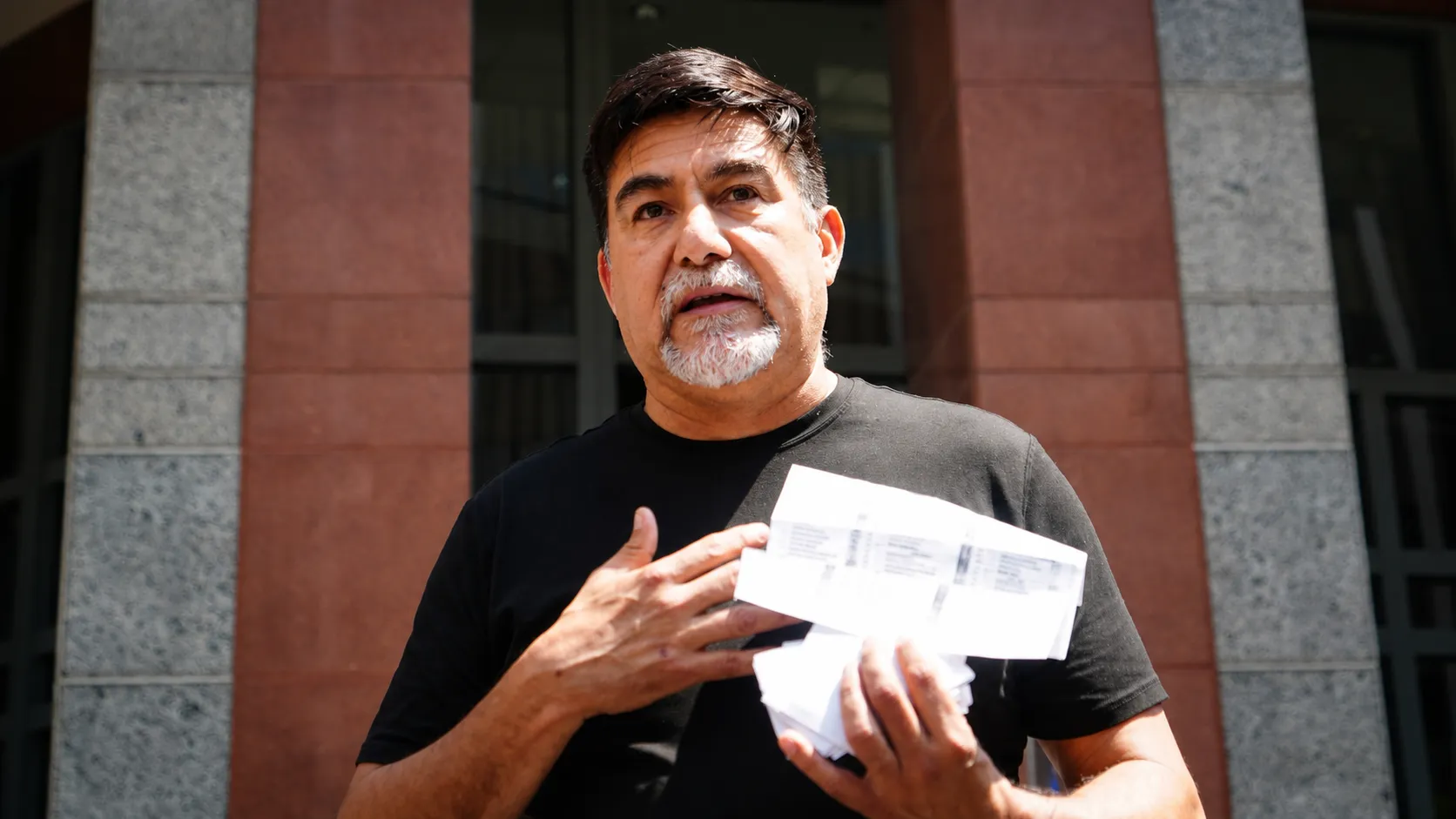
David Huerta, president of the Service Employees International Union California, had his felony charge reduced to a misdemeanor following his arrest in June at an immigration protest in Los Angeles. Federal prosecutors moved to dismiss the original felony conspiracy charge, marking another case in a sweeping pattern of collapsed prosecutions against anti-ICE protesters across the country.
Huerta was arrested on June 6 outside a Los Angeles garment warehouse where Immigration and Customs Enforcement agents were conducting a workplace raid. According to court filings, Huerta sat down in front of a vehicular gate and encouraged others to walk in circles to prevent law enforcement from entering or leaving. When an officer attempted to move him, Huerta pushed back, and the officer pushed him to the ground. Huerta was hospitalized with a head injury following the arrest.
He was released three days later on a $50,000 bond and initially faced a felony charge of conspiracy to impede a federal officer, which carried a potential sentence of up to six years in prison. The charge was downgraded to a misdemeanor obstruction charge in October, and prosecutors subsequently filed to dismiss the original conspiracy charge without prejudice.
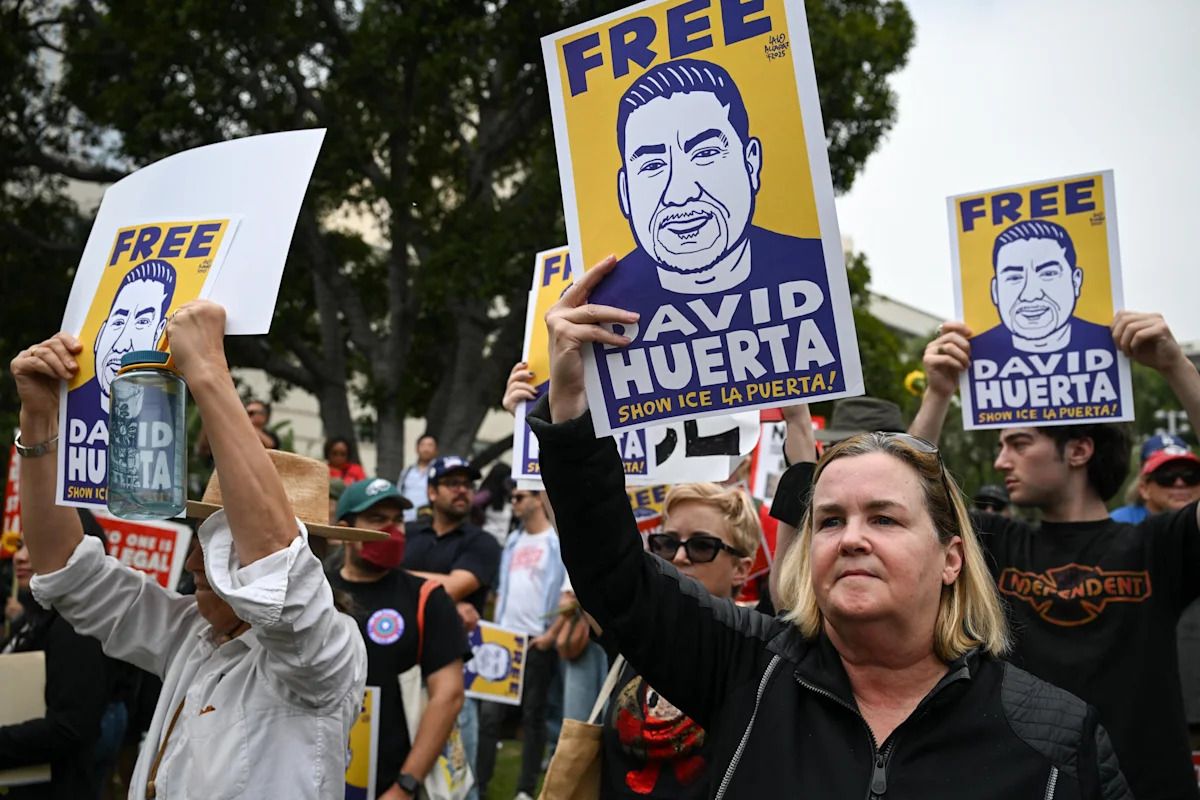
The move came as the leader of a union representing hundreds of thousands of janitors, security officers and other workers across California. His arrest sparked nationwide rallies demanding his release. AFL-CIO President Liz Shuler called it “a gross abuse of power by an administration hell-bent on punishing its perceived enemies and attacking immigrants.”
Huerta’s attorneys, Abbe David Lowell and Marilyn Bednarski, said in a statement that his case “is not a good-faith pursuit of justice but a bald act of retaliation, designed to silence dissent and punish opposition.” They said they would seek “the speediest trial” to vindicate him.
The reduction and subsequent move to dismiss Huerta’s charges fit into a much broader pattern of failed prosecutions. An investigation by ProPublica and FRONTLINE documented more than 300 arrests of protesters and bystanders during immigration enforcement sweeps in Los Angeles, Chicago, Minneapolis and Charlotte, North Carolina. In more than a third of those cases, prosecutors either dismissed charges that couldn’t be substantiated, refused to file charges at all, or lost at trial.
The pattern has been consistent across jurisdictions. In Chicago, federal prosecutors dropped charges in at least 75 of 109 arrests. In Minnesota, at least 15 cases have been dropped entirely, while others including activist Isabel Lopez have been downgraded from felonies to misdemeanors. Eight defendants were acquitted at trial by juries.
Prosecutors often dropped charges when claims made by immigration officers and agents didn’t match video evidence or other inconsistencies emerged. In some cases, judges and federal prosecutors expressed alarm at the quality of evidence and the conduct of immigration agents. When the “Broadview Six” anti-ICE protesters in Illinois had their remaining charges dismissed with prejudice in May, U.S. District Judge April Perry said she had “never seen the types of prosecutorial behavior before a grand jury” that she witnessed in those proceedings.
The outlet analysis found the Trump administration has filed assault charges against more than 550 people caught in its immigration dragnet. Of the more than 400 cases resolved so far, nearly half have unraveled through acquittals, dismissals, or prosecutors withdrawing charges. This represents a stark departure from typical federal prosecution outcomes, where the Justice Department wins more than 90 percent of cases.
Acting U.S. Attorney Bill Essayli, who oversees prosecutions in Los Angeles, has faced particular scrutiny over his handling of protest-related cases. According to three law enforcement officials, Essayli screamed at subordinates over speakerphone when a grand jury refused to indict someone accused of attacking federal officers. He allegedly told prosecutors to disregard the Justice Manual, which directs prosecutors to bring only cases they can win at trial, and to instead follow directives from U.S. Attorney General Pam Bondi.
A federal judge later disqualified Essayli from supervising several criminal prosecutions after concluding he had remained in his temporary position longer than allowed by law. Despite these challenges, Essayli’s office initially charged dozens of people with crimes ranging from assault on federal agents to civil disorder. Many of those charges have since been dropped or reduced.
Experts have raised concerns about the consequences of these failed prosecutions. Jared Fishman, a former Justice Department prosecutor and now executive director of the Justice Innovation Lab, said that even unsuccessful prosecutions can be costly and emotionally taxing for defendants. The aggressive tactics of agents and public accusations of serious crimes, he said, affect people’s willingness to publicly challenge immigration policies.
“If the goal of the Trump administration is to keep people out of the streets, then it doesn’t matter if the people are getting convicted,” Fishman said. “I’m sure it’s having a chilling effect.” After reviewing case records, Fishman added that the numbers seemed to indicate “a pattern and practice of illegal arrests.”
Huerta has maintained his innocence throughout the case. When he pleaded not guilty in late November, he called the charges “baseless” and insisted he was exercising his First Amendment rights when detained outside the garment warehouse where dozens of undocumented workers were arrested.